

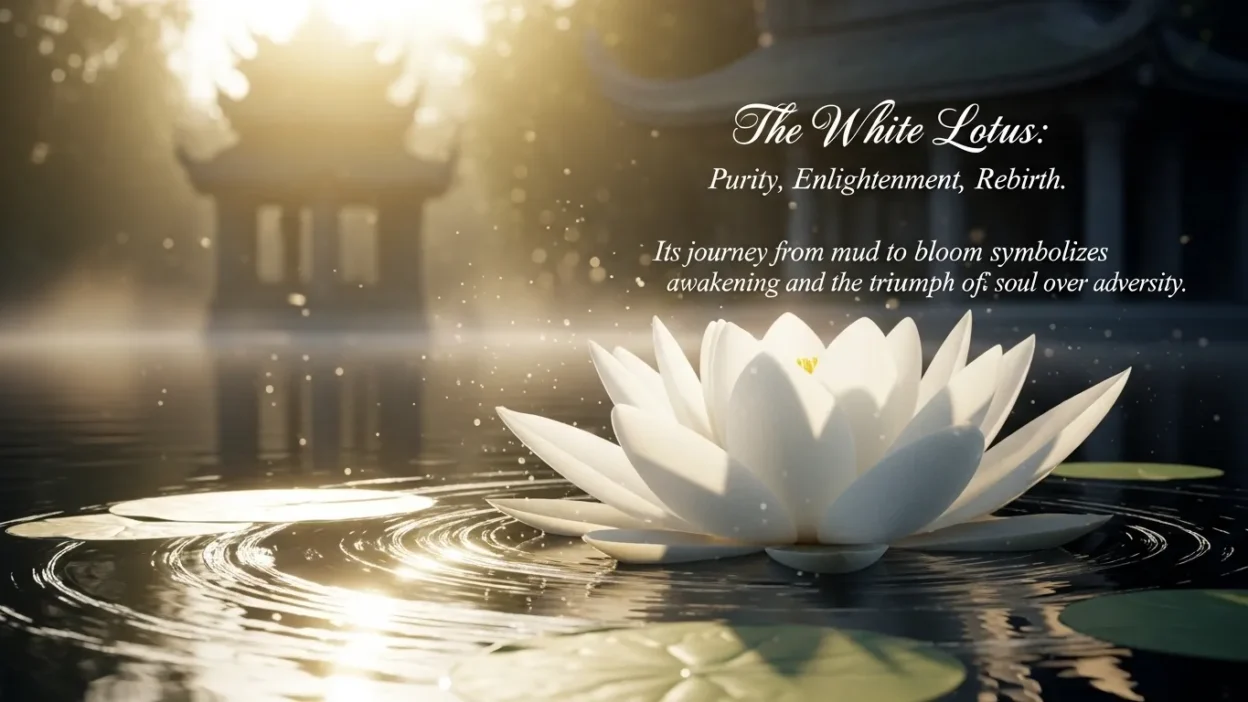
The white lotus is more than just a beautiful flower it carries a deep spiritual and symbolic meaning across many cultures and religions. Known as a powerful sign of purity, enlightenment, peace, and rebirth, the white lotus often represents the journey of rising above negativity and becoming the best version of yourself.
What makes this flower truly special is the way it grows: it blooms in muddy water yet remains clean and untouched, making it a perfect symbol of inner strength and spiritual growth.
Many people search for the white lotus meaning because they’ve seen it in Buddhist teachings, Hindu mythology, tattoos, dreams, or even modern pop culture. But its message remains the same: no matter how difficult life becomes, you can still grow into something pure and beautiful.
In this guide, we’ll explore the full meaning, symbolism, and significance of the white lotus.
White Lotus Flower Symbolism: Purity, Enlightenment, and Rebirth
The white lotus has long been a symbol of purity and innocence. Its pristine white petals represent a heart and mind untouched by negativity, envy, or greed. Unlike ordinary flowers, the white lotus grows in muddy waters yet blooms perfectly clean, which is why it is often associated with the idea of rising above life’s challenges. This imagery teaches us that even in difficult situations, we can maintain inner purity and grace.
Beyond purity, the white lotus is a symbol of spiritual enlightenment. In many traditions, particularly Buddhism and Hinduism, the lotus represents the journey of the soul. Just as the lotus slowly emerges from the mud to bloom in the sunlight, individuals can rise from ignorance and suffering to achieve higher consciousness and spiritual awakening.
Another important aspect of the white lotus is rebirth and transformation. In both religious texts and cultural symbolism, the flower signifies new beginnings and the ability to regenerate after hardship. Its growth cycle mirrors human life: challenges, growth, and eventual beauty.
The white lotus also embodies inner peace and serenity, often used in meditation and mindfulness practices. Its calm presence encourages reflection, balance, and harmony in one’s life. Whether seen in art, dreams, or tattoos, the white lotus serves as a timeless reminder that true beauty and strength come from rising above adversity.
White Lotus Meaning in Buddhism
In Buddhism, the white lotus is one of the most revered symbols, representing purity of the mind, spiritual awakening, and enlightenment. The flower’s journey from the murky waters to a flawless bloom mirrors the path of a person seeking spiritual growth. Just as the lotus rises above the mud, a Buddhist aims to rise above worldly desires, suffering, and ignorance.
The white color specifically symbolizes mental purity and spiritual perfection. It is often associated with a peaceful, disciplined mind that has detached from material cravings. In Buddhist art and teachings, deities and enlightened beings are frequently depicted seated or standing on a lotus, highlighting the flower as a foundation for spiritual elevation.
The white lotus also plays a key role in Buddhist meditation practices. Visualizing a white lotus during meditation encourages calmness, balance, and self-reflection. It reminds practitioners to cultivate inner peace while navigating life’s challenges.
Additionally, the lotus posture (Padmasana) in meditation is named after the flower, emphasizing the lotus’s connection with enlightenment and concentration. The blooming lotus becomes a metaphor for the mind reaching clarity, wisdom, and spiritual liberation.
Ultimately, the white lotus in Buddhism teaches that purity, spiritual awakening, and peace are attainable, no matter one’s current circumstances. It inspires the belief that anyone can overcome suffering and ignorance to achieve higher consciousness, just as the lotus emerges unsullied from muddy waters.
White Lotus Meaning in Hinduism
In Hinduism, the white lotus is a sacred symbol representing purity, spiritual wisdom, and divine beauty. It is closely associated with several deities, most notably Goddess Lakshmi, the goddess of wealth, prosperity, and purity. Lakshmi is often depicted seated on a fully bloomed white lotus, symbolizing the spiritual and material abundance that arises from purity of heart and mind. The flower conveys the message that true prosperity comes from inner virtue, not just worldly wealth.
The white lotus is also connected to Lord Vishnu, the preserver of the universe. In Hindu mythology, Vishnu is depicted holding a lotus, representing cosmic creation, spiritual perfection, and divine order. The flower’s pristine white petals reflect clarity of thought and enlightenment, emphasizing the importance of maintaining a pure mind while performing worldly duties.
Beyond the deities, the white lotus in Hinduism represents spiritual growth and liberation (moksha). Just like the lotus rises from muddy water, individuals are encouraged to rise above material attachments and desires to reach spiritual freedom. The flower symbolizes detachment, resilience, and the journey toward self-realization.
Moreover, the white lotus is commonly used in rituals and offerings as a mark of devotion, respect, and spiritual purity. Its presence in temples and sacred ceremonies reminds devotees that divine energy thrives in purity, patience, and perseverance.
In essence, the white lotus in Hinduism teaches that true beauty, wisdom, and spiritual awakening are born from inner purity and devotion, making it one of the most powerful symbols in the religion.
White Lotus Flower Symbolism in Ancient Cultures
The white lotus has held deep symbolic meaning across many ancient civilizations, not just in Asia. Its unique growth pattern rising unsullied from muddy waters made it a natural symbol of purity, rebirth, and spiritual transcendence in multiple cultures.
In ancient Egypt, the white lotus was considered a symbol of rebirth and the sun. Egyptians observed the flower opening with the morning sun and closing at night, linking it to the cycles of life, death, and regeneration. It was often depicted in hieroglyphics, tomb art, and religious rituals, representing the eternal renewal of life and the soul.
In Chinese culture, the white lotus represents purity, harmony, and spiritual balance. Confucian scholars and Taoist philosophers admired the lotus for its ability to remain clean despite growing in muddy water, seeing it as a model for moral integrity and virtuous living. Lotus imagery is common in Chinese art, poetry, and gardens, symbolizing peace and inner reflection.
In Japanese culture, influenced by Zen Buddhism, the white lotus symbolizes calmness, discipline, and spiritual awakening. It is often used in meditation and art to inspire mindfulness and serenity. The flower’s quiet elegance embodies the concept of wabi-sabi, the beauty of simplicity and impermanence.
Across these ancient cultures, the white lotus consistently represents the triumph of purity over adversity, life over struggle, and spiritual awakening over ignorance. Its universal appeal highlights the timeless human desire to seek inner peace and transcendence, making the white lotus a symbol that continues to inspire even today.
White Lotus Meaning in Spirituality (Modern Interpretation)
Beyond religious contexts, the white lotus has become a powerful symbol in modern spirituality, representing personal growth, inner peace, and emotional healing. Today, many people view it as a reminder that, no matter life’s challenges, it is possible to rise above negativity and cultivate purity of mind.
The white lotus symbolizes self-awareness and mindfulness. In modern spiritual practices, it encourages individuals to reflect inward, letting go of stress, fear, and toxic influences. Just as the lotus grows untouched in muddy waters, people are reminded that their inner spirit can remain untouched by external chaos.
It is also widely regarded as a symbol of resilience and transformation. Life often presents difficulties, setbacks, and emotional struggles, but the white lotus teaches that growth and beauty emerge from overcoming obstacles. Many spiritual coaches and wellness guides use the white lotus as a metaphor for personal evolution and awakening.
In addition, the white lotus is connected to energy cleansing and positive vibrations. People often use images of the flower in meditation spaces, yoga studios, and homes to encourage serenity, balance, and clarity. Its calm presence inspires peaceful reflection and emotional stability, helping individuals reconnect with their true selves.
In modern spirituality, the white lotus represents more than tradition it is a living symbol of hope, purity, and inner strength. It reminds us that no matter the difficulties we face, we can grow, bloom, and shine in our highest potential.
White Lotus Meaning in Love and Relationships
The white lotus isn’t just a symbol of spiritual purity it also carries deep meaning in love and relationships. Its qualities of innocence, loyalty, and inner beauty make it a powerful representation of pure, unconditional love. Just as the flower remains untouched by the mud around it, a white lotus in relationships symbolizes love that remains genuine and untarnished by external challenges.
In romantic contexts, the white lotus represents honesty, devotion, and emotional clarity. Couples who connect with this symbol often value transparency, trust, and mutual respect. It reminds partners to nurture their bond with patience and understanding, allowing love to flourish even in difficult circumstances.
The white lotus can also symbolize soul connections and spiritual love. Many spiritual traditions view it as a representation of soulmates or deep spiritual compatibility, highlighting the idea that true love transcends physical attraction and thrives on inner harmony and shared growth.
In marriage, the white lotus signifies peaceful unions, loyalty, and emotional balance. Couples who embrace its symbolism are encouraged to approach their relationship with mindfulness, cultivating patience, kindness, and devotion over time.
Even in friendship, the white lotus represents loyalty and support, showing that meaningful connections are built on purity of heart and sincerity. Ultimately, the white lotus teaches us that love, like the flower, can remain beautiful and untainted, even when life is challenging.
White Lotus Tattoo Meaning
The white lotus tattoo has become a popular choice for those seeking a symbol of spiritual growth, purity, and personal transformation. Much like the flower itself, the tattoo represents the ability to rise above life’s challenges while maintaining inner beauty and peace. People often choose this design to remind themselves of their journey toward enlightenment or self-improvement.
For many, the white lotus tattoo signifies purity of mind and heart. Its clean white petals convey innocence and clarity, making it a powerful emblem for those who value honesty, integrity, and spiritual awareness. Unlike other tattoo designs, the white lotus carries deep spiritual significance while remaining visually elegant and versatile.
The tattoo also symbolizes rebirth and personal transformation. Just as the lotus emerges from muddy waters to bloom, individuals often get this tattoo to mark overcoming adversity, healing emotional wounds, or starting a new chapter in life. It is a visual reminder that struggles do not define us growth and beauty emerge from resilience.
Additionally, white lotus tattoos are meaningful in different placements and combinations. For example, a lotus on the wrist or chest may symbolize inner peace, while combining it with mandalas, butterflies, or unalomes can enhance its spiritual symbolism and personal significance.
Ultimately, a white lotus tattoo is more than just body art it is a statement of strength, purity, and spiritual awakening, serving as a lifelong reminder of one’s journey toward inner peace and self-realization.
White Lotus Meaning in Dreams
Dreaming of a white lotus often carries a profound spiritual and emotional message. In dream interpretation, the white lotus is a symbol of purity, spiritual awakening, and positive transformation. Seeing this flower in your dream may indicate that you are on a path of personal growth, healing, and enlightenment.
A blooming white lotus in a dream represents success, clarity, and inner peace. It suggests that you are emerging from a period of struggle or confusion and stepping into a phase of renewed strength and spiritual clarity. This type of dream encourages embracing positivity and personal transformation.
Holding a white lotus in your dream signifies emotional cleansing and spiritual reflection. It may indicate that you are letting go of negative emotions, past regrets, or toxic influences, allowing yourself to grow emotionally and spiritually.
Conversely, seeing a wilted or dying white lotus may symbolize temporary setbacks, emotional struggles, or a lack of balance in your life. It serves as a reminder to pause, reflect, and restore inner peace before moving forward.
White lotus dreams can also relate to relationships and love, signifying pure intentions, loyalty, and harmonious bonds. Overall, dreaming of a white lotus emphasizes the power of resilience, spiritual growth, and the pursuit of inner peace, reminding you that even amidst challenges, you can maintain purity and bloom beautifully.
White Lotus Meaning in Different Colors
While the white lotus is primarily associated with purity, spiritual awakening, and peace, other lotus colors carry unique meanings, making it interesting to compare them. Understanding these differences helps clarify the full symbolism of the lotus flower in various spiritual and cultural contexts.
The pink lotus is often linked to divine love, devotion, and enlightenment. It is considered the supreme lotus in Buddhism, symbolizing the highest spiritual attainment and the path to Nirvana. While the white lotus represents purity of mind, the pink lotus emphasizes spiritual devotion and divine connection.
The blue lotus signifies wisdom, knowledge, and victory over the senses. Unlike the white lotus, which focuses on inner purity, the blue lotus encourages mental clarity, intellectual growth, and self-discipline.
The red lotus is a symbol of love, compassion, and passion. In relationships or spiritual practices, it highlights the emotional and heart-centered aspects of life, whereas the white lotus emphasizes balance and serenity.
The purple lotus carries mysticism and spiritual power, often associated with esoteric knowledge and higher consciousness. It represents the transformative aspect of spirituality, complementing the white lotus’s theme of purity and awakening.
By comparing these colors, it’s clear that the lotus flower is a versatile and powerful symbol. Each color conveys a different lesson or energy, but the white lotus stands out as a representation of unblemished purity, peace, and spiritual elevation, reminding us to rise above challenges while maintaining clarity and serenity.
White Lotus Meaning in Yoga and Chakras
In yoga and chakra practices, the white lotus is a deeply spiritual symbol that represents purity, enlightenment, and the awakening of higher consciousness. It is most commonly associated with the Crown Chakra (Sahasrara), located at the top of the head, which governs spiritual connection, awareness, and transcendence. Just as the white lotus rises above muddy waters, activating the Crown Chakra helps practitioners rise above earthly distractions and connect with their inner divine essence.
In meditation, visualizing a white lotus is a common technique to enhance mental clarity and spiritual focus. Yogis and spiritual seekers imagine the flower blossoming at the top of their head, symbolizing the opening of the Crown Chakra and the flow of universal energy and wisdom. This practice encourages inner peace, balance, and heightened consciousness.
The white lotus is also used in yoga symbolism for its representation of purity of mind and body. It reminds practitioners that the physical world may be chaotic, but spiritual growth allows one to remain untainted and centered. Its presence in yoga-inspired art, mantras, and sacred spaces reinforces the importance of mindfulness, self-discipline, and spiritual awakening.
Ultimately, the white lotus in yoga and chakras is more than decorative it is a symbol of transformation, spiritual enlightenment, and connection to the universe. It encourages practitioners to cultivate inner purity, wisdom, and serenity while navigating the challenges of daily life.
White Lotus Meaning in Art, Literature, and Mythology
The white lotus has long inspired artists, writers, and storytellers across cultures due to its rich symbolism of purity, rebirth, and spiritual enlightenment. In art, the white lotus often represents inner beauty, serenity, and transcendence, making it a popular subject in paintings, sculptures, and religious iconography. From ancient Buddhist murals to contemporary spiritual art, the lotus is used to convey divine energy, calmness, and the journey of the soul.
In literature, the white lotus frequently appears as a metaphor for overcoming adversity and personal transformation. Poets and authors use it to symbolize characters who remain morally pure or spiritually awakened despite the “muddy waters” of life. Its symbolism reinforces themes of resilience, hope, and inner strength, reminding readers that challenges can lead to growth and enlightenment.
Mythology also holds the white lotus in high regard. In Hindu myths, it is connected to gods and goddesses like Lakshmi and Vishnu, representing spiritual perfection and divine creation. In Buddhist stories, the lotus often appears in teachings about enlightenment and detachment from worldly desires. Even outside Asia, cultures such as ancient Egypt revered the lotus as a symbol of rebirth and the eternal cycle of life, often depicting it in sacred art and temples.
Across art, literature, and mythology, the white lotus continues to symbolize purity, resilience, spiritual awakening, and the triumph of light over darkness. Its presence in creative works emphasizes its timeless appeal as a universal symbol of hope, beauty, and transcendence.
White Lotus Meaning in Pop Culture
The white lotus has found its way into modern pop culture, often carrying symbolism that extends beyond spirituality and tradition. One of the most notable examples is the TV series The White Lotus, where the title reflects themes of purity, luxury, and hidden truths. While the flower itself symbolizes innocence and serenity, the show uses it ironically to highlight the contrast between outward appearances and underlying complexities, showing how something seemingly perfect can conceal struggle, tension, or corruption.
Beyond television, the white lotus frequently appears in films, literature, and digital media as a metaphor for personal growth, enlightenment, and resilience. Characters associated with the lotus often undergo significant transformation or rise above adversity, reflecting the flower’s timeless meaning of emerging beautiful and pure from challenging circumstances.
In fashion, home decor, and wellness culture, the white lotus is also a symbol of calm, balance, and mindfulness. Yoga studios, meditation apps, and lifestyle brands incorporate the lotus in their visuals to evoke spiritual serenity, inner peace, and self-reflection.
Social media and online art platforms have further amplified the flower’s significance. White lotus imagery is often paired with inspirational quotes, personal transformation stories, and mindfulness tips, turning it into a universal symbol of hope, clarity, and spiritual aspiration.
In pop culture, the white lotus has transcended its traditional roots to become a multifaceted symbol simultaneously representing purity, spiritual growth, and resilience, while also serving as a reminder that true beauty and strength come from rising above life’s challenges.
White Lotus Meaning as a Symbol of Strength
The white lotus is widely regarded as a symbol of strength and resilience. Unlike ordinary flowers, it grows in muddy and challenging environments, yet it blooms beautifully, untouched by the murky water surrounding it. This remarkable growth process makes the white lotus a powerful metaphor for overcoming obstacles and thriving despite adversity.
In life, people often face emotional struggles, setbacks, and difficult circumstances. The white lotus reminds us that true strength comes from maintaining purity and integrity even when life is chaotic. Its symbolism encourages individuals to rise above fear, negativity, and hardship, emerging stronger, wiser, and more resilient.
Spiritually, the white lotus represents inner fortitude and mental discipline. In Buddhism and Hinduism, it is seen as a flower of spiritual awakening, highlighting the strength required to detach from material desires and achieve clarity of mind. The growth of the lotus mirrors the journey of the human spirit: beginning in struggle, facing challenges, and ultimately blossoming into peace, wisdom, and enlightenment.
Even in modern interpretations, the white lotus is used as a motivational symbol. Many people display it in tattoos, artwork, or meditation spaces to serve as a constant reminder of personal growth and resilience.
Ultimately, the white lotus embodies the idea that strength is not about resistance alone it is about rising gracefully above challenges, maintaining purity of mind, and transforming struggles into beauty and wisdom. It is a timeless emblem of courage, perseverance, and inner power.
Is the White Lotus a Good Symbol? (Positive or Negative Meaning)
The white lotus is overwhelmingly considered a positive symbol across cultures, religions, and modern interpretations. Its primary associations purity, spiritual awakening, inner peace, and resilience make it a universally admired emblem. People often turn to the white lotus for inspiration, motivation, and guidance, seeing it as a reminder that beauty and strength can emerge even from difficult circumstances.
In spiritual and religious contexts, the white lotus is linked to enlightenment in Buddhism and divine purity in Hinduism. It is rarely associated with negative meanings because it embodies the idea of rising above worldly struggles while remaining untainted. Its growth from muddy waters to a flawless bloom reinforces this positive message of hope, transformation, and triumph over adversity.
However, in modern symbolic interpretations, some subtle negative connotations can appear. For instance, when used metaphorically in literature or pop culture, a “white lotus” may sometimes highlight false purity or outward appearances that hide imperfection, as seen in shows like The White Lotus. These examples are exceptions rather than the rule, often serving to contrast innocence with complexity rather than portraying the lotus itself as negative.
Overall, the white lotus is universally celebrated as a symbol of goodness, growth, and spiritual clarity. Its presence in art, tattoos, meditation, and cultural practices consistently conveys positivity, resilience, and the ability to overcome challenges with grace. For anyone seeking inspiration or a reminder of inner strength, the white lotus remains a timeless and uplifting symbol.
What Does Giving Someone a White Lotus Mean?
Gifting a white lotus carries profound symbolic meaning and is considered a gesture of respect, purity, and spiritual goodwill. Unlike ordinary flowers, the white lotus is deeply associated with spiritual awakening, inner peace, and resilience, making it a meaningful gift for someone you admire or care about.
In romantic contexts, giving a white lotus symbolizes pure love, honesty, and emotional devotion. It conveys a message that your feelings are genuine and untainted, reflecting loyalty and long-term commitment. The recipient is reminded that the bond shared is built on trust, clarity, and mutual respect.
In friendship, a white lotus can represent loyalty, support, and encouragement. It signifies that you appreciate the other person’s inner beauty, strength, and growth, and it serves as a reminder that you wish them continued personal and spiritual development.
Spiritually, gifting a white lotus is often seen as an offering of blessings. In Hindu and Buddhist traditions, presenting a lotus flower in rituals symbolizes purity of intention and respect for the divine. Giving someone a white lotus can therefore carry the message: “May you grow, rise above challenges, and remain pure of heart.”
Even in modern life, offering a white lotus whether physically or as an image can represent encouragement, hope, and admiration. It is a timeless way to communicate that you recognize someone’s inner strength and journey toward personal and spiritual enlightenment.
White Lotus Meaning Quotes
The white lotus has inspired countless quotes and sayings due to its symbolism of purity, resilience, and spiritual awakening. These quotes can serve as daily reminders to stay centered, positive, and focused on personal growth.
One common theme in white lotus quotes is rising above adversity. Many emphasize how, like the lotus that blooms untainted from muddy waters, we too can overcome challenges and maintain inner purity. For example, a popular reflection states: “Be like the lotus, rooted in the mud, rising above to bloom in grace and beauty.”
Another theme is spiritual growth and enlightenment. Quotes often highlight the flower as a symbol of inner peace, mindfulness, and connection to higher consciousness. Phrases such as “The white lotus reminds us that true beauty begins within” or “In the stillness of your mind, bloom like the lotus” encourage reflection and meditation.
The white lotus is also linked to resilience and transformation. Many quotes encourage embracing change and trusting the process of growth: “Even in the darkest waters, the lotus finds the light to bloom”. This reinforces the idea that setbacks and challenges are temporary, and strength and beauty emerge from perseverance.
Finally, white lotus quotes are often used in tattoos, home décor, and social media posts to inspire positivity and mindfulness. They capture the timeless essence of the lotus purity, hope, and the power to rise above life’s challenges.
(FAQ)
1. What does a white lotus symbolize spiritually?
Spiritually, the white lotus represents purity, enlightenment, inner peace, and spiritual awakening. It encourages rising above negativity and maintaining clarity of mind, just as the lotus blooms untouched from muddy waters.
2. What is the white lotus meaning in Buddhism?
In Buddhism, the white lotus symbolizes mental purity, spiritual perfection, and detachment from worldly desires. It is often depicted with Buddha and deities, representing the path to enlightenment and higher consciousness.
3. What does a white lotus tattoo represent?
A white lotus tattoo signifies personal growth, resilience, purity, and spiritual awakening. It often marks overcoming challenges, inner transformation, and the journey toward peace and clarity.
4. Is white lotus a symbol of purity?
Yes, the white lotus is one of the strongest symbols of purity of mind, heart, and soul. Its growth in muddy water yet flawless bloom exemplifies the idea of remaining untainted amidst challenges.
5. What does white lotus mean in love?
In love, the white lotus represents pure, unconditional love, loyalty, and honesty. It symbolizes relationships built on trust, devotion, and emotional clarity.
6. What does dreaming of a white lotus mean?
Dreaming of a white lotus often signifies spiritual growth, emotional healing, and personal transformation. A blooming lotus represents success and clarity, while a wilted lotus may indicate setbacks or unresolved challenges.
7. What is the difference between a white lotus and a pink lotus?
The white lotus symbolizes purity and spiritual awakening, while the pink lotus is associated with divine love, devotion, and supreme enlightenment.
8. Is white lotus a lucky symbol?
Yes, it is considered lucky and positive, representing hope, spiritual growth, resilience, and inner peace.
Conclusion:
The white lotus is much more than a beautiful flower it is a timeless symbol of purity, resilience, spiritual growth, and inner peace. Across cultures, religions, and modern interpretations, it consistently represents the journey of rising above challenges and emerging untainted, reminding us that true strength and beauty come from within.
In Buddhism and Hinduism, the white lotus signifies enlightenment, divine wisdom, and spiritual awakening, while in ancient cultures like Egypt, China, and Japan, it represented rebirth, harmony, and moral integrity.
Today, it continues to inspire people in tattoos, meditation, art, literature, and even pop culture, symbolizing hope, transformation, and mindfulness.
The white lotus also carries deep meaning in love, relationships, and personal growth, teaching us that loyalty, purity of intention, and inner strength can guide us through life’s challenges.
Dream interpretations, color comparisons, and chakra connections further highlight its versatility as a symbol of spiritual and emotional well-being.
Ultimately, the white lotus reminds us that adversity does not define us. Like the lotus blooming from muddy waters, we too can grow, transform, and shine in our highest potential.
If as a spiritual guide, a motivational emblem, or a symbol of love and devotion, the white lotus continues to inspire and empower people across the world.

Welcome to TextFlirtz.com, your ultimate destination for fun, flirty, and clever pick-up lines that spark conversations and make hearts skip a beat! Whether you’re looking to impress your crush, add some humor to your chats, or just have a playful time texting, we’ve got you covered with lines that are witty, spicy, and unforgettable. Dive in, explore our collections, and start flirting the smart way—because at TextFlirtz.com, words are your best wingman!