
In today’s interconnected world, knowing how to translate English to Urdu meanings has become more important than ever.
\Whether you are a student, professional, or language enthusiast, understanding the meaning of English words and phrases in Urdu can greatly improve communication, comprehension, and learning.
English is widely used in education, business, and digital platforms, while Urdu remains the primary language for millions across Pakistan and parts of India. Bridging the gap between these two languages not only helps in day-to-day interactions but also enhances vocabulary, reading skills, and cultural understanding.
This guide will provide a comprehensive approach to translating English words, sentences, and idioms into Urdu, explain useful tools and techniques, and offer practical tips to make learning easier and more effective. By the end, you’ll have a solid foundation to confidently translate and use English words in Urdu.
Understanding Translation Basics
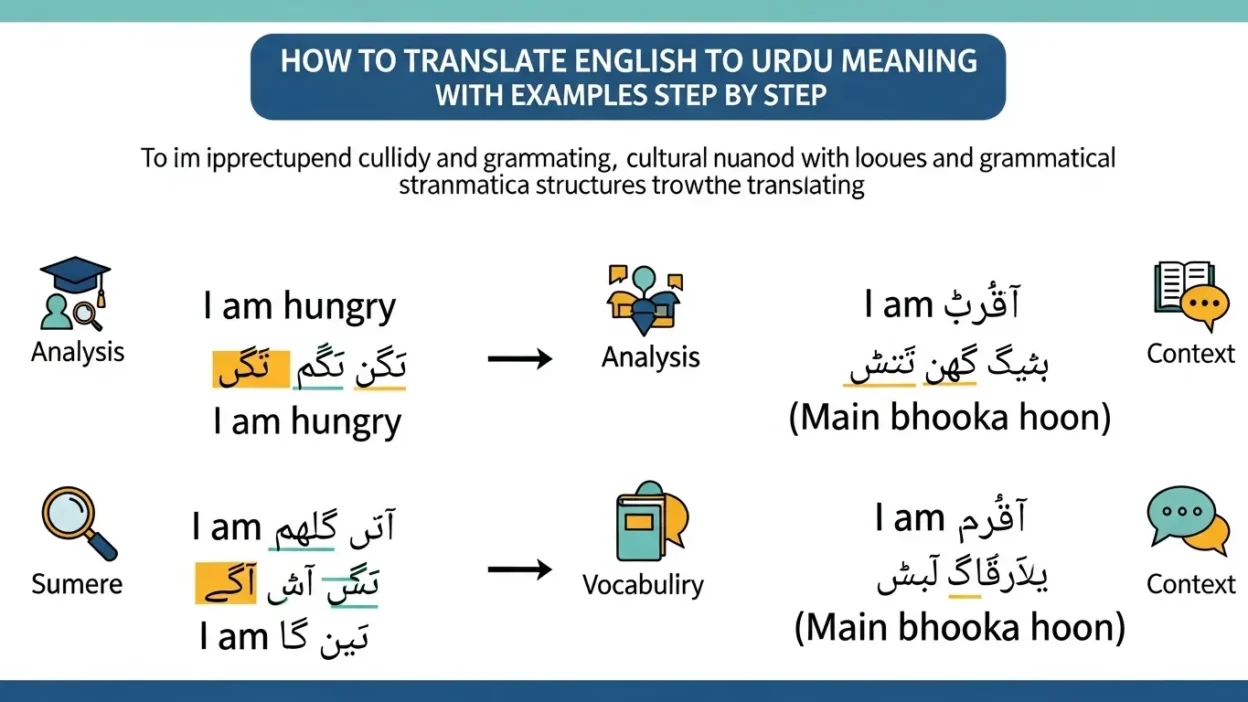
Translation is the process of converting words, phrases, or sentences from one language to another while keeping the meaning intact. In the context of English to Urdu, translation is not always a literal word-for-word conversion. Instead, it often requires understanding the context, cultural nuances, and grammar differences between the two languages. For example, the English word “home” can be translated as “گھر” (ghar) in Urdu, but in some contexts, it might imply warmth or family, which may require additional explanation.
One key aspect of translation is distinguishing between literal translation and contextual translation. Literal translation focuses on the exact word meanings, which works well for simple words but may fail for idioms or phrases. Contextual translation considers the situation, tone, and cultural meaning, ensuring that the message is conveyed accurately. For example, the English phrase “break the ice” literally translates to “برف توڑنا,” but in Urdu, the contextual meaning would be “بات چیت کا آغاز کرنا” to convey the intended idea.
Accurate translation is essential for effective communication, learning, and professional use. Misinterpretations can cause confusion or misunderstandings. By understanding translation basics, learners can approach English-to-Urdu conversions with clarity and precision. Using tools, dictionaries, and practice, anyone can gradually improve their translation skills and confidently interpret meanings between these two languages.
English to Urdu Word Meanings
One of the most essential steps in learning English-to-Urdu translation is understanding the meanings of individual words. Words form the building blocks of language, and knowing their Urdu equivalents helps in reading, writing, and speaking more confidently. For example, simple words like “Book” translate to “کتاب” (Kitaab), “Water” to “پانی” (Pani), and “Friend” to “دوست” (Dost). Learning these basic words is the foundation for translating sentences and complex expressions.
In addition to common words, it is important to understand phrases and idioms, as literal translations often fail to capture their true meaning. For instance, the English idiom “Piece of cake” does not mean “کیک کا ٹکڑا”, but rather “بہت آسان کام”, conveying the intended meaning in Urdu. Similarly, phrases like “Break the ice” translate contextually as “بات چیت کا آغاز کرنا” instead of literally.
To make learning easier, creating word tables is highly effective. For example:
| English Word | Urdu Meaning | Example Sentence |
|---|---|---|
| House | گھر (Ghar) | I live in a big house. → میں بڑے گھر میں رہتا ہوں۔ |
| School | اسکول (School) | She goes to school daily. → وہ روز اسکول جاتی ہے۔ |
| Happiness | خوشی (Khushi) | Happiness is important. → خوشی بہت اہم ہے۔ |
By practicing such word lists and learning contextual translations, learners can gradually expand their vocabulary and improve comprehension. This step is crucial before moving on to full sentences or paragraphs, as it forms the foundation of accurate translation.
Tools and Methods for Translation
Translating English to Urdu has become much easier thanks to modern tools and techniques. Using the right tools can save time, improve accuracy, and help learners understand both literal and contextual meanings. One of the most popular options is online dictionaries. Websites like Rekhta Dictionary, UrduPoint, and apps like Google Translate provide quick translations for words and phrases. These tools often include pronunciation guides, example sentences, and synonyms, which are extremely helpful for learners.
While online tools are convenient, manual translation techniques are equally important. Manual translation involves understanding the meaning of words, grammar, and sentence structure before converting them into Urdu. This method is particularly useful for idioms, cultural references, and sentences where literal translation might fail. For example, translating “Hit the nail on the head” literally as “کیل پر مارنا” would confuse readers; understanding the context allows for a meaningful translation like “بات بالکل درست کہنا”.
Additionally, audio and visual tools can enhance learning. Listening to English words pronounced correctly and then seeing their Urdu meaning can reinforce memory. YouTube videos, language apps, and interactive exercises are practical for this purpose.
The key is to combine tools with practice. Using dictionaries and translation apps alongside manual learning and contextual understanding ensures accuracy. Over time, learners can translate English words, sentences, and even paragraphs confidently, bridging the gap between the two languages effectively.
Tips to Improve English to Urdu Translation Skills
Improving English to Urdu translation skills requires consistent practice, the right strategies, and exposure to both languages. One of the most effective methods is daily vocabulary building. Learning a few new words every day and practicing their Urdu meanings helps strengthen memory and comprehension. Using flashcards, word lists, or apps can make this process more interactive and efficient.
Another important tip is to read bilingual texts. Books, articles, and news in English with Urdu translations allow learners to see how sentences are constructed in both languages. This helps in understanding sentence structure, idiomatic expressions, and contextual meanings. For instance, reading a bilingual story can show how complex sentences are translated naturally into Urdu.
Practice writing and speaking is equally essential. Translating sentences or paragraphs on your own and then comparing them with accurate translations reinforces learning. It also improves confidence in using new words and phrases.
Joining language learning communities can further enhance skills. Online forums, social media groups, and language apps connect learners with native speakers and fellow students. This interaction provides opportunities to ask questions, get feedback, and learn new expressions and nuances.
Lastly, consistency is key. Even small daily efforts, like translating a short paragraph or learning five new words, accumulate over time and lead to significant improvement. By combining vocabulary practice, reading, writing, and community engagement, anyone can gradually become proficient in translating English to Urdu accurately and confidently.
Challenges in English to Urdu Translation
Translating English to Urdu can be rewarding, but it also comes with several challenges that learners need to understand. One of the main difficulties is words without direct Urdu equivalents. Some English words, especially technical or modern terms, may not have a simple Urdu translation. For example, words like “software” or “internet” are often used as-is, or adapted phonetically into Urdu (سافٹ ویئر, انٹرنیٹ). Learners must learn when to use such terms and when to explain them in Urdu for clarity.
Idioms and cultural expressions pose another challenge. Many English idioms, proverbs, and expressions cannot be translated literally. For example, “Spill the beans” literally translates as “بینز گرا دینا”, but the contextual Urdu meaning is “راز فاش کرنا”. Without understanding the context, translations can become confusing or meaningless.
Differences in grammar and sentence structure also create obstacles. English is a Subject-Verb-Object (SVO) language, while Urdu often follows Subject-Object-Verb (SOV) order. Translating without adjusting the sentence structure can make the translation awkward or incorrect.
Finally, accuracy vs readability is a common challenge. Translating word-for-word may maintain literal accuracy but can result in sentences that sound unnatural in Urdu. Learners must balance between keeping the meaning accurate and making the sentence easy to understand.
Being aware of these challenges helps learners approach translation thoughtfully. Using dictionaries, practicing contextual translations, and studying examples can overcome these difficulties and make English-to-Urdu translation more precise and effective.
Practical Applications of English to Urdu Translation
Understanding English to Urdu translation is not just an academic exercise—it has many practical applications in daily life, education, and professional work. For students, translating English words, sentences, and texts into Urdu can significantly improve comprehension of textbooks, study materials, and exam content. It also helps in writing essays, preparing assignments, and learning new vocabulary in both languages simultaneously.
For professionals, English to Urdu translation is essential in workplaces where bilingual communication is required. Translating business emails, reports, presentations, or official documents into Urdu ensures clarity for teams or clients who are more comfortable with the native language. It also reduces miscommunication and enhances productivity.
In daily life, translation skills help in effective communication with family, friends, and the community. Whether it is translating English instructions, recipes, or messages from social media, knowing the Urdu meaning improves understanding and interaction.
Another practical application is in digital content creation. Bloggers, social media influencers, and content writers often translate English content into Urdu to reach a wider audience. Accurate translations make content accessible and relatable to Urdu-speaking readers.
Finally, English to Urdu translation plays a role in language learning and cultural exchange. It bridges the gap between cultures, allowing learners to understand idioms, literature, and expressions that would otherwise be inaccessible. By practicing translation in these real-world contexts, learners not only improve their skills but also gain confidence in using both languages effectively.
Frequently Asked Questions (FAQ)
English to Urdu translation often raises several common questions among learners. Addressing these can make the learning process smoother and more effective.
Q1: How accurate are online translations?
Online translation tools like Google Translate or UrduPoint are helpful for quick word meanings and simple sentences. However, they may not always capture idioms, cultural nuances, or context-specific meanings. It’s recommended to double-check translations, especially for longer texts or formal communication.
Q2: Can I translate full paragraphs accurately?
Yes, but translating paragraphs requires attention to context, grammar, and sentence structure. While tools can assist, manual translation often yields more natural and readable Urdu. Understanding each sentence’s meaning before converting it ensures accuracy.
Q3: How can I learn translation effectively?
Effective learning involves daily practice, vocabulary building, and exposure to bilingual content. Reading English texts alongside Urdu translations, writing practice sentences, and using language apps or dictionaries regularly helps reinforce skills.
Q4: How do I handle idioms and phrases?
Idioms cannot be translated word-for-word. Learners should focus on the intended meaning and find the equivalent expression in Urdu. For example, “Hit the nail on the head” translates contextually as “بات بالکل درست کہنا” instead of literally.
Q5: Is it better to translate literally or contextually?
Contextual translation is usually better, especially for sentences, idioms, and phrases. Literal translation may work for simple words, but it can make sentences awkward or confusing if the meaning is not preserved.
By understanding these common concerns and following practical tips, learners can improve their English to Urdu translation skills and gain confidence in both reading and writing.
Conclusion:
Mastering English to Urdu translation is a valuable skill that opens doors to better communication, learning, and cultural understanding.
Whether you are a student, professional, or language enthusiast, being able to accurately interpret English words, phrases, and sentences into Urdu improves comprehension and builds confidence in both languages.
Through consistent practice, learners can expand their vocabulary, understand idioms and contextual meanings, and communicate effectively in daily life and professional settings.
This guide has covered essential aspects of translation from understanding the basics, learning common words and phrases, using tools and techniques, to tackling challenges and practical applications.
We also discussed tips to improve translation skills, including daily vocabulary building, reading bilingual texts, practicing writing and speaking, and joining language learning communities.
Additionally, we addressed frequently asked questions to help learners navigate common issues such as idioms, grammar differences, and online translation accuracy.
The key takeaway is that translation is not just about substituting words—it’s about conveying meaning clearly and naturally. By combining tools, practice, and contextual understanding, anyone can become proficient in translating English to Urdu.
Start with simple words and sentences, gradually move to paragraphs, and don’t shy away from challenges. With dedication, patience, and consistent effort, you can enhance your language skills, bridge the gap between English and Urdu, and confidently use both languages in real-life situations.
Remember, translation is a journey. Each new word and phrase learned brings you closer to mastering effective bilingual communication.

Welcome to TextFlirtz.com, your ultimate destination for flirty, fun, and clever text messages! Whether you’re looking to break the ice, charm your crush, or keep the sparks alive in your relationship, we’ve got a treasure trove of pick-up lines, flirty texts, and witty messages that make flirting effortless and exciting. Dive in, explore, and let your words do the magic—because at TextFlirtz.com, every message is a chance to flirt smarter, not harder.