
Have you ever heard someone say, “Let’s split,” and wondered what they actually meant? Or maybe you came across the word split in a text, a business report, or even a sports commentary, and felt a bit confused.
That’s because split is one of those versatile words in English that changes meaning depending on the context. It can mean to divide, to leave, to separate, or even refer to a financial or sports term.
From casual conversations and texting slang to relationships, business, technology, and grammar, split pops up everywhere. Understanding its correct meaning is essential if you want to use it confidently in both writing and speech.
In this guide, we’ll explore all the different meanings of split, provide real-life examples, explain its slang uses, and show you how it’s applied in finance, sports, and even grammar. By the end, you’ll never be confused by split again.
Split Meaning (Quick Definition)
The word “split” is one of the most versatile words in English, and its meaning changes depending on the context. At its core, split means to divide, separate, or break something into parts. For example, if you split a pizza, you are dividing it into smaller slices. Similarly, splitting money means sharing it among several people.
However, split is not limited to physical division. In everyday language, it can also mean to leave quickly. For instance, someone might say, “I’m going to split,” which simply means they are leaving. In relationships, split up is a common expression used to indicate a breakup or separation.
In addition, split can function as a noun or an adjective, not just a verb. As a noun, it can refer to a division or part of something, such as “a split in the team” or “a banana split.” As an adjective, it can describe something divided, like a “split decision” in sports or a “split screen” on a device.
Because of its multiple meanings, understanding split always depends on the context in which it’s used. It can appear in casual conversations, texting slang, business and finance, sports, grammar, and even psychology. Later in this article, we’ll explore all these contexts, provide real-life examples, and explain how to use split correctly in every situation.
Origin and Background of the Word Split
The word “split” has a long history in the English language, dating back to Old English and Germanic roots. It originally appeared as splittan, which meant to cleave or separate, and over time, it evolved into the modern term we use today. The basic idea of dividing or breaking apart has remained central to its meaning, even as its usage expanded into different areas of life.
Over the centuries, split has developed multiple meanings depending on context. In the 16th and 17th centuries, it was commonly used to describe physical separation, such as splitting wood or splitting cloth. By the 18th century, the word started appearing in figurative language, describing emotional or social separations, like a split between friends or groups.
The versatility of split also grew with the rise of modern slang and technology. Today, it can mean leaving quickly (“I’m going to split”), dividing money or responsibilities, or even technical applications such as split screens and stock splits. Its use in grammar, like the “split infinitive,” also highlights its flexibility in language structure.
Understanding the origin of split helps explain why it has so many nuanced meanings. From physical division to emotional separation, business terms, sports, and everyday slang, the core idea is always about dividing, separating, or breaking apart. In the sections that follow, we will break down these different contexts and provide clear examples to make sure you never get confused when you encounter the word split.
Split Meaning in English (All Common Uses)
In English, the word “split” is highly versatile and can function as a verb, noun, or adjective, depending on the context. Understanding these common uses is key to using the word correctly.
As a verb, split typically means to divide or separate something. For example, “We split the pizza into six slices” or “They decided to split the profits equally.” It can also mean to leave quickly, such as in the sentence, “I have to split before the traffic gets worse.” In relationships, split up is used to describe a breakup: “After five years, they split up.”
As a noun, split refers to a division or separation. Examples include “a split in the team” or “a banana split.” In these cases, it describes a tangible or figurative division.
As an adjective, split describes something that is divided or separated, such as “a split decision” in sports, where judges disagree, or “split screen,” a term used in technology and entertainment.
The meaning of split can also change slightly depending on the context. In casual conversation or texting, it often means leaving, whereas in finance, it can refer to dividing stocks or profits. In sports, it can describe an uneven decision, and in grammar, it refers to a “split infinitive” like “to boldly go.”
In short, split is a flexible word whose meaning depends on how it’s used. Whether it’s dividing something physical, separating emotionally, or describing technical or grammatical situations, understanding the context is essential. Later sections will explore all these uses in greater detail with examples to help you master the word completely.
Split Meaning in Daily Life (Common Situations)
The word “split” is not just a dictionary term it appears in everyday life, often in situations that involve dividing, sharing, or separating. Understanding these practical uses can help you use the word naturally in conversation.
One of the most common daily life uses of split is dividing something physically. For example, “Let’s split the pizza” or “We split the chocolate bar between us.” It’s a simple way to express sharing or breaking something into parts. Similarly, splitting money is frequent in group settings: “We split the bill evenly at the restaurant,” which shows fairness and clarity in sharing expenses.
Another daily context is time management. People often say, “I split my time between work and study,” meaning they divide their attention or schedule between multiple tasks. This usage emphasizes balance and organization.
Split also applies to responsibilities: “We split the chores at home,” meaning each person takes on their share of duties. In social life, it can describe dividing a group: “The kids split into two teams for the game,” showing a literal or figurative separation.
Even casual conversations and texting reflect daily usage. Someone might say, “I’m going to split now,” meaning they’re leaving. This shows how split can express both physical division and movement or exit in a natural, everyday way.
Understanding these common situations makes it easier to use split correctly in real life, whether you’re sharing, dividing, scheduling, or leaving.
Split Meaning in Texting and Chat
In the digital age, the word “split” has taken on a new life in texting and online chat, often used as casual slang. Understanding this meaning is essential, especially for younger audiences or anyone who frequently communicates online.
When someone says, “I’m going to split”, it usually means they are leaving or going somewhere quickly. For example, after a long meeting or a party, a friend might text, “I’m splitting, see you tomorrow,” indicating they are leaving the location. Similarly, the phrase “Let’s split” is a casual way to suggest leaving together: “It’s getting late; let’s split.”
In addition to leaving, split can also imply ending a conversation or departing from a situation. For example, “This group is boring, I’m splitting,” shows that the person is disengaging. The meaning is always informal and context-dependent, so it’s not commonly used in professional writing.
Split in texting is often accompanied by other casual slang terms like “bounce”, “dip,” or “roll out,” all of which convey a quick exit. Using split in this context adds a friendly, conversational tone to messages, making it popular in casual online chats, social media, and instant messaging.
Understanding the texting meaning of split ensures you won’t misinterpret messages or appear out of touch with modern slang. In short, in texting, split is all about leaving, exiting, or separating oneself from a situation quickly, keeping conversations light and casual.
Split Meaning in Slang
Beyond texting, the word “split” has established itself as a versatile slang term in informal English. In slang, split generally conveys leaving quickly, escaping, or breaking away from a situation, but it can also mean ending a relationship or separating from a group.
One common slang usage is simply to leave or exit. For example, “The party’s boring, let’s split” means it’s time to leave. Similarly, “I’m gonna split before it gets messy” emphasizes a quick exit. In these cases, split adds a casual, spontaneous tone that makes the conversation sound natural and friendly.
Another slang context is escaping from trouble or avoiding responsibilities. “We saw the cops coming, so we split” shows how the word can imply getting away quickly. In social groups, split can also mean walking away from friends or activities, as in “After the argument, he split,” indicating separation.
Slang usage of split isn’t limited to leaving. It’s sometimes used metaphorically in social life to show division or disagreement, such as “The group split over who should lead,” meaning the group divided due to a conflict.
Understanding split in slang is important because it differs from the more formal meanings in business, grammar, or finance. In informal settings, split is all about action, movement, and separation, making it a handy word to express casual exits, disagreements, or changes in plans.
Split Meaning in Relationships
In the context of relationships, the word “split” is commonly used to describe a breakup or separation between partners. This is one of the most searched meanings, as people often want to understand what it implies when someone says, “They split” or “We split up.”
The phrase “split up” specifically refers to the ending of a romantic relationship. For example, “After five years together, they split up” clearly communicates that the couple has broken up. Similarly, “We decided to split” can be used in casual conversations to indicate separation without going into details.
Split in relationships can also extend to friendships or social connections. For instance, when a group of friends experiences disagreements or differences, it’s common to say, “The friends split over the argument,” meaning the group has separated or drifted apart.
It’s important to note that split in this context carries an emotional nuance. Unlike the neutral meaning of dividing something physical, a relationship split often implies conflict, loss, or change. However, the tone can vary depending on how it’s used: “We split amicably” suggests a peaceful separation, whereas “They split badly” implies tension or unresolved issues.
Understanding split in relationships ensures you use it appropriately in both speech and writing. Whether it’s a romantic breakup or the end of a friendship, split communicates separation clearly and concisely, making it a widely recognized term across informal and formal conversations.
Split Meaning in Money and Business
In money and business contexts, the word “split” is often used to describe division, sharing, or allocation of financial resources. Understanding these uses is essential for clear communication in workplaces, banking, and finance.
One of the most common expressions is “split the bill”, which means dividing the total cost among several people. For example, at a restaurant, “We decided to split the bill evenly” shows that everyone pays their fair share. This usage emphasizes fairness and practicality in financial transactions.
Another common business usage is profit or revenue splits. For example, “The partners split the profits 50/50” refers to dividing earnings according to agreed terms. Similarly, split payments indicate installments or partial payments, such as paying for a product in two separate amounts.
In corporate and investment contexts, stock splits are a key financial term. A company may split its stock to increase the number of shares while keeping the total value the same, making shares more affordable for investors. Reverse stock splits also occur to reduce the number of shares while maintaining market value.
In short, split in money and business always revolves around division or allocation whether it’s money, profits, payments, or shares. Using it correctly ensures clarity in financial discussions, negotiations, and agreements. The key is understanding that in this context, split is neutral and formal, unlike its casual slang or relationship meanings.
Split Meaning in Sports
In sports, the word “split” has specialized meanings that are commonly used in competitions, scoring, and game analysis. Understanding these usages helps both players and fans interpret results and strategies accurately.
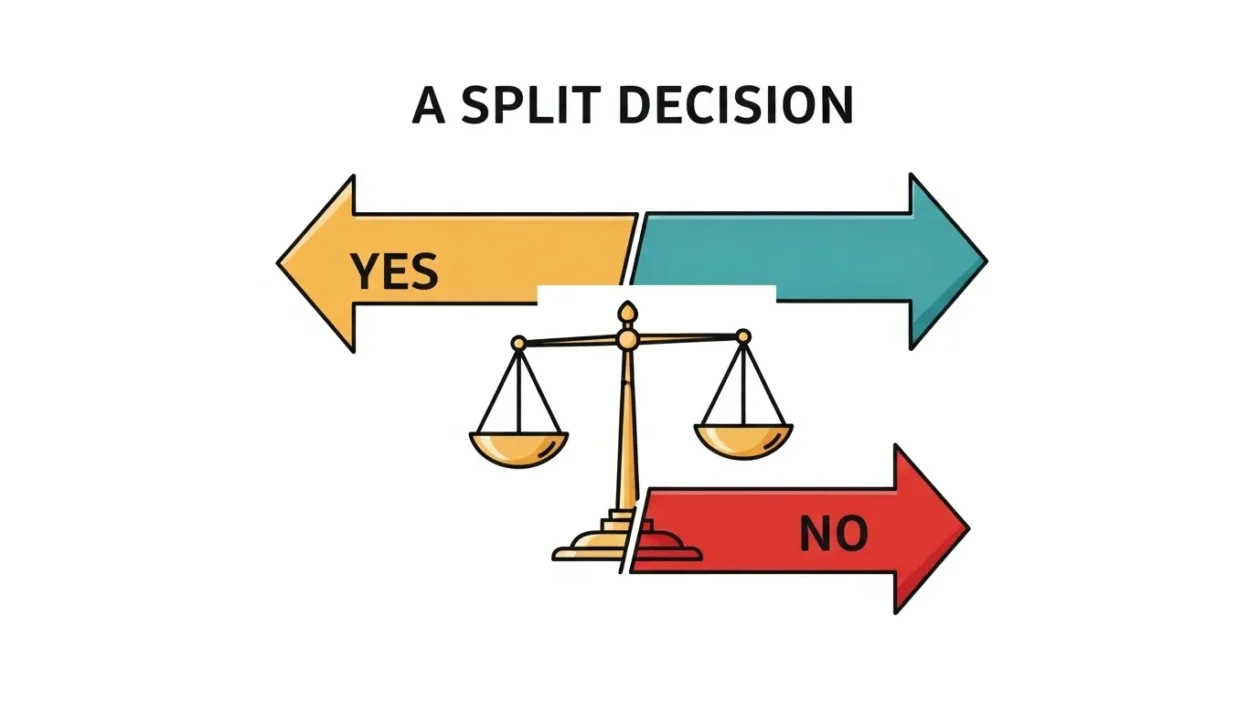
One of the most common uses is the “split decision”, which occurs in sports like boxing, MMA, or gymnastics. A split decision happens when the judges disagree on the winner, with one judge scoring in favor of one competitor while another favors the opponent. For example: “He won by split decision,” meaning the victory was narrow and not unanimous. This term emphasizes the competitiveness and close nature of the contest.
Another sports-related meaning is splitting games or matches, often used in leagues or series. For instance, “The team split the series 2-2” indicates that each team won an equal number of games. Similarly, split time refers to dividing playtime among athletes: “The coach split the time evenly between the forwards,” ensuring fair participation and energy management.
In gymnastics or athletics, a split can also describe a physical position, such as legs extended in opposite directions. While this is more literal, it still reflects the concept of division or separation inherent in the word split.
Overall, in sports contexts, split can refer to judging outcomes, game results, time allocation, or physical positions, depending on the situation. Understanding these nuances ensures accurate communication, whether you’re reporting scores, analyzing games, or coaching athletes.
Split Meaning in Technology
In technology, the word “split” is widely used to describe dividing screens, content, or testing processes. Its usage reflects the core meaning of separating or dividing, but applied to digital contexts.
One common application is the split screen, where a device or software displays two or more sections simultaneously. For example, a user might open two documents side by side on a computer, saying, “I like using split screen to compare files.” This usage is common in computers, smartphones, and video games, allowing multitasking and better organization.
Another digital use is split view, often found on mobile devices and tablets. It enables users to view multiple apps or windows at once, such as checking email while browsing the web. This enhances productivity and efficiency, showing how split adapts to modern needs.
In marketing and web development, split testing or A/B testing is a technique where a webpage or ad is divided into two versions to determine which performs better. For example: “We ran a split test on our landing page to see which design converts more visitors.” Here, split conveys division for comparison and analysis purposes.
Even coding and software development use split to describe dividing strings, files, or data sets. For example, in programming, a string can be “split” into multiple parts for easier processing.
Overall, in technology, split consistently reflects division, separation, and organization whether it’s screens, data, or tests. Its versatility makes it an essential term in the digital and professional world.
Split Meaning in Grammar
In grammar, the term “split” is most commonly associated with the split infinitive, a concept that often confuses English learners and writers. A split infinitive occurs when an adverb is placed between “to” and the verb in an infinitive form. For example, in the famous phrase, “to boldly go where no one has gone before,” the word boldly splits the infinitive to go.
Split infinitives are not grammatically incorrect, though they were once considered improper by traditional English rules. Modern grammar recognizes that splitting an infinitive can add clarity, emphasis, or natural rhythm to a sentence. For instance, “She wants to completely understand the topic” emphasizes the thoroughness of understanding, making the sentence clearer than “She wants completely to understand the topic.”
Besides split infinitives, split in grammar can also describe dividing clauses or phrases for stylistic purposes. Writers sometimes “split” sentences with punctuation, conjunctions, or transitional phrases to improve readability or add emphasis.
Understanding split in grammar helps in both writing and editing, especially for formal documents, creative writing, or academic work. While it may seem technical, the idea is simple: a split separates elements to create emphasis, clarity, or stylistic effect.
In short, in grammar, split retains its core meaning of division or separation, applied to words, phrases, or sentence structures. Knowing how to use split constructions effectively can make your writing more precise and impactful.
Split Meaning in Psychology
In psychology, the word “split” takes on a specialized meaning that is quite different from its everyday uses. It often refers to a mental process known as splitting, which is a defense mechanism or cognitive pattern where a person views people, situations, or themselves in extreme terms all good or all bad, with no middle ground.
This psychological concept is commonly associated with borderline personality disorder (BPD), though it can appear in other contexts. For example, someone might idealize a friend one day and then completely devalue them the next. This “splitting” reflects an inability to integrate positive and negative qualities into a single balanced perception.
In a broader sense, split in psychology can also refer to division of mental processes or personalities, often misunderstood as “split personality.” While media sometimes confuses splitting with dissociative identity disorder (DID), they are not the same. In psychology, splitting mainly describes black-and-white thinking and emotional extremes, rather than actual multiple personalities.
Understanding split in psychology is important for recognizing certain behavioral patterns and emotional responses. It helps therapists, caregivers, and individuals identify imbalances in perception, relationships, and self-concept.
In short, in the psychological context, split emphasizes division within the mind or perception, highlighting how a person separates experiences, emotions, or evaluations into distinct, often extreme, categories. This use is more technical but provides valuable insight into human behavior and mental health.
Split Meaning in Food and Desserts
In the context of food and desserts, the word “split” often refers to items that are divided, layered, or arranged separately. One of the most popular examples is the banana split, a classic dessert made by splitting a banana lengthwise and topping it with ice cream, chocolate syrup, whipped cream, and cherries. The term split here literally describes the act of dividing the banana while also highlighting the layered presentation of the dessert.
Another common culinary use is split peas, which are dried peas that have been split in half for easier cooking and digestion. Split peas are commonly used in soups and stews, and the word split refers to the physical separation of the pea halves.
In baking and cooking, split can also describe cutting or dividing ingredients for portion control or presentation. For example, a chef might say, “Split the dough into six equal pieces,” emphasizing uniformity and organization.
Interestingly, split in food isn’t limited to preparation it can also describe serving style. For instance, sharing a dish between people may be described as “splitting the dessert” or “splitting the pizza,” linking the culinary and everyday meanings of the word.
Overall, in food and dessert contexts, split consistently conveys division, separation, or layering, whether it’s a banana, a pea, dough, or a shared meal. Understanding this usage adds a practical and literal dimension to the word, showing its versatility beyond abstract or metaphorical contexts.
Split Meaning in Geography / Places
In geography and places, the word “Split” is most famously recognized as the name of a city in Croatia. Located on the eastern shore of the Adriatic Sea, Split is known for its historic sites, stunning coastline, and vibrant culture. Its name likely originates from the Latin word Spalatum, which itself comes from the Greek Aspálathos, referring to the dense vegetation in the region. In this context, Split is a proper noun rather than a verb, yet it still carries the essence of separation or division historically referring to the way the city developed around the ruins of the Roman Emperor Diocletian’s Palace, effectively “splitting” urban areas around a central complex.
Beyond city names, split can also appear in geographic descriptions, such as split islands, rivers, or regions, indicating natural or artificial divisions in the land. For instance, “The river split into two branches” describes a physical division of water flow, which is another literal use of the word.
Tourism-related searches often combine the place and general meaning, such as “Split Croatia travel guide” or “things to do in Split,” showing how people encounter the term in a geographic context.
Overall, in geography and place names, split can either refer to a specific location like the Croatian city or describe a division in natural landscapes, reinforcing the word’s fundamental meaning of separation and division, but applied to physical space rather than objects, people, or abstract ideas.
Synonyms of Split
Understanding the synonyms of split is important for expanding vocabulary and using the word accurately in different contexts. Depending on the situation, there are several words that can replace split, each carrying a slightly different nuance.
One of the most common synonyms is divide, which emphasizes separating something into parts. For example, “We divided the cake among six people” conveys the same meaning as “We split the cake.” Similarly, separate is another synonym, often used when distinguishing or keeping things apart: “The teacher separated the students into two groups.”
Other synonyms include break, cut, and tear, which highlight physical separation or damage. For instance, “He broke the chocolate bar” or “She tore the paper in half” can be considered variations of splitting in a literal sense.
In social or relational contexts, words like part, detach, and disband are useful. For example, “The group parted ways after the argument” conveys a separation similar to “The group split.”
In professional and financial settings, allocate and apportion can act as synonyms. “The company allocated profits among partners” reflects the same idea as “The company split profits among partners.”
Using these synonyms effectively allows you to avoid repetition, adjust tone, and make your writing or speech more precise. The key is understanding the context: split in relationships, money, objects, or tasks may have different appropriate alternatives, but all convey the core concept of division or separation.
Antonyms of Split
While the word “split” emphasizes division, separation, or breaking apart, its antonyms convey the opposite joining, combining, or uniting. Understanding these antonyms helps in expressing cohesion, togetherness, or consolidation in various contexts.
One of the most common antonyms is join, which refers to bringing two or more things together. For example, “We joined the two pieces of wood” conveys the opposite of splitting them. Similarly, unite emphasizes forming a single entity from separate parts, such as “The team united to achieve their goal.”
Other useful antonyms include combine, merge, and connect, which are often used in professional, technical, or social contexts. For instance, “The companies merged last year” is the opposite of a corporate split. “Connect the wires” or “Combine the ingredients” also illustrates joining rather than separating.
In social or relational contexts, words like reconcile, integrate, or bring together serve as antonyms. For example, “They reconciled after the argument” or “The new program integrates multiple departments” shows restoring unity or cohesion.
Even in abstract or figurative contexts, these antonyms help balance language. For instance, while a split decision in sports indicates division, the opposite could be a unanimous decision, showing agreement among all parties.
By knowing the antonyms of split, you can choose words that emphasize unity, combination, or togetherness, depending on the situation. This enhances clarity and precision in writing, speech, and professional communication, giving you the tools to express both separation and cohesion effectively.
Idioms and Phrases Using Split
The word “split” appears in several idioms and common phrases in English, each with unique meanings that extend beyond its literal sense. Understanding these expressions can make your language more natural and fluent.
One popular phrase is “split the difference”, which means to compromise or agree on a middle ground. For example, “You want $50 and I want $30; let’s split the difference and go with $40.” This usage is common in negotiations and everyday decision-making.
Another phrase is “split hairs”, meaning to argue over very small or unimportant details. For instance, “They spent hours splitting hairs about the wording of the contract,” illustrates excessive attention to minor differences.
“Split second” is another widely used idiom, describing something that happens extremely quickly. Example: “He reacted in a split second to avoid the accident.” It emphasizes speed and immediacy rather than division.
The phrase “split up” is often used for breaking apart relationships, teams, or groups, as in “The band split up after their last tour.” Similarly, “split apart” can describe both physical and social separation: “The old bridge split apart during the storm.”
Finally, “split the bill” and “split the pot” are practical phrases in social and financial contexts, meaning to divide expenses or earnings fairly.
These idioms and phrases show how versatile split is, ranging from compromise, speed, division, or disagreement. Mastering them allows you to understand nuanced English expressions and use the word naturally in both casual and professional conversations.
Examples of Split in Sentences
Seeing examples of split in sentences helps you understand its many meanings and use the word naturally in different contexts. Here are practical examples covering everyday life, relationships, business, sports, and technology:
Daily Life:
- “We split the pizza into six equal slices.”
- “She split her time between work and studying.”
- “They decided to split the chores evenly at home.”
Relationships:
- “After five years together, they split up.”
- “We split amicably after realizing we had different goals.”
- “The friends split after the argument, each going their separate ways.”
Business and Finance:
- “The partners split the profits 50/50.”
- “They decided to split the bill for the office lunch.”
- “The company plans to split its stock to make shares more affordable.”
Sports:
- “He won the fight by split decision.”
- “The team split the series 2-2.”
- “The coach split the playtime evenly among the players.”
Technology:
- “I like using split screen to compare two documents.”
- “The website is running a split test to see which version performs better.”
- “You can split the data into smaller sets for analysis.”
These examples demonstrate that split can mean divide, leave, separate, allocate, or even refer to technical actions depending on the context. By studying these sentences, you can confidently apply split in conversations, writing, and professional settings. Context is key, as the meaning shifts depending on whether it’s everyday life, relationships, money, sports, or technology.
Common Mistakes People Make Using Split
Although “split” is a simple word, people often make mistakes when using it because it has multiple meanings depending on context. Knowing these common errors can help you use it accurately.
One frequent mistake is confusing split in relationships with other types of separation. For example, saying “They split the project” instead of “They split up” can confuse readers, because split alone in personal contexts usually refers to leaving or breaking up.
Another common error occurs in financial or business contexts. People sometimes say, “We split money equally” without clarifying the context. While understandable, more precise phrasing like “We split the profits 50/50” ensures clarity, especially in formal writing.
In sports, beginners often misinterpret split decision as a negative outcome rather than a neutral term meaning the judges disagreed. Similarly, in grammar, people may think split infinitives are always wrong. Modern English allows split infinitives when they improve clarity or emphasis.
Slang usage is another area of confusion. For example, saying “I will split” in a professional email is inappropriate because in texting it means “I’m leaving,” but in formal writing it could be misunderstood.
Finally, people sometimes overuse split as a synonym for “divide” or “separate,” when words like allocate, detach, or divide may be more precise depending on the situation.
By being aware of these mistakes, you can ensure that split is used accurately in casual, professional, financial, grammatical, or social contexts, avoiding misunderstandings and making your communication clear and effective.
FAQs:
Here are some frequently asked questions about the word “split”, covering its most common uses and helping clarify any confusion.
1. What does split mean in slang?
In slang, split usually means to leave or exit quickly. For example, “I’m going to split before it gets crowded” means “I’m leaving.”
2. What does split mean in a relationship?
In relationships, split refers to a breakup or separation. For example, “They split up after three years together” indicates the end of a romantic relationship.
3. What does “let’s split” mean?
“Let’s split” is casual slang meaning let’s leave. It’s often used among friends when leaving a place together.
4. What does split decision mean?
A split decision occurs in sports, especially boxing or MMA, when judges disagree on the winner. One judge favors one competitor while another favors the opponent.
5. What does split the bill mean?
It means dividing the total cost among people. For instance, “We split the bill evenly at the restaurant.”
6. What is a stock split?
A stock split is when a company divides its shares to increase the number available while keeping the overall value the same, making shares more affordable.
7. What is a reverse stock split?
A reverse stock split reduces the number of shares while keeping total value constant, often to increase the stock price.
8. What does split mean in psychology?
In psychology, splitting refers to black-and-white thinking, seeing people or situations as all good or all bad, and is a defense mechanism.
9. What does split mean in grammar?
It often refers to a split infinitive, where an adverb is placed between “to” and the verb, like “to boldly go.”
10. Is split formal or informal?
The word is context-dependent: formal in finance, grammar, or business, informal in texting, slang, and daily conversation.
Conclusion
The word “split” is a highly versatile term in the English language, with meanings that range from literal division to figurative separation and informal slang.
Its flexibility allows it to appear in everyday conversation, relationships, business, sports, technology, grammar, and even psychology. Understanding the context is key to using split correctly, as the same word can convey different ideas depending on the situation.
In everyday life, split can mean sharing, dividing, or leaving, such as splitting a bill, splitting chores, or deciding to leave a party. In relationships, it commonly refers to breakups or separations, while in business and finance, it relates to profit sharing, bill division, or stock splits.
Sports and games use split to describe decisions, game outcomes, or physical positions, while technology applies it to split screens, split views, and split testing. In grammar, it’s associated with split infinitives, and in psychology, it denotes black-and-white thinking or emotional extremes.
Additionally, split forms part of numerous idioms and phrases, such as “split the difference,” “split hairs,” and “split the bill,” each adding nuance to everyday English.
Recognizing synonyms and antonyms also helps expand your vocabulary and ensures precise communication.
By understanding the multiple dimensions of split, you can use it accurately in writing and speech, whether formal or informal.
From casual texting to professional discussions, sports commentary, or academic writing, mastering the word split equips you to communicate clearly and confidently in nearly any context.