
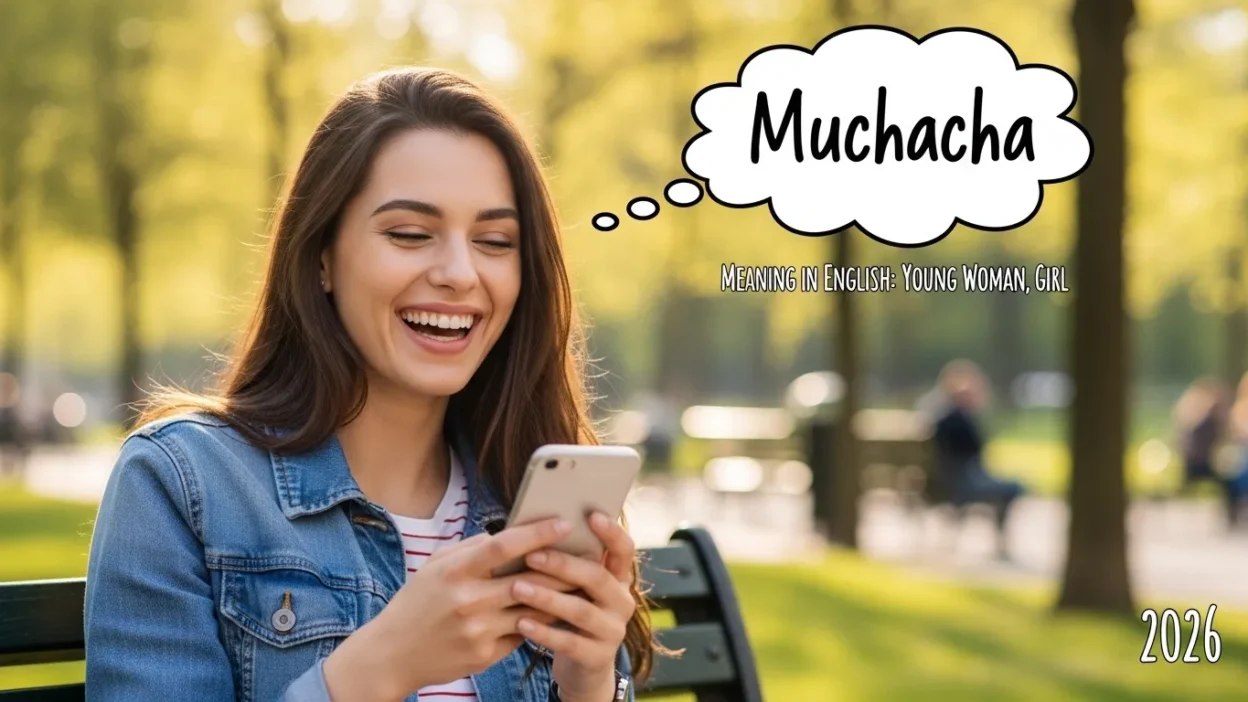
Spanish is full of beautiful words that carry culture, history, and emotion, and one of the most commonly heard is “muchacha.” If you’ve heard it in a song, seen it in a TikTok caption, or come across it while learning Spanish, you might be wondering, “What does muchacha actually mean?”
At its core, muchacha is a feminine noun that typically refers to a young girl or young woman, but its meaning can vary slightly depending on context, country, and tone.
It’s a word used in everyday conversation, music, and even literature, making it a versatile part of the Spanish language.
In this article, we’ll break down the meaning of muchacha, explain how to pronounce it correctly, explore its use in different Spanish-speaking countries, compare it with similar words like chica and muchacho, and provide examples so you can use it naturally in conversation.
Muchacha Meaning in Spanish
The word “muchacha” is a common feminine noun in Spanish that generally refers to a young girl or young woman. It comes from the same root as “muchacho,” which is the masculine form used for boys. In most Spanish-speaking countries, muchacha is used to describe a girl who is typically in her teenage years or early adulthood. Unlike formal words such as señorita or dama, muchacha is more casual and conversational, making it a word often heard in daily life rather than in formal writing.
For example, parents might refer to their daughters as muchacha at home, or a teacher could use it when speaking to students, although this is more common in certain regions like Mexico, Colombia, and Argentina. It’s important to note that muchacha is feminine, so it should never be used for boys. Its usage can also vary depending on tone and context sometimes it conveys affection, and in other cases, it is purely descriptive.
In some areas, muchacha can have a slightly old-fashioned feel compared to chica, which is more commonly used today to refer to girls in general. However, muchacha still appears frequently in literature, songs, and everyday conversation, making it a versatile and culturally rich word. Understanding it fully will help learners speak Spanish naturally and appreciate the nuance in its usage.
Muchacha Meaning in English
In English, the word “muchacha” is most commonly translated as “girl” or “young woman.” The exact meaning depends on context, tone, and the age of the person being referred to. For example, when talking about a teenage female, muchacha can simply mean “girl,” whereas when referring to an older teen or young adult, it can lean more toward “young woman” or “young lady.”
It’s important to understand that muchacha is always feminine, so there is no masculine equivalent except for muchacho, which refers to boys or young men. Unlike words like woman or lady in English, which are more formal, muchacha has a casual, everyday tone, making it suitable for conversation, songs, storytelling, or informal writing.
In English translations, context is key. For example:
- “La muchacha está estudiando” → “The girl is studying.”
- “Esa muchacha es muy simpática” → “That young woman is very nice.”
Sometimes, English speakers may confuse muchacha with slang terms or affectionate nicknames. While it’s not slang, in some social or romantic contexts, calling someone “muchacha” can carry a playful or flirtatious tone—especially in songs or casual messaging.
Understanding the English equivalent of muchacha helps learners grasp not only its literal meaning but also the cultural nuances behind its usage, so they can use it naturally and correctly in conversation.
What Does Muchacha Mean in Different Contexts?
The meaning of “muchacha” can slightly change depending on the context in which it is used. While its basic definition is “girl” or “young woman,” context shapes how the word is understood, whether in conversation, literature, or music.
1. Muchacha as “Girl”
In everyday conversation, muchacha often refers to a girl in her childhood or teenage years. For example, a parent might say, “La muchacha está jugando en el patio” – “The girl is playing in the yard.” This is a neutral, descriptive use with no particular emotional tone.
2. Muchacha as “Young Woman”
When referring to older teens or young adult females, muchacha leans toward “young woman” or “young lady.” For example, in Colombia or Mexico, someone might say, “Esa muchacha trabaja muy duro” – “That young woman works very hard.” Here, the word emphasizes youth while remaining respectful and casual.
3. Muchacha in Romantic or Playful Contexts
In songs, movies, or texting, muchacha can take on a playful, flirtatious, or affectionate tone. For example, a song lyric like “Ay, muchacha, qué linda eres” translates to “Oh girl, how beautiful you are,” showing admiration or romantic interest. This usage is informal and often culturally influenced.
4. Regional Variations
Different Spanish-speaking countries may use muchacha more commonly than others. In some areas, it is slightly old-fashioned compared to chica, while in others, it remains widely used in daily conversation.
By understanding these contextual differences, learners can use muchacha accurately, whether speaking, writing, or interpreting Spanish media.
Muchacha Pronunciation (Correct Way to Say It)
Pronouncing “muchacha” correctly is essential for sounding natural in Spanish and being understood clearly. The word is made up of three syllables: mu-cha-cha, with the stress on the second syllable. Phonetically, it is pronounced as:
/moo-ˈcha-cha/
Here’s a breakdown to make it easier:
- Mu – sounds like “moo” in English, as in “moon.”
- Cha – sounds like “cha” in “charm,” but with a short, crisp “a.”
- Cha – the final syllable is pronounced the same way as the middle one.
So when you put it together, it sounds like “moo-CHA-cha”, with emphasis on the middle syllable.
Common Pronunciation Mistakes
- Overemphasizing the first syllable – saying MOO-cha-cha instead of moo-CHA-cha.
- Pronouncing the “ch” as “sh” – saying moo-SHA-cha, which is incorrect in Spanish.
- Shortening the vowels too much – Spanish vowels are always clear and pure, unlike English, where they can be reduced.
Tips for Practicing
- Repeat slowly: mu – cha – cha, then combine naturally.
- Listen to native speakers in songs or videos and mimic the sound.
- Practice in phrases like: “La muchacha es simpática” – “The girl is nice.”
Mastering the pronunciation helps you sound confident and fluent, especially when using the word in conversation, texting, or listening to Spanish music.
Is Muchacha Formal or Informal?
Understanding whether “muchacha” is formal or informal is key to using it correctly in conversation. Generally, muchacha is considered informal or semi-casual, meaning it is appropriate for everyday speech, friendly interactions, or descriptive contexts, but not for highly formal situations.
For example, a parent might say:
“La muchacha está en la escuela” – “The girl is at school.”
This is neutral and casual, perfectly normal in daily conversation.
Comparison with Formal Words
- Señorita – A formal term for a young woman, often used politely or in professional situations.
- Dama – A more respectful, elegant term for a woman, usually older or in formal writing.
Using muchacha instead of señorita or dama shows familiarity and casualness, but it can sound slightly old-fashioned depending on the region.
Regional Differences
In some Spanish-speaking countries like Mexico, Colombia, and Argentina, muchacha is commonly used in informal speech without sounding rude. In Spain, however, the word may feel less common and slightly outdated, with speakers preferring chica for casual situations.
When to Avoid Using Muchacha
- Formal letters or professional emails
- Addressing adult women in professional settings
- Situations where respect or hierarchy matters
In summary, muchacha is informal, friendly, and versatile, perfect for conversation, storytelling, and cultural contexts like music or social media. Knowing the tone of the word ensures that you use it naturally and appropriately without accidentally sounding disrespectful or out of place.
Is Muchacha a Slang Word?
One common question for learners of Spanish is whether “muchacha” is slang. The short answer is: no, muchacha is not slang in standard Spanish. It is a normal, everyday feminine noun that refers to a young girl or young woman. Unlike slang terms that vary by region, social group, or age, muchacha has a clear, widely understood meaning across Spanish-speaking countries.
However, the tone and context can make it feel playful, affectionate, or even flirtatious in some situations. For example, in songs or romantic messages, a phrase like “Ay, muchacha, eres hermosa” (“Oh girl, you are beautiful”) can convey a sense of intimacy or charm, which may seem “slang-like” to English speakers. But grammatically and culturally, it remains a standard word.
Regional and Cultural Nuances
- In Mexico, Colombia, and Argentina, muchacha is very common in everyday conversation.
- In Spain, it is less frequently used in modern speech, with chica being preferred.
- Online or in texting, calling someone muchacha can sound playful or casual, but this is not considered slang—it’s still proper Spanish.
Key Takeaway
- Muchacha = standard Spanish word
- Not slang, but can take on a friendly or affectionate tone
- Context determines if it feels playful, romantic, or purely descriptive
Understanding this distinction is crucial for learners, because mislabeling muchacha as slang could lead to misunderstandings about its tone or appropriateness in different situations.
Muchacha Meaning in Texting and Social Media
In today’s digital world, Spanish words often take on slightly different shades of meaning online, and “muchacha” is no exception. While it is a standard Spanish word, in texting, social media, or messaging apps, it can carry a playful, casual, or even flirtatious tone depending on how it’s used.
For example, someone might send a message like:
“Hola muchacha 😏” – “Hey girl 😏”
Here, the word is friendly and informal, often signaling familiarity or affection. Emojis and punctuation can further influence the tone, making it sound flirty, cute, or joking.
How Muchacha Appears Online
- Captions on Instagram or TikTok: Used to refer to friends or a young woman in a fun or stylish way.
- Memes: Often paired with humorous or playful phrases.
- Flirty Messages: Can be a way to compliment someone without using overly formal words.
Tips for Using Muchacha in Texting
- Keep it casual—avoid using it with someone you don’t know well.
- Consider emojis to match the tone, like 😄, 😏, or 💃.
- Be aware of regional differences: in some countries, the word might sound slightly old-fashioned or more neutral.
Key Takeaway
Even online, muchacha remains a standard word, not slang, but its casual and affectionate undertones make it versatile for modern texting and social media. Using it appropriately helps learners sound friendly, culturally aware, and natural in digital conversations.
Muchacha Meaning in Songs and Pop Culture
The word “muchacha” is widely used in Latin music, movies, and popular culture, making it a familiar term even for people who don’t speak Spanish fluently. In songs, it often conveys youth, beauty, affection, or admiration, and is frequently used in romantic or playful contexts. For example, lyrics like “Ay, muchacha, qué linda eres” translate to “Oh girl, how beautiful you are,” showing admiration or love.
In pop culture, muchacha appears in movies, TV shows, and telenovelas as a natural way to refer to a young woman. It is often used to set a scene or describe a character’s youth, innocence, or charm. For instance, a character might be introduced as “la muchacha del barrio” (“the girl from the neighborhood”), giving context about her age and social background.
Why Muchacha is Popular in Songs
- The word has a melodic sound that fits well in lyrics.
- It conveys emotion easily, whether romantic, nostalgic, or playful.
- Its casual tone allows singers to connect with listeners in a familiar way.
Fun Fact
Some famous Latin songs and artists, including reggaeton and pop tracks, use muchacha repeatedly, helping the word reach international audiences. Non-Spanish speakers often pick it up through music, making it a recognizable term even outside Spanish-speaking communities.
Key Takeaway
Knowing how muchacha is used in songs and pop culture helps learners understand its emotional and cultural nuances. It’s more than just a word—it carries context, tone, and feeling that textbooks alone can’t teach.
Muchacha vs Chica (Key Differences Explained)
A common question for Spanish learners is the difference between “muchacha” and “chica”, since both words can refer to a girl or young woman. While they are similar, understanding the nuance helps you sound more natural in conversation.
1. Meaning Difference
- Muchacha: Typically refers to a girl or young woman, often emphasizing youth or innocence. It can feel slightly traditional or old-fashioned depending on the region.
- Chica: More commonly used today in casual Spanish for “girl” or “young woman.” It’s widely used in modern conversation across Spain and Latin America.
2. Tone and Usage
- Muchacha has a semi-casual tone and can sometimes feel affectionate or descriptive, often used in songs, literature, or storytelling.
- Chica is completely neutral and highly versatile, suitable for daily conversation, texting, or casual descriptions.
3. Regional Differences
- In Mexico, Colombia, and Argentina, muchacha is still widely used and understood.
- In Spain, people almost always use chica instead of muchacha in modern speech.
4. Practical Example
- “La muchacha está estudiando en la biblioteca” → “The girl (young woman) is studying in the library.”
- “La chica está estudiando en la biblioteca” → “The girl is studying in the library.”
Both are correct, but chica sounds more contemporary, while muchacha gives a slightly traditional or narrative feel.
Key Takeaway
- Use muchacha for storytelling, songs, or a slightly traditional tone.
- Use chica for casual, everyday conversation.
Muchacho vs Muchacha (Masculine vs Feminine Form)
In Spanish, nouns often have masculine and feminine forms, and muchacho and muchacha are a perfect example. Understanding the difference is essential for speaking correctly and avoiding confusion.
1. Meaning
- Muchacho: Refers to a boy or young man, typically a teenager or young adult.
- Muchacha: Refers to a girl or young woman, usually in the same age range.
Both words convey youth and can be used in everyday conversation, storytelling, or music.
2. Gender Rules
Spanish nouns ending in -o are usually masculine, while nouns ending in -a are feminine. Therefore:
- El muchacho → The boy / young man
- La muchacha → The girl / young woman
3. Plural Forms
- Los muchachos → The boys / group of young men
- Las muchachas → The girls / group of young women
4. Usage in Sentences
- “El muchacho juega al fútbol en el parque” → “The boy is playing soccer in the park.”
- “La muchacha estudia en la biblioteca” → “The girl is studying in the library.”
5. Tone and Context
Both words are casual and descriptive. They are suitable for conversation, literature, and songs. Like muchacha, muchacho can sometimes carry a playful or affectionate tone depending on context.
Key Takeaway
- Muchacho = boy / young man
- Muchacha = girl / young woman
- Use the appropriate form for gender, and remember that both words are casual, everyday Spanish terms, not slang.
Is Muchacha Romantic or Flirty?
While “muchacha” is a standard Spanish word meaning “girl” or “young woman,” its tone can change depending on context. In certain situations, it can carry a playful, flirtatious, or romantic vibe, especially in songs, movies, or casual conversations.
1. Romantic or Flirty Tone
When used in a compliment or affectionate phrase, muchacha can sound charming. For example:
“Ay, muchacha, qué bonita eres” → “Oh girl, how beautiful you are.”
Here, the word expresses admiration or romantic interest in a casual, friendly way. The tone of voice and body language often enhance this effect.
2. Context Matters
- Songs and pop culture: Muchacha is commonly used to convey flirtation, admiration, or nostalgia.
- Casual texting: A friend or partner may say “Hola, muchacha 😏”, giving the word a playful, intimate tone.
- Formal situations: Using muchacha in a professional or formal setting could be inappropriate if it is interpreted as overly familiar or flirtatious.
3. Tips for Using Muchacha Romantically
- Only use with someone you know well or in a casual setting.
- Add context like emojis or tone indicators to ensure the intent is clear.
- Avoid using it with strangers, as it may seem too familiar or informal.
Key Takeaway
- Muchacha can be affectionate or flirty, but it is not inherently romantic.
- Its tone depends entirely on context, relationship, and delivery.
- Knowing how to use it correctly helps learners communicate naturally in both friendly and playful Spanish settings.
Can Muchacha Be Offensive?
While “muchacha” is generally a neutral and standard Spanish word, it can be perceived as offensive or inappropriate in certain contexts. Understanding when and how to use it is important to avoid misunderstandings.
1. Age and Respect
Using muchacha to refer to an adult woman can sometimes sound patronizing or disrespectful, especially if she is significantly older than a teenager or young adult. For example, calling a 40-year-old woman muchacha may be interpreted as minimizing her maturity.
2. Tone and Context
The tone of voice, body language, and relationship between the speaker and listener are crucial. In casual conversation among friends or family, muchacha is usually harmless, but in formal or professional settings, it can appear too familiar or informal.
3. Regional Differences
- In Latin America, muchacha is widely accepted for girls and young women, though context still matters.
- In Spain, it is less common and may sound slightly old-fashioned or unusual in modern speech.
4. Online or Flirty Usage
When used in texting or social media in a flirtatious way, muchacha may be playful, but if the recipient does not know the sender well, it could be misinterpreted as overly familiar or disrespectful.
Key Takeaway
- Muchacha is not inherently offensive, but using it in the wrong context or with the wrong age group can make it sound disrespectful.
- To avoid offense, reserve it for casual conversation, storytelling, music, or addressing younger women, and always consider tone and relationship.
How to Use Muchacha in a Sentence (Real Examples)
Using “muchacha” correctly in sentences is the best way to understand its meaning, tone, and context. Below are several examples for different situations.
1. Everyday Conversation
- “La muchacha está jugando en el patio.” → “The girl is playing in the yard.”
- “La muchacha compró un libro nuevo.” → “The girl bought a new book.”
These sentences show neutral, descriptive usage, perfect for daily conversation.
2. Romantic or Flirty Context
- “Ay, muchacha, qué hermosa eres.” → “Oh girl, how beautiful you are.”
- “Hola, muchacha 😏, ¿cómo estás?” → “Hey girl 😏, how are you?”
Here, muchacha conveys affection or admiration, often enhanced by tone, emojis, or body language.
3. Formal or Polite Context
While muchacha is generally informal, it can still appear in polite statements when describing someone respectfully:
- “La muchacha de la biblioteca es muy inteligente.” → “The young woman in the library is very intelligent.”
4. Fun or Playful Social Media Use
- “Esa muchacha siempre hace reír a todos.” → “That girl always makes everyone laugh.”
- “La muchacha del TikTok es trending hoy.” → “The TikTok girl is trending today.”
These examples show how muchacha works casually online or in lighthearted conversation.
Key Takeaway
By practicing these examples, learners can use muchacha naturally, understand its tone, and adjust it for descriptive, friendly, playful, or slightly flirtatious situations.
Common Spanish Phrases Using Muchacha
The word “muchacha” often appears in common Spanish phrases that help convey emotion, description, or emphasis. Learning these phrases makes it easier to use the word naturally in conversation, music, or social media.
1. Esa muchacha
- Meaning: “That girl”
- Example: “Esa muchacha es muy simpática” → “That girl is very nice.”
Used to refer to a specific girl, often to describe her personality or actions.
2. Muchacha bonita
- Meaning: “Pretty girl” / “Beautiful young woman”
- Example: “Hola, muchacha bonita, ¿cómo estás?” → “Hello, pretty girl, how are you?”
This phrase is friendly or flirtatious, depending on tone.
3. Oye muchacha
- Meaning: “Hey girl”
- Example: “Oye muchacha, ven aquí un momento.” → “Hey girl, come here for a moment.”
Used to get someone’s attention in casual conversation.
4. Pobre muchacha
- Meaning: “Poor girl”
- Example: “Pobre muchacha, tuvo un día difícil.” → “Poor girl, she had a tough day.”
Used to express sympathy or concern.
5. Muchacha joven
- Meaning: “Young girl” / “Young woman”
- Example: “La muchacha joven es muy inteligente.” → “The young woman is very intelligent.”
Emphasizes youth and can sound slightly formal or descriptive.
Key Takeaway
Using these common phrases helps learners communicate naturally and understand cultural nuances. Whether descriptive, playful, affectionate, or sympathetic, these expressions show the versatility of muchacha in everyday Spanish.
Muchacha Meaning in Different Spanish-Speaking Countries
The word “muchacha” is widely understood across the Spanish-speaking world, but its usage and popularity vary by country. Knowing these differences helps learners speak naturally and avoid sounding outdated or unfamiliar.
1. Mexico
In Mexico, muchacha is commonly used in daily conversation to refer to girls and young women. It is often affectionate and descriptive, though in casual speech, chica may be used more frequently among younger people.
2. Colombia
Colombians frequently use muchacha for teenage girls and young women, especially in informal settings. It carries a friendly tone and can also appear in songs or storytelling.
3. Argentina
Muchacha is widely recognized in Argentina and retains a traditional feel, often used in narratives, songs, and casual conversation. It can sound slightly old-fashioned in very modern speech, but it is still perfectly acceptable.
4. Spain
In Spain, muchacha is less common in contemporary speech. Spaniards often prefer chica for everyday conversation. Using muchacha in Spain may sound slightly formal, literary, or old-fashioned.
5. Caribbean Countries (Cuba, Puerto Rico, Dominican Republic)
In these regions, muchacha is still used, especially in rural or traditional contexts. It conveys youth, familiarity, or affection, and it appears frequently in music, particularly in salsa, merengue, and reggaeton lyrics.
Key Takeaway
While muchacha is universally understood, its frequency and nuance differ across countries. It is important to consider regional preferences, using it naturally in Mexico, Colombia, or Argentina, and leaning toward chica in Spain. Awareness of these differences ensures accurate, culturally sensitive communication in Spanish.
Muchacha in Literature and Classic Spanish
The word “muchacha” has a long history in Spanish literature and classical texts, giving it a slightly traditional or literary feel compared to modern alternatives like chica. Authors often used it to describe young women in novels, poems, and stories, emphasizing youth, innocence, or charm.
1. Narrative Descriptions
In classic Spanish literature, you might find phrases like:
- “La muchacha del pueblo era conocida por su bondad” → “The girl from the village was known for her kindness.”
Here, muchacha conveys not only age but also a descriptive, almost poetic quality, adding depth to the character.
2. Romantic or Poetic Usage
Poets and songwriters often use muchacha to create a soft, affectionate tone. Its melodic syllables make it suitable for romantic or sentimental writing:
- “Oh, muchacha de mis sueños, ven a mí” → “Oh, girl of my dreams, come to me.”
This usage shows how the word can carry emotion and nostalgia beyond its literal meaning.
3. Cultural Significance
Because of its frequent use in classic texts, muchacha can feel slightly old-fashioned to modern ears. However, its literary heritage gives it a richness that learners can appreciate when reading older novels, poems, or listening to traditional songs.
4. Key Takeaway
- Muchacha adds a literary or poetic flavor in writing.
- It conveys youth, innocence, and charm more vividly than modern casual words like chica.
- Knowing its use in literature helps learners understand cultural nuance, recognize its role in storytelling, and appreciate Spanish-language media beyond casual conversation.
Similar Words to Muchacha (Synonyms)
Understanding synonyms for muchacha helps Spanish learners expand their vocabulary and choose the most appropriate word for each context. While muchacha specifically refers to a young girl or young woman, several other words convey similar meanings with subtle differences in tone, formality, and region.
1. Chica
- Meaning: Girl or young woman
- Usage: Casual, everyday conversation
- Example: “La chica está en la tienda” → “The girl is at the store.”
Chica is more modern and widely used across Spain and Latin America.
2. Niña
- Meaning: Little girl or child
- Usage: Refers to younger girls, typically under teenage years
- Example: “La niña juega en el parque” → “The little girl is playing in the park.”
3. Señorita
- Meaning: Young lady, Miss
- Usage: Polite or formal, often respectful
- Example: “La señorita Gómez es muy amable” → “Miss Gómez is very kind.”
4. Jovencita
- Meaning: Young girl or young woman
- Usage: Slightly affectionate, emphasizes youth
- Example: “La jovencita está aprendiendo a bailar” → “The young girl is learning to dance.”
5. Dama
- Meaning: Lady or woman
- Usage: Formal or elegant, often for adults
- Example: “La dama entró en la sala con gracia” → “The lady entered the room gracefully.”
Key Takeaway
While muchacha is versatile and casual, choosing the right synonym depends on age, formality, and tone. Words like chica are casual and modern, señorita or dama are polite or formal, and niña emphasizes childhood. Knowing these alternatives allows learners to express nuance and sound natural in different Spanish contexts.
Antonyms / Opposite Meaning
While “muchacha” refers to a young girl or young woman, understanding its antonyms helps learners express the opposite concepts of age, gender, or maturity in Spanish.
1. Hombre
- Meaning: Man
- Usage: Refers to adult males, the masculine counterpart of “woman”
- Example: “El hombre trabaja en la oficina” → “The man works in the office.”
- Opposite aspect: Gender
2. Muchacho
- Meaning: Boy or young man
- Usage: Refers to young males, roughly equivalent in age to muchacha
- Example: “El muchacho juega en el parque” → “The boy is playing in the park.”
- Opposite aspect: Gender, but same age group
3. Adulto / Adulta
- Meaning: Adult
- Usage: Refers to fully grown men or women, emphasizing maturity rather than youth
- Example: “El adulto tomó decisiones importantes” → “The adult made important decisions.”
- Opposite aspect: Age
4. Señor / Señora
- Meaning: Mister / Mrs.
- Usage: Polite or formal term for adults
- Example: “El señor Gómez es profesor” → “Mr. Gómez is a teacher.”
- Opposite aspect: Age, formality
Key Takeaway
- Muchacha focuses on young, feminine individuals, while antonyms can reflect gender, maturity, or adulthood.
- Using the correct antonym ensures clear communication and avoids misunderstandings when describing people.
- Recognizing both synonyms and antonyms enriches your Spanish vocabulary, allowing more precise and natural expression in conversation, writing, and media.
Common Mistakes People Make With Muchacha
Even though “muchacha” is a simple word, learners of Spanish often make mistakes when using it. Being aware of these common errors can help you use the word naturally and appropriately.
1. Using Muchacha for Men
One of the most frequent mistakes is confusing muchacha with muchacho. Remember:
- Muchacha = girl / young woman
- Muchacho = boy / young man
Example mistake: “El muchacha está jugando” → ❌ Incorrect, because it refers to a male.
2. Using Muchacha for Older Women
Calling an adult woman muchacha can sound disrespectful or patronizing, especially in formal settings. It is best reserved for teenagers or young women.
3. Pronunciation Errors
- Mispronouncing the stressed syllable: saying MOO-cha-cha instead of moo-CHA-cha.
- Confusing “ch” with “sh”: saying moo-SHA-cha, which is incorrect in Spanish.
4. Confusing With Similar Words
- Mucha or mucho → meaning “a lot” or “much,” not a person.
Example mistake: “Mucha está jugando” → ❌ Incorrect. - Chica → similar meaning, but may be more natural in modern speech in some countries.
5. Incorrect Plural Usage
- Singular: muchacha
- Plural: muchachas
Mistake: using muchacha for multiple girls without changing the ending.
Key Takeaway
By avoiding these mistakes, learners can use muchacha confidently in speech, writing, songs, and social media. Focus on correct gender, age, pronunciation, and plural forms to sound natural and culturally aware.
Grammar Guide: Gender and Plural of Muchacha
In Spanish, nouns have gender and number, and understanding these rules is essential for using muchacha correctly.
1. Gender
- Muchacha is a feminine noun, used to refer to girls or young women.
- Its masculine counterpart is muchacho, used for boys or young men.
- Example:
- La muchacha juega en el parque → “The girl is playing in the park.”
- El muchacho juega en el parque → “The boy is playing in the park.”
2. Articles with Muchacha
Spanish nouns are usually paired with definite or indefinite articles:
- Definite articles: la muchacha → “the girl”
- Indefinite articles: una muchacha → “a girl”
These articles must match the gender and number of the noun.
3. Plural Form
- To make muchacha plural, add -s:
- Singular: la muchacha → “the girl”
- Plural: las muchachas → “the girls”
- Masculine plural: los muchachos → “the boys”
- Indefinite plural: unas muchachas → “some girls”
4. Adjective Agreement
Adjectives must also match the gender and number:
- La muchacha bonita → “The pretty girl”
- Las muchachas bonitas → “The pretty girls”
- Masculine: El muchacho alto → “The tall boy”
Key Takeaway
- Muchacha is feminine, so always use feminine articles and adjectives.
- The plural is muchachas, and adjectives must match both gender and number.
- Mastering these rules ensures proper grammar and helps you speak and write naturally in Spanish.
Muchacha Meaning in Urdu / Hindi (Bonus Section)
For readers from Pakistan, India, or Hindi/Urdu-speaking regions, understanding muchacha in your native language makes it easier to grasp its meaning and use it naturally in Spanish.
1. Muchacha Meaning in Urdu
- Muchacha translates to لڑکی (larki) or نوجوان لڑکی (naujawan larki).
- لڑکی (larki) = girl, generally used for children or teenagers.
- نوجوان لڑکی (naujawan larki) = young woman, typically a teenager or young adult.
Example: - La muchacha estudia en la escuela → “وہ لڑکی اسکول میں پڑھ رہی ہے”
2. Muchacha Meaning in Hindi
- Muchacha translates to लड़की (ladki) or युवती (yuvati).
- लड़की (ladki) = girl, commonly used for children and teens.
- युवती (yuvati) = young woman, emphasizing youth.
Example: - Esa muchacha es muy inteligente → “वह युवती बहुत बुद्धिमान है”
3. Contextual Nuances
- Just like in Spanish, the word is not slang in Urdu or Hindi.
- Using it for a much older woman may sound disrespectful or unusual.
- It conveys youth and femininity, whether in everyday conversation, literature, or media.
4. Key Takeaway
Knowing the Urdu or Hindi equivalent of muchacha helps learners quickly understand its meaning and cultural context. It’s a useful bridge for beginners to connect Spanish words to their native language, making it easier to remember and use correctly.
Quick Summary Box (TL;DR)
Here’s a concise overview of everything you need to know about muchacha
Meaning
- Muchacha = young girl or young woman in Spanish.
- Feminine noun; masculine form is muchacho.
- Neutral, casual, and versatile—used in conversation, music, literature, and social media.
Pronunciation
- Phonetic: /moo-ˈcha-cha/
- Stress on the second syllable: moo-CHA-cha
- Common mistakes: overemphasizing first syllable or pronouncing “ch” as “sh.”
Context & Tone
- Everyday conversation: descriptive, neutral.
- Romantic or playful: affectionate, flirty, often in songs or texting.
- Formal: not recommended for professional or adult situations.
- Regional differences:
- Mexico, Colombia, Argentina → commonly used
- Spain → less common; chica preferred
Grammar
- Feminine: la muchacha, plural las muchachas
- Articles and adjectives must match gender and number:
- La muchacha bonita → “The pretty girl”
- Las muchachas bonitas → “The pretty girls”
Synonyms
- Chica, niña, jovencita, señorita, dama
Antonyms / Opposites
- Muchacho, hombre, adulto, señor/señora
Cultural Notes
- Appears in literature, pop culture, songs
- Can convey affection, admiration, or nostalgia
- Not slang, but tone and context matter
Urdu / Hindi Meaning
- Urdu: لڑکی (larki) / نوجوان لڑکی (naujawan larki)
- Hindi: लड़की (ladki) / युवती (yuvati)
Key Takeaway:
Muchacha is a versatile, culturally rich word that conveys youth and femininity. Use it in casual conversation, storytelling, songs, or playful texting, and pay attention to context, tone, and regional usage.
FAQs About Muchacha Meaning
Here are some frequently asked questions about the word muchacha, covering its meaning, usage, and cultural nuances.
1. What does muchacha mean?
Muchacha is a feminine Spanish noun meaning girl or young woman. It refers to teenage girls or young adults and is casual, not slang.
2. How do you pronounce muchacha?
Pronounced /moo-ˈcha-cha/, with the stress on the second syllable: moo-CHA-cha. Avoid pronouncing the “ch” as “sh” or overemphasizing the first syllable.
3. Is muchacha formal or informal?
Muchacha is informal and friendly. It is suitable for casual conversation, storytelling, songs, or social media but not ideal for professional or formal contexts.
4. Can muchacha be romantic or flirty?
Yes, in playful, affectionate, or romantic contexts, especially in songs or texting. For example: “Hola muchacha 😏” is flirty, but tone and relationship matter.
5. What is the masculine form of muchacha?
The masculine form is muchacho, meaning boy or young man.
6. Is muchacha slang?
No, muchacha is a standard Spanish word, though context can make it sound playful or flirtatious.
7. How is muchacha used in different countries?
- Mexico, Colombia, Argentina → commonly used in casual speech.
- Spain → less common; chica is preferred in modern speech.
8. What are synonyms of muchacha?
Common synonyms: chica, niña, jovencita, señorita, dama.
Key Takeaway:
Muchacha is a versatile word for describing girls or young women. Understanding pronunciation, context, and regional usage ensures you use it naturally and correctly in conversation, writing, and media.
Conclusion
The word “muchacha” is a versatile and culturally rich term in the Spanish language, used to describe a girl or young woman. Its meaning may seem simple at first, but understanding its nuances, pronunciation, tone, and regional variations is key to using it naturally and confidently.
From everyday conversation to literature, music, and social media, muchacha appears in a variety of contexts, each carrying a slightly different emotional or cultural weight.
Key Points to Remember
- Gender and Number: Muchacha is feminine; its plural form is muchachas. The masculine counterpart is muchacho.
- Pronunciation: Stress the second syllable: moo-CHA-cha. Proper pronunciation helps you sound fluent.
- Context: Casual, friendly, and versatile; can be playful or flirtatious but is not formal.
- Regional Differences: Common in Mexico, Colombia, and Argentina; less frequent in Spain, where chica is preferred.
- Cultural Use: Appears in songs, pop culture, literature, and storytelling, giving it emotional or poetic depth.
- Synonyms and Antonyms: Synonyms include chica, niña, jovencita, señorita, and dama. Antonyms include muchacho, hombre, and adulto/adulta.
Whether you’re learning Spanish for conversation, travel, or understanding media, muchacha is a foundational word that captures youth, femininity, and a touch of cultural flair.
By mastering its correct usage, pronunciation, and context, you’ll be able to speak naturally, appreciate Spanish media, and connect with native speakers more confidently.
In short, muchacha is more than a word it’s a window into Spanish language and culture, showing how a single term can carry meaning, tone, and emotion depending on how it’s used.

Welcome to TextFlirtz.com, your ultimate destination for fun, flirty, and clever pick-up lines that spark conversations and make hearts skip a beat! Whether you’re looking to impress your crush, add some humor to your chats, or just have a playful time texting, we’ve got you covered with lines that are witty, spicy, and unforgettable. Dive in, explore our collections, and start flirting the smart way—because at TextFlirtz.com, words are your best wingman!