

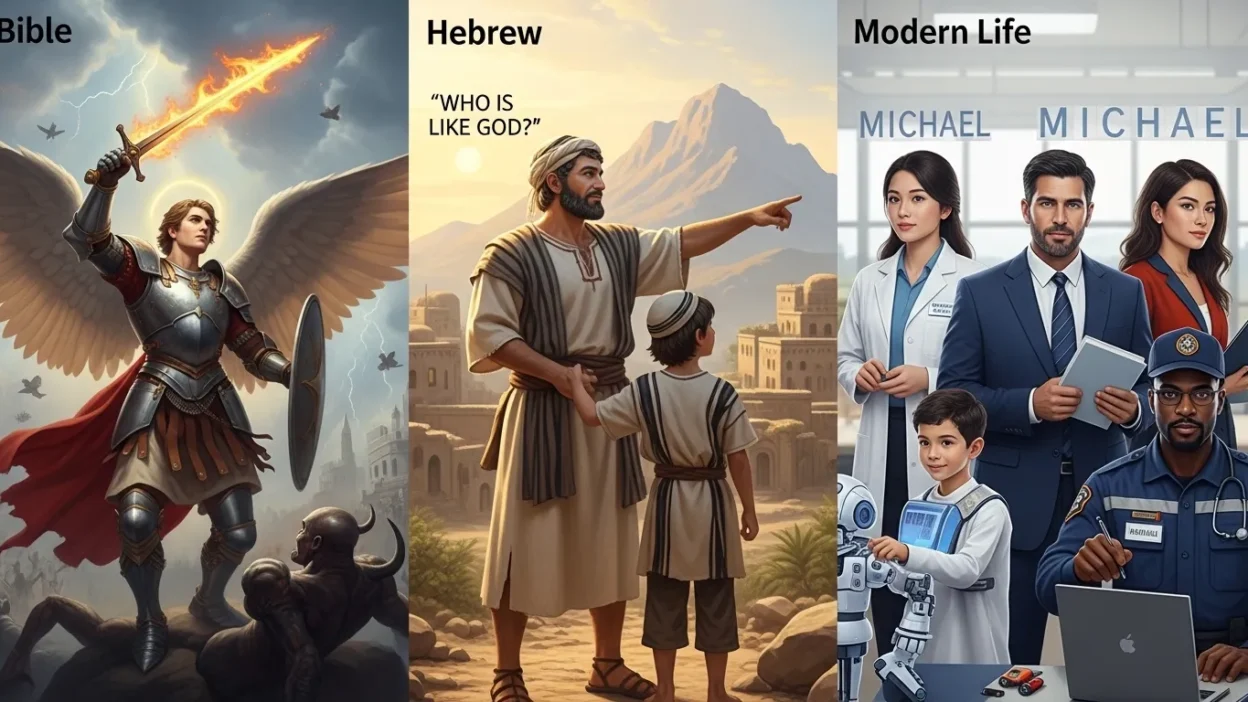
The name Michael is one of the most timeless and widely recognized names in the world. With roots deeply embedded in history, religion, and culture, Michael name meaning carries a powerful significance that resonates across generations.
Originating from the Hebrew name Mikha’el, it literally translates to “Who is like God?”, reflecting a rhetorical question that emphasizes divine uniqueness. This name is not only prominent in the Bible, associated with the Archangel Michael, but also admired for its spiritual and symbolic meaning, representing strength, protection, and leadership.
Whether you are curious about the meaning of the name Michael, exploring its biblical and spiritual significance, or considering it for a baby, understanding its origins, personality traits, and historical relevance provides a deeper appreciation of this classic name.
In this guide, we will explore every aspect of Michael from its Hebrew roots to famous people and cultural variations giving you a complete understanding of this iconic name.
What Does the Name Michael Mean?
The name Michael has a rich and meaningful origin that dates back thousands of years. Derived from the Hebrew name Mikha’el (מִיכָאֵל), its literal translation is “Who is like God?”. This is not just a simple meaning it’s a rhetorical question that emphasizes the uniqueness and unmatched greatness of God. In other words, the name carries a sense of reverence, humility, and divine acknowledgment, which is why it has remained so significant in religious and cultural contexts.
Breaking down the Hebrew components, Mi means “Who,” Kha means “like,” and El refers to “God.” Together, they form a powerful phrase that has inspired generations. The name Michael has been used throughout history to signify strength, leadership, and protection. It is closely associated with the Archangel Michael, who is recognized in Judaism, Christianity, and Islam as a warrior and protector against evil.
In daily life, the name Michael is often linked to individuals who are determined, confident, and loyal. Its timeless appeal makes it a popular choice for parents across the world. From biblical figures to modern celebrities, the name Michael has maintained its prominence and continues to symbolize courage, integrity, and devotion. Understanding the meaning of Michael allows us to appreciate not just the name itself but the qualities and symbolism it represents.
Origin and Historical Background
The name Michael has a long and fascinating history that spans multiple cultures and religions. Its roots are found in ancient Hebrew, where Mikha’el first appeared as a name expressing devotion and reverence to God. In this context, it wasn’t just a personal name but a meaningful phrase “Who is like God?” used to honor divine supremacy. This origin reflects the deep spiritual significance the name has carried for centuries, making it a popular choice in religious communities from the very beginning.
As Christianity spread across Europe, the name Michael gained further prominence. It became closely associated with the Archangel Michael, a powerful figure in the Bible known for defending God’s people and leading the heavenly armies against evil. This association with courage, protection, and leadership helped the name Michael become one of the most revered and commonly used names in medieval Europe. Nobles and clergy often chose the name for its strong spiritual and moral connotations.
Michael also appears in Islamic tradition as Mikail, an angel who delivers God’s mercy and blessings to humanity. This demonstrates the cross-cultural appeal of the name, connecting it to spiritual guardianship and divine service in multiple faiths. Over time, the name evolved into various forms across languages like Miguel in Spanish, Mikhail in Russian, and Michel in French yet its core meaning and historical significance have remained intact. Understanding the origin of Michael highlights why it continues to be a timeless and universally respected name.
Biblical Significance of Michael
The name Michael holds profound significance in the Bible, primarily through its association with the Archangel Michael, one of the most powerful and revered angels in Judeo-Christian tradition. In the Old Testament, Michael appears in the Book of Daniel as a protector of Israel, described as a warrior who defends God’s people during times of spiritual and physical conflict. This early depiction establishes Michael as a symbol of divine strength and loyalty.
In the New Testament, Michael is mentioned in the Book of Revelation as the leader of God’s heavenly armies in the ultimate battle against evil forces. He represents courage, justice, and unwavering faith in God’s plan. Michael’s role as a spiritual warrior highlights the protective and guiding aspects of his character, making the name synonymous with leadership and divine guardianship.
Additionally, the Book of Jude briefly refers to Michael disputing with Satan over the body of Moses, showcasing his authority and righteous power. These biblical references collectively portray Michael as a defender of truth, a protector against evil, and a figure of moral integrity.
For believers, naming a child Michael is more than a tradition it is a tribute to these qualities of courage, protection, and devotion. Beyond the Bible, Michael’s symbolism extends into Christian art, literature, and liturgy, where he is often depicted as a strong, armored figure standing against darkness. Understanding the biblical significance of Michael deepens appreciation for its spiritual weight and timeless influence.
Spiritual and Symbolic Meaning of Michael
Beyond its linguistic and biblical roots, the name Michael carries deep spiritual and symbolic significance. Traditionally, Michael is viewed as a symbol of strength, courage, and protection, largely due to his connection with the Archangel Michael. In spiritual contexts, the name represents leadership, integrity, and divine guidance, making it a powerful choice for anyone seeking a name with meaningful symbolism.
The symbolism of Michael extends to several aspects of life. As a figure of protection, Michael embodies the idea of a guardian someone who defends and supports others in times of difficulty. This protective quality has made the name popular among parents who wish to inspire bravery and responsibility in their children. In many cultures, Michael is also seen as a spiritual warrior, reflecting the values of discipline, justice, and moral courage.
In addition, Michael symbolizes faith and devotion. The rhetorical question “Who is like God?” reminds us of humility and reverence, highlighting the importance of acknowledging a higher power while striving for personal integrity. The name also conveys a sense of leadership, suggesting individuals named Michael may naturally assume roles that require decision-making, guidance, and responsibility.
Culturally, Michael has maintained its spiritual appeal across religions. From Judaism to Christianity and Islam, the name signifies a divine connection and a commitment to righteousness. Understanding the spiritual and symbolic meaning of Michael enriches its value, making it more than just a popular name it becomes a representation of courage, protection, and moral strength that resonates through generations.
Personality Traits Associated with the Name Michael
The name Michael is often associated with distinctive personality traits that reflect the qualities of its biblical and spiritual roots. Individuals named Michael are commonly perceived as strong-willed, confident, and determined, embodying leadership and resilience in both personal and professional life. These traits mirror the protective and courageous symbolism linked to Archangel Michael, making the name synonymous with strength and reliability.
People named Michael are also known for their loyalty and responsibility. They tend to prioritize the well-being of their family, friends, and community, often taking on the role of protector or guide. This natural inclination toward caring for others reinforces the spiritual meaning of Michael as a guardian figure. Their determination is balanced with a sense of integrity, as they value honesty and justice, often striving to do what is morally right.
At the same time, individuals named Michael may exhibit certain challenges, such as stubbornness or a strong need for control, which comes from their determination and leadership tendencies. However, these qualities often fuel their ambition and perseverance, helping them overcome obstacles and achieve goals.
In addition to these traits, numerology and astrology enthusiasts often associate Michael with a sense of purpose and spiritual awareness. People with this name may have a natural inclination toward helping others, standing up for justice, or assuming leadership positions. Overall, the personality traits of Michael reflect a balance of courage, loyalty, and moral integrity, making it a timeless name that inspires respect and admiration across cultures and generations.
Popularity of the Name Michael
The name Michael has enjoyed extraordinary popularity for decades, making it one of the most enduring and recognized names worldwide. In the United States, Michael became particularly prominent in the mid-20th century, consistently ranking among the top male names for boys. Its appeal spans generations, from classic baby naming traditions to modern parents seeking a strong and timeless name. Even today, Michael remains widely used, demonstrating its lasting cultural and social significance.
Globally, Michael has also maintained a strong presence. In the United Kingdom, Canada, and Australia, it has consistently been a favorite choice for parents, while European countries have embraced variations such as Miguel (Spanish), Mikhail (Russian), and Michel (French). Its universal recognition makes it versatile and easily adapted across languages and cultures, which has contributed to its ongoing popularity.
Several factors contribute to Michael’s widespread appeal. Its biblical and spiritual significance offers a sense of protection and strength, while its historical use in European royalty and prominent figures adds prestige. Additionally, its simple pronunciation and memorable sound make it accessible and attractive to parents worldwide.
In modern times, Michael may not always occupy the very top ranks of baby name lists, but its classic charm and cultural weight ensure it continues to be a respected and well-loved choice. Understanding the popularity of the name Michael highlights why it remains a timeless and widely admired name, bridging history, spirituality, and contemporary naming trends.
Variations and International Forms of Michael
The name Michael has inspired numerous variations across different cultures and languages, reflecting its global appeal and timeless significance. In Spanish-speaking countries, the name is commonly rendered as Miguel, while in Russian, it becomes Mikhail, both retaining the original meaning of “Who is like God?” In France, the name appears as Michel, and in Italy as Michele, demonstrating how Michael has seamlessly adapted to different linguistic traditions without losing its essence.
Feminine forms of Michael have also emerged, offering versatility for naming daughters. Names such as Michaela, Michelle, and Mikaela carry the same spiritual meaning and strength, making them popular choices in English-speaking and European countries. These variations allow the powerful symbolism of Michael to be shared across genders while maintaining cultural and linguistic relevance.
In addition to formal variations, many cultures use affectionate or informal nicknames for Michael. Common examples include Mike, Mikey, and Mick, while some modern adaptations like Mico or Mik have emerged in recent years. These nicknames provide a personal touch, making the name flexible for casual and intimate contexts.
The international forms of Michael demonstrate its enduring relevance and cross-cultural resonance. Whether used in its original Hebrew form, a European variant, or a feminine adaptation, the name continues to symbolize strength, protection, and divine connection. Understanding these variations and international forms allows parents and individuals to appreciate the global legacy of Michael while choosing a form that fits their personal or cultural preference.
Nicknames for Michael
The name Michael offers a variety of nicknames, giving it a personal and versatile touch. One of the most common nicknames is Mike, widely used across English-speaking countries for both casual and formal contexts. It maintains the strength and recognition of the original name while providing a simpler, more approachable alternative. Another popular option is Mikey, which adds a playful and affectionate tone, often used by family members or close friends.
In addition to these traditional nicknames, Mick has long been a classic choice, especially in British and Irish cultures. This nickname carries a strong, no-nonsense appeal and is often associated with confidence and independence. Modern adaptations, such as Mico or Mik, have also emerged, reflecting contemporary trends in shortening or stylizing names for uniqueness and individuality. These variations allow Michael to feel modern and adaptable without losing its timeless essence.
Nicknames are particularly useful for differentiating individuals with common names. Given Michael’s popularity, using a nickname helps personalize the name while preserving its identity. Parents, friends, or colleagues can choose a nickname that reflects the personality of the individual, whether playful, formal, or unique.
Overall, the flexibility of nicknames for Michael contributes to the name’s enduring charm. Whether it’s Mike, Mikey, Mick, or a modern twist like Mico, each nickname maintains the symbolic strength, leadership, and protection associated with the original name while offering a more intimate or casual alternative suitable for everyday use.
Famous People Named Michael
The name Michael has been borne by countless influential figures throughout history, contributing to its global recognition and timeless appeal. Perhaps the most iconic is Michael Jordan, widely regarded as one of the greatest basketball players of all time. Known for his determination, skill, and leadership on the court, Jordan exemplifies the strength, confidence, and resilience associated with the name Michael.
In the world of music, Michael Jackson, the “King of Pop,” brought the name to international fame. His talent, creativity, and dedication to his art reflect qualities of ambition, charisma, and influence, reinforcing the cultural significance of the name. Other famous Michaels, such as Michael B. Jordan, a prominent actor known for his powerful performances and leadership roles, continue to highlight the name’s modern appeal and versatility in contemporary society.
The name Michael has also been associated with historical and religious figures. Archangel Michael, revered in Judaism, Christianity, and Islam, serves as a spiritual role model, symbolizing protection, courage, and moral authority. Additionally, writers, politicians, and artists named Michael have contributed to science, literature, and public service, further cementing the name’s enduring impact across generations.
From sports to music, acting, and history, individuals named Michael often embody leadership, talent, and integrity. Their achievements enhance the cultural and symbolic resonance of the name Michael, making it more than a personal identifier it becomes a name associated with excellence, influence, and inspiration worldwide.
Is Michael a Good Name for a Baby?
The name Michael has been a beloved choice for centuries, and its enduring popularity makes it a strong candidate for a baby’s name today. One of the key reasons parents choose Michael is its timeless appeal. Unlike trendy names that may fade over time, Michael has a historical and cultural weight that remains relevant across generations. Its rich biblical and spiritual significance adds a layer of meaning that many families find appealing, especially those who value tradition and faith.
Choosing Michael for a baby also conveys strength, leadership, and protection, reflecting the qualities associated with Archangel Michael. It is a name that inspires confidence and integrity, encouraging the child to embody traits such as loyalty, courage, and moral responsibility. Parents often feel that naming their child Michael offers not only a beautiful sound but also a name that carries positive symbolism and aspirational qualities.
The versatility of the name further enhances its appeal. With international variations like Miguel, Mikhail, and Michel, and feminine forms like Michaela and Michelle, Michael can suit a variety of cultural backgrounds and personal preferences. Its common nicknames, including Mike, Mikey, and Mick, also provide flexibility for informal or playful contexts while maintaining the strength of the original name.
In conclusion, Michael is an excellent choice for a baby, combining historical depth, spiritual meaning, and cultural versatility. It’s a name that conveys timeless values, inspires respect, and remains cherished across generations.
Fun Facts About the Name Michael
The name Michael is not only rich in meaning and history but also comes with many interesting and fun facts that highlight its enduring popularity and cultural significance. One notable aspect is its association with Archangel Michael, considered the leader of heavenly armies and a protector of humanity. In many Christian traditions, Michaelmas, celebrated on September 29th, is a feast day dedicated to honoring this powerful angel, reflecting the name’s spiritual importance.
Michael has also enjoyed remarkable popularity in modern times. In the United States, it ranked as one of the most popular male names from the 1950s through the early 2000s. Its widespread use has led to countless famous Michaels, from sports legends like Michael Jordan to entertainment icons such as Michael Jackson and Michael B. Jordan, further embedding the name into global culture.
The versatility of the name is another fun fact. Across the world, Michael has many international variations, including Miguel (Spanish), Mikhail (Russian), Michel (French), and Michele (Italian). Each retains the original meaning while adapting to local languages and customs. Its feminine forms, such as Michaela and Michelle, demonstrate its adaptability and enduring appeal across genders.
Finally, Michael is often associated with strength, leadership, and protection, qualities that parents hope to inspire in their children. From biblical references to cultural icons, the name carries an aura of respect, courage, and timeless charm. These fun facts show why Michael remains one of the most beloved and enduring names worldwide.
Frequently Asked Questions (FAQ) About Michael
The name Michael sparks curiosity for many, and several common questions help explore its meaning, significance, and usage.
1. What does Michael mean spiritually?
Spiritually, Michael represents strength, protection, and divine guidance. Derived from the Hebrew Mikha’el, meaning “Who is like God?”, it embodies humility, courage, and devotion, reflecting the qualities of the Archangel Michael.
2. Is Michael a biblical name?
Yes, Michael is prominently mentioned in the Bible. In the Old Testament, he appears as a protector of Israel in the Book of Daniel. In the New Testament, particularly the Book of Revelation, he leads the heavenly armies against evil, symbolizing leadership and righteousness.
3. What is the personality of someone named Michael?
People named Michael are often seen as strong-willed, confident, and loyal. They exhibit leadership, moral integrity, and a protective nature, though they may also show stubbornness or a desire for control due to their determined personality.
4. What is the female version of Michael?
Feminine forms include Michaela, Michelle, and Mikaela. These names retain the spiritual and symbolic meaning of the original name while offering versatility for girls.
5. Is Michael mentioned in Islam?
Yes, in Islamic tradition, the angel Mikail (Michael) is recognized as a provider of blessings and mercy to humanity. This highlights the name’s cross-cultural spiritual significance.
6. Why is Michael so popular?
Its timeless appeal, spiritual meaning, biblical references, and adaptability across cultures and languages have made Michael one of the most popular names worldwide for centuries.
These FAQs help readers understand the full meaning, history, and significance of the name Michael, making it easier to appreciate its depth and lasting appeal.
Conclusion
The name Michael is much more than a simple identifier it is a name rich in history, meaning, and cultural significance. From its Hebrew roots, Mikha’el, meaning “Who is like God?”, to its association with the Archangel Michael in Judaism, Christianity, and Islam, the name carries a profound spiritual and symbolic weight.
It represents strength, protection, leadership, courage, and moral integrity, qualities that have inspired countless generations.
Over the centuries, Michael has maintained its timeless appeal. Its biblical and historical importance has contributed to its widespread popularity, making it one of the most recognizable and beloved names across the world.
International variations such as Miguel, Mikhail, Michel, and Michele, as well as feminine forms like Michaela and Michelle, demonstrate the versatility and adaptability of this classic name.
Moreover, the many nicknames Mike, Mikey, Mick, and others allow for personalization and modern usage while retaining the original name’s power and significance.
Famous individuals named Michael, including athletes, musicians, actors, and historical figures, have further cemented its cultural impact, associating the name with achievement, charisma, and influence. Choosing Michael for a child not only honors tradition but also offers a name imbued with spiritual, historical, and cultural resonance.
Ultimately, understanding the meaning of Michael, its biblical and spiritual significance, its personality traits, and global appeal allows parents and individuals alike to appreciate why Michael remains one of the strongest, most respected, and timeless names in the world.
It is a name that carries both legacy and inspiration a true symbol of enduring strength and virtue.

Welcome to TextFlirtz.com, your ultimate destination for flirty, fun, and clever text messages! Whether you’re looking to break the ice, charm your crush, or keep the sparks alive in your relationship, we’ve got a treasure trove of pick-up lines, flirty texts, and witty messages that make flirting effortless and exciting. Dive in, explore, and let your words do the magic—because at TextFlirtz.com, every message is a chance to flirt smarter, not harder.