
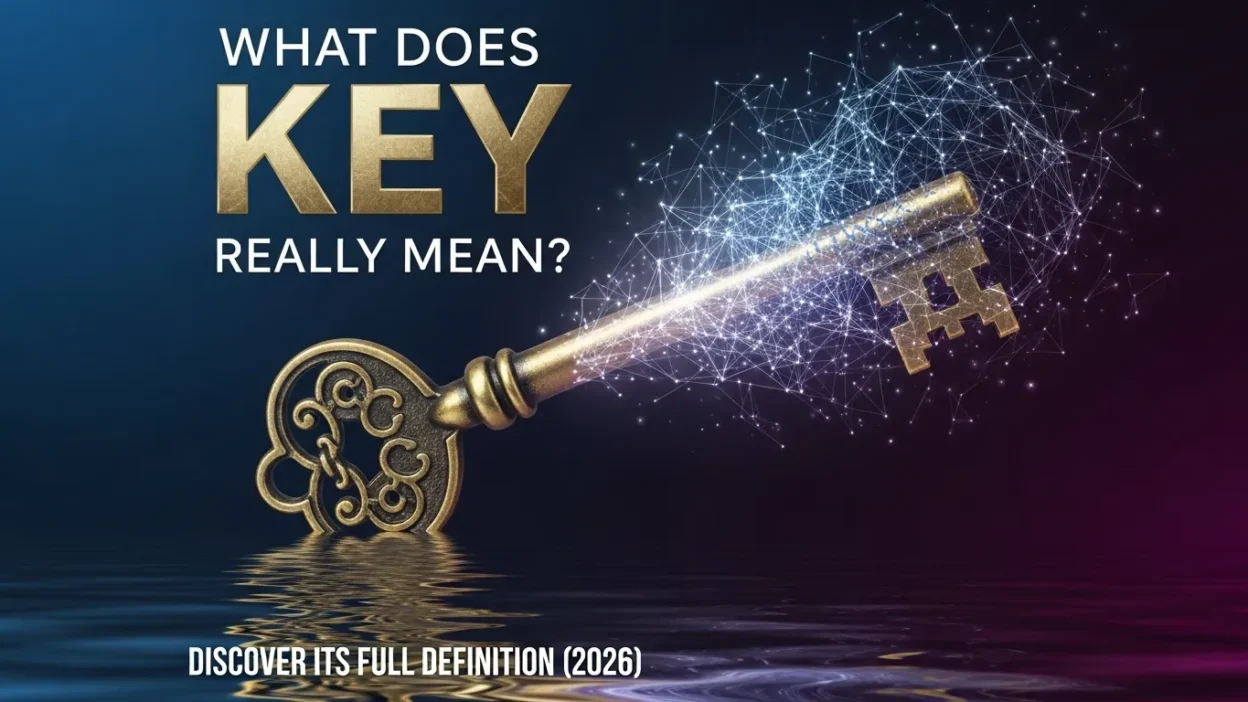
The word “key” is simple yet carries a wide range of meanings, from its literal function as a physical object to its symbolic and metaphorical significance in language, culture, and spirituality.
Literally, a key is a tool used to unlock doors, cabinets, or locks, giving us access to something valuable or protected. Beyond its tangible form, the term “key” often represents importance, solutions, and power as in phrases like “the key to success” or “holding the key to knowledge.”
In dreams and spiritual contexts, a key can symbolize hidden opportunities, personal growth, or divine access. Understanding the different interpretations of “key” helps us grasp its significance in everyday language, literature, and culture.
This article explores the literal, symbolic, spiritual, and figurative meanings of key, its use in idioms and phrases, and why this small object has become such a powerful metaphor across different aspects of life.
Literal Meaning of Key
At its most basic, a key is a physical object designed to unlock or lock something, providing access to spaces, items, or systems that are otherwise secured. Keys have existed for thousands of years, evolving from simple wooden or metal designs to complex mechanical and digital versions. Traditionally, a key consists of a metal blade with cuts that match a specific lock, allowing only the correct key to open it. Common examples include door keys, car keys, cabinet keys, and padlock keys.
In addition to physical locks, the concept of a key extends to musical and technological contexts. In music, a key refers to a scale or set of notes that forms the foundation of a composition. In technology, digital or encryption keys act as codes to secure access to computers, accounts, or encrypted data, ensuring privacy and control.
Understanding the literal meaning of a key is essential because it forms the basis for its figurative and symbolic interpretations. For instance, just as a key grants access to a locked space, it often symbolizes solutions, opportunities, and control in language and culture. By exploring the literal applications of keys, we can better appreciate how this simple object became a powerful symbol in dreams, spirituality, and everyday speech.
Symbolic Meaning of Key
Beyond its physical function, a key carries rich symbolic meaning across cultures, literature, and daily life. At its core, a key often represents access, control, and opportunity. Just as a key unlocks a door or a chest, symbolically it can signify the ability to open new paths, solve problems, or gain entry into previously inaccessible areas of life. For example, saying someone “holds the key to success” implies they possess the essential knowledge, skills, or influence to achieve a goal.
Keys also symbolize power and authority. In historical contexts, those who possessed keys to castles, treasure, or important buildings often held significant responsibility and trust. Similarly, in modern metaphors, a “key decision-maker” refers to someone whose choices can influence the outcome of events.
Another layer of symbolic meaning is knowledge and wisdom. Keys can represent understanding hidden truths or unlocking secrets, which is why they often appear in literature, art, and mythology as tools that grant insight or enlightenment.
In addition, keys can symbolize freedom and opportunity. Unlocking a door may metaphorically suggest new beginnings, personal growth, or overcoming obstacles. In dreams or spiritual contexts, a key often represents access to inner potential or higher consciousness.
Overall, the symbolic meaning of a key revolves around its ability to grant access, reveal truth, and empower individuals, making it a powerful and versatile metaphor in both language and life.
Spiritual Meaning of Key
In spiritual and religious contexts, a key holds profound significance, often symbolizing access to higher wisdom, divine guidance, or spiritual awakening. Just as a physical key opens a door, a spiritual key represents the ability to unlock hidden knowledge or truths within oneself or the universe. Many spiritual traditions view keys as symbols of protection, enlightenment, and transformation, guiding individuals toward personal growth and understanding.
In Christianity, keys carry special meaning. For example, the “keys of the kingdom” are mentioned in the Bible, representing authority, responsibility, and the power to grant or restrict spiritual access. This has inspired centuries of art and iconography where keys symbolize faith, divine authority, and spiritual responsibility.
Beyond religious texts, keys are often used in meditation, rituals, or dream interpretation to symbolize opening pathways to intuition and self-discovery. A key in a spiritual dream may indicate that the dreamer is about to uncover solutions to personal challenges or embark on a transformative journey.
Keys also symbolize opportunity and personal empowerment in a spiritual sense. Finding a key may suggest that one possesses the tools to overcome obstacles, while losing a key may indicate blocked potential or unresolved issues.
Overall, the spiritual meaning of a key emphasizes unlocking inner wisdom, gaining divine insight, and navigating life with awareness and purpose, making it a potent symbol across religions, cultures, and mystical traditions.
Key Meaning in Dreams
Dreaming of a key is often rich with symbolism, representing opportunity, discovery, and access to hidden aspects of life or the self. In dream interpretation, a key typically suggests that the dreamer holds the solution to a problem, is on the verge of a personal breakthrough, or has the potential to unlock new opportunities.
Seeing a key in a dream can indicate that you are about to gain access to something valuable, whether it’s knowledge, a relationship, or a personal goal. Finding a key often represents new possibilities, clarity, or the uncovering of secrets that were previously inaccessible. Conversely, losing a key in a dream may reflect feelings of lost control, confusion, or missed opportunities, suggesting that something important is out of reach or requires more attention.
The type of key and the context in the dream also matter. A golden key may symbolize spiritual growth or divine opportunity, while an ordinary key may reflect practical solutions in daily life. Dreaming of multiple keys can suggest that you have several paths or choices available, and it’s up to you to determine which door to unlock.
Overall, the key in dreams is a powerful metaphor for access, control, and potential. It encourages reflection on the areas of life where you hold influence, the solutions you may already possess, and the opportunities that await discovery. Recognizing this symbolism can provide guidance, insight, and motivation in both personal and professional aspects of life.
Figurative Meaning of Key in Language
In everyday language, the word “key” is widely used as a metaphor for importance, solutions, and central roles. Figuratively, calling something a “key factor” or “key person” emphasizes its critical role in achieving an outcome or influencing a situation. For example, in business, a “key decision-maker” is someone whose choices directly affect results, while a “key element” in a project is essential for success.
The phrase “the key to success” is another common figurative use. It implies that there is a specific solution, skill, or approach that unlocks achievement. Similarly, in problem-solving contexts, a key represents the answer or insight needed to overcome obstacles. This figurative usage extends beyond practical situations to abstract ideas, such as “the key to happiness” or “the key to understanding,” where the key symbolizes access to desired outcomes or knowledge.
Keys also appear in idiomatic expressions, enhancing their figurative power. Phrases like “hold the key” suggest authority or control, while “key takeaway” points to the most important insight from information or experience. These expressions reflect how deeply the concept of a key has permeated language as a symbol of access, significance, and influence.
Overall, the figurative meaning of key in language highlights its versatility and power as a metaphor. From unlocking solutions to emphasizing importance, keys in speech and writing convey clarity, authority, and guidance, making them a central figure in communication and thought.
Common Phrases and Idioms Using “Key”
The word “key” is frequently used in idioms and common phrases, reflecting its symbolic association with importance, access, and solutions. Understanding these expressions helps capture how language has adopted the concept of a key as a metaphor.
One of the most popular phrases is “the key to success.” This implies that there is a particular action, skill, or mindset that unlocks achievement or progress. Similarly, “hold the key” conveys control or authority, suggesting that someone has the power to grant or restrict access to something important.
Another idiom is “under lock and key,” which emphasizes security and protection. It is often used literally to describe something being safely stored, but figuratively it can also mean that an idea, secret, or resource is carefully safeguarded. The phrase “key takeaway” has become common in business and education, highlighting the most important point or lesson from a discussion, presentation, or text.
The metaphorical use of key also extends to personal and professional contexts. For example, calling someone a “key player” or “key contributor” acknowledges their essential role in a team or project. Even in everyday conversation, people may refer to finding the key to a problem, which reinforces the idea of a key as a solution or essential tool.
These idioms demonstrate how deeply the concept of a key has embedded itself in language, serving as a universal symbol for access, importance, and problem-solving. Using these expressions thoughtfully can enrich communication and convey meaning efficiently.
Cultural and Historical Significance of Keys
Keys have played an important role in human culture and history, symbolizing authority, status, and access. In ancient civilizations, possessing keys was often a sign of trust and responsibility. For example, in ancient Egypt and Rome, keys were carried by officials and gatekeepers, representing their control over important spaces or treasures. Similarly, medieval castles often had elaborate keys to protect valuable resources, emphasizing both security and social hierarchy.
Throughout history, keys have also appeared in mythology and religious symbolism. In many cultures, keys represent knowledge, wisdom, and spiritual access. For instance, in Christianity, the keys given to Saint Peter symbolize authority and responsibility in guiding the faithful. In other traditions, keys appear as metaphors for unlocking hidden truths or spiritual insight, reinforcing their symbolic power.
In modern culture, keys continue to hold symbolic meaning. They appear in literature, films, and art as representations of freedom, opportunity, and solutions. For example, a key in a story might symbolize unlocking a mystery, finding the truth, or achieving a goal. Keys are also used in ceremonies, such as the “key to the city”, which honors someone with symbolic access or respect.
Overall, the cultural and historical significance of keys demonstrates that this small object has been much more than a practical tool. It embodies power, trust, wisdom, and opportunity, showing why the idea of a key resonates across time and societies.
Psychological Meaning of Key
In psychology, a key often symbolizes personal empowerment, control, and the ability to unlock hidden potential. Just as a physical key opens doors, the concept of a key represents access to one’s own mind, emotions, and capabilities. It can signify the tools or strategies needed to solve problems, overcome obstacles, or achieve personal growth.
Keys are commonly used in therapeutic and self-development contexts as metaphors for unlocking inner resources. For example, identifying the “key” to coping with stress, anxiety, or personal challenges may involve discovering effective habits, thought patterns, or emotional strategies. Similarly, psychologists may refer to the “key to understanding behavior,” emphasizing insight as the essential tool for change or improvement.
In dreams, a key can reflect personal agency and opportunity, highlighting areas where the dreamer has control over outcomes or the ability to make transformative decisions. Losing a key in a dream may indicate a perceived lack of control, while finding one can symbolize new possibilities and self-discovery.
Furthermore, the psychological meaning of a key can extend to motivation and goal achievement. Recognizing the “key” to success, happiness, or fulfillment involves understanding which actions, choices, or attitudes are most crucial in life.
Overall, in psychology, a key is not just a physical object but a powerful symbol of empowerment, problem-solving, and self-awareness, reminding us that we often already possess the tools needed to unlock our potential.
Key Meaning in Different Fields
The concept of a key extends beyond everyday language and symbolism into several professional and academic fields, each giving it a distinct meaning. In music, a key defines the scale or set of notes around which a piece is composed. Musical keys establish the tonal center, guiding how melodies and harmonies are structured. For example, a song in the key of C major has a specific set of notes and chords that create a particular sound and mood.
In technology, a key often refers to a code or digital identifier used to secure information. Encryption keys, passwords, and API keys protect sensitive data, grant access to systems, and ensure privacy. In this context, keys are not physical objects but essential tools for control and security.
In education and writing, the term “key” frequently denotes essential points or concepts. A “key concept” or “key point” highlights the most important information that readers or students must understand. Similarly, “key terms” summarize critical vocabulary or ideas within a topic.
In business and project management, a “key factor” or “key resource” identifies elements that are crucial for success, emphasizing strategic importance.
Across these fields, the consistent theme is that a key If literal, metaphorical, or technical represents access, control, and central importance. Understanding how keys function in different contexts helps us appreciate their versatility as both practical tools and powerful symbols in music, technology, education, and professional life.
Why the Word “Key” Is Used as a Metaphor
The word “key” is widely used as a metaphor because of its universal association with access, control, and solutions. Just as a physical key opens doors, chests, or locks, the metaphorical use of a key conveys the idea of unlocking something valuable or important. This natural connection makes it a powerful linguistic and conceptual tool across cultures, languages, and contexts.
In everyday speech, we use key to signify essential elements. For example, phrases like “the key to success,” “key player,” or “key factor” highlight what is crucial for achieving a desired outcome. The metaphor works because it immediately communicates the idea of importance and centrality without needing lengthy explanations.
The metaphor extends into abstract and philosophical ideas as well. A “key insight” or “key to understanding” represents a concept, strategy, or piece of knowledge that unlocks comprehension or problem-solving. Similarly, in psychology and self-development, identifying a “key” often refers to recognizing the tool, habit, or mindset necessary for growth.
Culturally and historically, keys have symbolized authority, responsibility, and wisdom, reinforcing their metaphorical use in language. This longstanding symbolic significance makes the metaphor intuitive and effective.
Ultimately, the word “key” is used as a metaphor because it conveys access, control, and the unlocking of potential in a single, universally understood concept. Its versatility and clarity explain why it remains a cornerstone of figurative speech, literature, and everyday communication.
(FAQs)
1. What does a key symbolize?
A key typically symbolizes access, opportunity, and control. It can represent unlocking solutions, gaining knowledge, or opening new possibilities in life, literature, or spirituality.
2. What is the spiritual meaning of a key?
Spiritually, a key often represents divine guidance, personal growth, and enlightenment. Finding a key in a spiritual context may suggest that you are about to discover hidden truths or unlock your inner potential. In some religious traditions, keys symbolize authority and responsibility, such as the biblical “keys of the kingdom.”
3. What does it mean to be “key” in a team?
Being a “key” member of a team refers to someone who is crucial to the success or functioning of the group. This person typically holds important skills, knowledge, or influence that others rely on to achieve goals.
4. What does seeing a key mean in dreams?
In dreams, a key often represents solutions, opportunities, or personal empowerment. Finding a key may indicate upcoming breakthroughs or new paths, while losing a key could suggest obstacles or missed chances.
5. What is the figurative meaning of key?
Figuratively, a key represents the essential element or factor needed to achieve success, solve a problem, or understand a concept. It conveys importance, centrality, and access in both language and thought.
6. How is a key used in different fields?
Keys appear in music, technology, education, and business, each with distinct meanings. In music, a key defines the tonal scale; in technology, it protects data; in education, it highlights essential concepts; and in business, it denotes critical factors for success.
These FAQs help readers quickly understand the multiple dimensions of a key, reinforcing the symbolic, figurative, and practical meanings discussed throughout the article.
Conclusion:
The word “key” is far more than a simple tool for opening locks. Its meanings span the literal, symbolic, spiritual, figurative, and practical realms, making it one of the most versatile and powerful terms in language and culture.
Literally, a key grants access and security, allowing entry to physical spaces, digital systems, or musical compositions. Symbolically, it represents power, control, knowledge, and opportunity, highlighting essential elements in life, work, and personal growth.
Spiritually, keys are associated with divine guidance, personal awakening, and hidden truths, reminding us that access to higher wisdom often requires insight, responsibility, and reflection. In dreams, keys serve as metaphors for solutions, opportunities, and self-discovery, while figuratively in language, they indicate central importance, critical factors, and solutions to problems.
The frequent use of keys in idioms and phrases, such as “key to success” or “hold the key,” further emphasizes their role as a symbol of influence and essential understanding.
Culturally and historically, keys have represented trust, authority, and social status, reflecting their enduring significance across time and societies.
In psychology, they symbolize empowerment, problem-solving, and access to inner potential, while in different professional fields music, technology, education, and business they carry specialized meanings that still tie back to the core concept of unlocking, accessing, or emphasizing importance.
Ultimately, the key remains a universal symbol of access, control, opportunity, and significance. Understanding its multifaceted meanings allows us to appreciate how this small object has become a powerful metaphor for unlocking potential in every aspect of life, making it a truly timeless and meaningful concept.

Welcome to TextFlirtz.com, your ultimate destination for fun, flirty, and clever pick-up lines that spark conversations and make hearts skip a beat! Whether you’re looking to impress your crush, add some humor to your chats, or just have a playful time texting, we’ve got you covered with lines that are witty, spicy, and unforgettable. Dive in, explore our collections, and start flirting the smart way—because at TextFlirtz.com, words are your best wingman!