
The term “illegitimate child” has been used historically to describe a child born to parents who are not legally married. While it may sound simple, the concept carries layers of legal, social, and cultural implications that vary across societies and eras.
Understanding the meaning of an illegitimate child is important not only from a legal perspective where inheritance, parental rights, and legitimacy may be affected but also socially, as the term has historically been associated with stigma and discrimination.
Today, modern societies are moving towards more sensitive and inclusive language, recognizing that the circumstances of a child’s birth should not define their rights or value.
This article explores the meaning, history, legal context, and social implications of illegitimacy, while also addressing why the terminology matters and how contemporary perspectives aim to reduce judgment and promote understanding for all children, regardless of their birth circumstances.
Definition and Meaning of Illegitimate Child
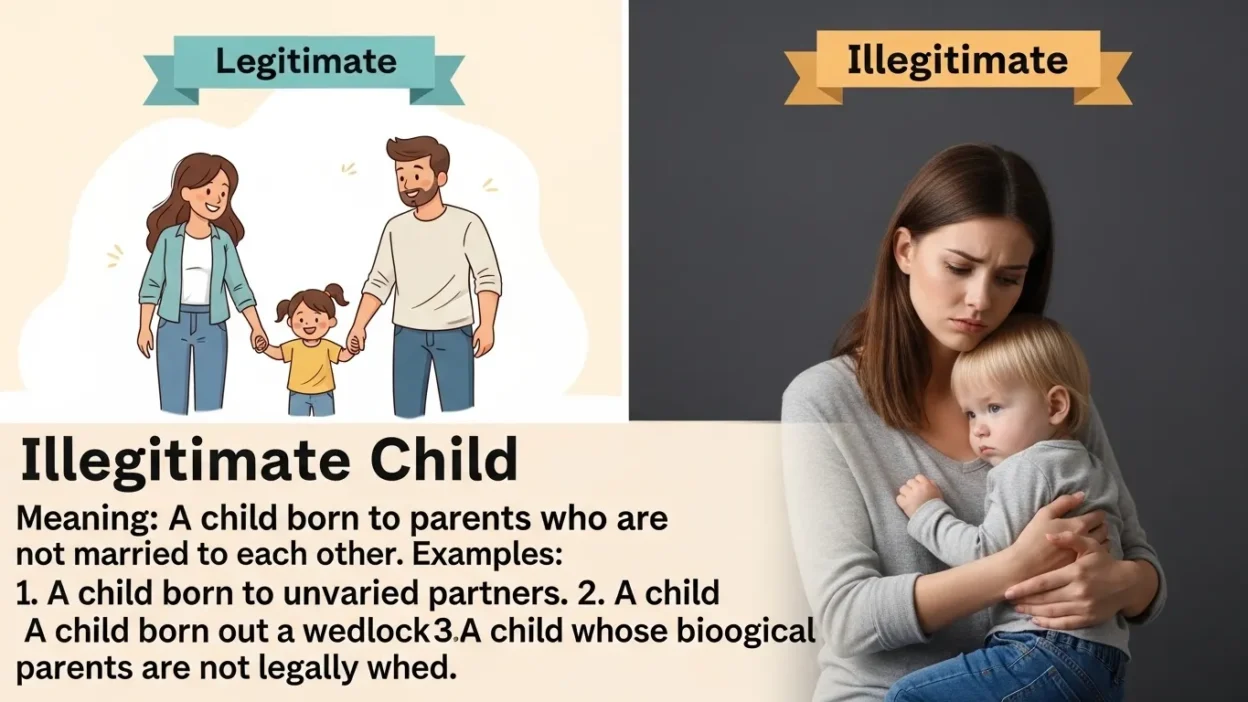
An illegitimate child traditionally refers to a child born to parents who are not legally married to each other at the time of the child’s birth. This distinction has been recognized in both social and legal contexts for centuries. In simple terms, it is the opposite of a legitimate child, who is born within a legally recognized marriage.
From a dictionary perspective, the term “illegitimate” often carries meanings such as “not sanctioned by law” or “born outside lawful wedlock.” Historically, this definition had significant implications: an illegitimate child could face social stigma, legal restrictions, and limited inheritance rights. In many societies, the child’s legitimacy directly affected their social standing and access to family property.
Legally, the exact definition of an illegitimate child varies across countries. In some modern legal systems, children born outside marriage are given the same rights as those born to married parents, reflecting evolving views on family, equality, and children’s rights. The term itself, however, is increasingly considered outdated and insensitive, with alternatives like “child born out of wedlock” or “non-marital child” preferred in formal and legal contexts.
Understanding this term is essential for recognizing both its historical weight and its contemporary relevance. While it originated as a legal label, today the focus is on protecting the child’s rights and ensuring social fairness, rather than judging the circumstances of birth.
Historical Context of Illegitimate Children
The concept of an illegitimate child has deep historical roots, with social, cultural, and legal consequences that have evolved over time. In many ancient societies, children born outside marriage faced significant disadvantages. For example, in medieval Europe, illegitimate children were often denied inheritance rights and social recognition. They were considered outside the legitimate family line, which could limit their access to wealth, status, and even education.
During the Victorian era, illegitimacy carried heavy social stigma. Women who gave birth outside marriage faced public shame, and children were often labeled as “bastards,” a term that reflected societal disapproval. Families and communities sometimes ostracized both the mother and the child, affecting their opportunities for marriage, work, and social mobility. Legal systems reinforced these views, making it difficult for illegitimate children to claim property or assert familial ties.
However, historical attitudes varied across cultures. In some societies, such as certain Indigenous and African communities, the concept of illegitimacy was less rigid, and children born outside formal unions could still be integrated into family structures and inheritance lines.
Over time, social and legal reforms began to challenge these discriminatory practices. By the 20th century, many countries introduced laws granting illegitimate children the same rights as those born within marriage, reflecting a shift toward equality and recognition of children as individuals, independent of the marital status of their parents.
Understanding this historical perspective highlights how much social and legal perceptions of illegitimacy have changed—and why modern terminology emphasizes respect and inclusivity.
Legal Perspective of Illegitimate Children
From a legal standpoint, the status of an illegitimate child has historically carried significant implications. In many traditional legal systems, children born outside marriage were often denied inheritance rights, legitimacy claims, or even recognition by the father. Laws were designed to favor children born within legally sanctioned marriages, reflecting societal norms that prioritized family legitimacy.
However, modern legal frameworks in most countries have evolved to protect the rights of all children, regardless of the marital status of their parents. Today, an illegitimate child—sometimes referred to as a “child born out of wedlock”—is generally entitled to the same legal rights as any other child. This includes rights to inheritance, maintenance, citizenship, and parental support. Many jurisdictions have specific statutes ensuring that non-marital children are not discriminated against in matters of property, succession, or guardianship.
Some legal systems also provide avenues for legitimizing a child after birth. For example, if the parents later marry, the child can often acquire legitimate status retroactively. In other cases, courts may recognize paternity and grant the child legal rights equivalent to those of a legitimate child.
It is important to note that while laws have largely equalized the treatment of children, terminology matters. Referring to a child as “illegitimate” in legal documents or public discourse can be insensitive, even though the term is still recognized in some legal contexts. Modern law emphasizes equal protection, non-discrimination, and the welfare of the child, prioritizing rights over labels.
Social and Cultural Implications
Beyond legal definitions, the concept of an illegitimate child has long carried social and cultural weight. Historically, children born outside of marriage faced stigma and discrimination in many societies. Families might experience shame, and the child could be marginalized in social, educational, or religious settings. In some communities, the label “illegitimate” shaped how the child was perceived, influencing friendships, marriage prospects, and even career opportunities later in life.
Cultural and religious beliefs heavily influenced these perceptions. For example, in conservative religious societies, children born out of wedlock were often seen as a moral reflection of the parents’ actions, which unfairly burdened the child with societal judgment. Conversely, some cultures historically placed less emphasis on marital status, allowing non-marital children to participate fully in family and community life.
Modern society has begun to challenge these traditional stigmas. Awareness of children’s rights, gender equality, and family diversity has encouraged more inclusive attitudes. Today, children born outside marriage are generally recognized as having the same social worth as those born within marriage, although cultural biases can still exist in certain regions.
The shift in perception also highlights the importance of language and sensitivity. Terms like “illegitimate” are increasingly avoided in favor of neutral expressions such as “child born out of wedlock.” By focusing on the child’s rights, well-being, and individuality, modern society aims to reduce stigma and promote fairness, emphasizing that birth circumstances should never limit a child’s opportunities or social acceptance.
Modern Terminology and Sensitivity
In contemporary society, the term “illegitimate child” is widely regarded as outdated and potentially offensive. While historically it served a legal and social function, today it carries negative connotations that can unfairly stigmatize a child for circumstances beyond their control. Language plays a crucial role in shaping perceptions, and using neutral, respectful terms is essential in both legal contexts and everyday communication.
Modern alternatives to the term include “child born out of wedlock,” “non-marital child,” or simply “child of unmarried parents.” These expressions focus on the factual circumstances of birth without attaching moral judgment or social stigma. Many legal documents, educational materials, and child welfare resources now adopt these neutral terms to promote inclusivity and sensitivity.
The shift in terminology reflects broader changes in societal attitudes. Families today come in diverse forms, including single-parent households, blended families, and children born outside traditional marriage structures. Emphasizing the child’s rights, well-being, and individuality rather than the marital status of parents aligns with modern principles of equality and child protection.
It is also important for writers, educators, and policymakers to be aware of the potential impact of language. Even if the term “illegitimate” appears in historical texts or legal documents, using it without context can perpetuate bias. By adopting sensitive, neutral language, society can ensure that all children are treated fairly, respected, and valued, regardless of the circumstances of their birth.
Frequently Asked Questions (FAQs)
1. What does “illegitimate child” mean legally?
Legally, an illegitimate child is a child born to parents who are not married at the time of birth. In many modern legal systems, the child has the same rights as a child born within marriage, including inheritance, maintenance, and recognition of parentage.
2. Can an illegitimate child inherit property?
In most countries today, illegitimate children are legally entitled to inherit from their parents. Historical restrictions on inheritance have largely been removed through reforms in family and succession laws, ensuring equality among all children regardless of marital status at birth.
3. Can an illegitimate child become legitimate?
Yes. Many legal systems allow for legitimation, often if the parents marry after the child’s birth or through a legal recognition of paternity. This can retroactively grant the child the same status and rights as a legitimate child.
4. Is the term “illegitimate” still relevant?
While it is recognized in some historical or legal contexts, the term is increasingly considered offensive. Modern language prefers neutral alternatives such as “child born out of wedlock” or “non-marital child.”
5. How should one discuss the topic sensitively?
Focus on the child’s rights and well-being rather than the circumstances of birth. Avoid judgmental language and emphasize that every child deserves equal respect, opportunities, and protection under the law.
These FAQs address common concerns and misconceptions, helping readers understand the legal, social, and linguistic aspects of the term while promoting clarity and sensitivity.
Conclusion
The concept of an illegitimate child carries a complex history that spans legal, social, and cultural dimensions. Historically, being born outside marriage often resulted in significant social stigma, limited legal rights, and restricted inheritance opportunities.
Families and communities judged both the child and the mother, leaving lasting impacts on their social and emotional well-being. Over time, reforms in law and changes in societal attitudes have worked to dismantle these barriers, recognizing that a child’s birth circumstances should never determine their rights or value.
In modern society, the focus has shifted toward equality, protection, and sensitivity. Legally, children born outside marriage generally have the same rights as those born to married parents, including inheritance, parental support, and recognition of identity.
Socially, awareness campaigns, inclusive language, and changing family structures have helped reduce stigma and promote acceptance. Importantly, the term “illegitimate” is now considered outdated and potentially offensive, and more neutral alternatives like “child born out of wedlock” or “non-marital child” are preferred in both legal and everyday contexts.
Understanding the meaning of an illegitimate child today requires acknowledging its historical context, legal evolution, and social implications. By adopting inclusive language, promoting children’s rights, and challenging outdated societal prejudices, we can ensure that all children are treated with dignity, fairness, and respect.
Ultimately, modern perspectives emphasize that no child should be judged or disadvantaged based on the marital status of their parents at birth.

Welcome to TextFlirtz.com, your ultimate destination for fun, flirty, and clever pick-up lines that spark conversations and make hearts skip a beat! Whether you’re looking to impress your crush, add some humor to your chats, or just have a playful time texting, we’ve got you covered with lines that are witty, spicy, and unforgettable. Dive in, explore our collections, and start flirting the smart way—because at TextFlirtz.com, words are your best wingman!