

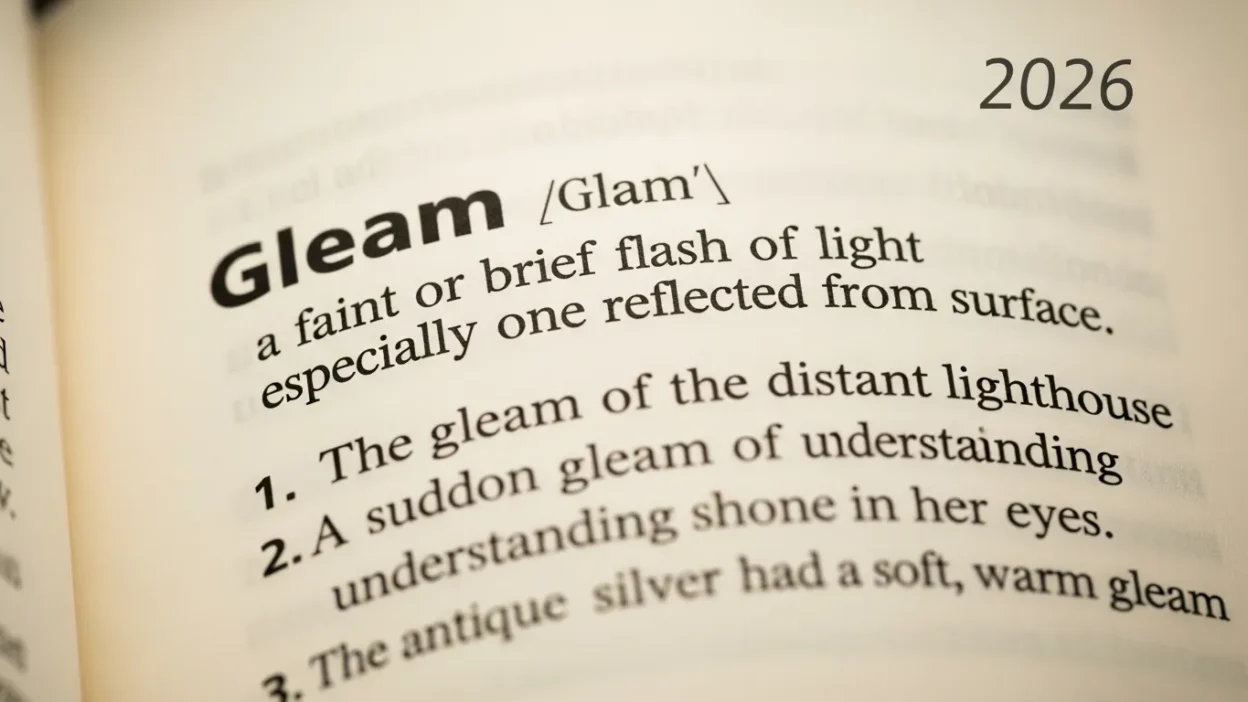
The word “gleam” is a versatile and expressive term in the English language, often used to describe a brief flash of light or a subtle shine that catches the eye.
Beyond its literal sense, “gleam” also conveys emotions, hope, and intelligence, making it a favorite choice for writers, poets, and storytellers.
Understanding the meaning of gleam is essential for anyone looking to enhance their vocabulary, improve descriptive writing, or comprehend literary works more deeply.
In this article, we will explore the definition of gleam, its pronunciation, usage as a noun and verb, synonyms and antonyms, and examples in everyday and literary contexts.
We’ll also look at common phrases like “a gleam of hope” and explain how to use the word effectively in sentences. By the end, you’ll have a thorough understanding of “gleam” and be able to use it confidently in your writing and conversation.
What Does Gleam Mean?
The word “gleam” primarily refers to a brief or faint flash of light that draws attention or catches the eye. For example, sunlight reflecting off water or a polished surface can be described as a gleam of light. In its literal sense, the word conveys brightness, shine, or a small, noticeable reflection that stands out against a darker background.
Beyond its literal meaning, gleam is often used in a figurative sense. It can describe emotions, qualities, or signals that are subtle but noticeable. For instance, a gleam of hope represents a small sign of optimism in a challenging situation. Similarly, a gleam in someone’s eye may indicate intelligence, mischief, or excitement. Writers and poets frequently use “gleam” to add vivid imagery and emotional depth to their descriptions.
Gleam functions both as a noun and a verb. As a noun, it refers to the flash or shine itself: “There was a gleam of light in the room.” As a verb, it describes the act of shining or reflecting: “The polished silverware gleamed under the lights.” This flexibility allows the word to be used in various contexts, from everyday conversation to creative writing.
In short, gleam is a small but powerful word that conveys light, brightness, and subtle emotions, making it a useful addition to anyone’s vocabulary.
Pronunciation of Gleam
Understanding how to pronounce “gleam” correctly is important, especially for English learners and writers who want to use the word confidently in speech and reading. The word is pronounced as /gliːm/, which can be broken down into one syllable: “gleem.”
To pronounce it clearly, start with the “gl” sound, similar to the beginning of “glass” or “glow.” Then, elongate the vowel sound “ee”, like in “see” or “tree.” Finally, end with a soft “m” sound. Saying it slowly: gl-ee-m → then blending it smoothly gives the correct pronunciation: gleam.
Common mistakes include shortening the vowel, which may sound like “glim”, or overemphasizing the “g,” making it sound harsh. Practice by repeating sentences such as:
- “The stars gleam brightly in the night sky.”
- “Her eyes had a gleam of excitement.”
Pronunciation is also influenced by accents. In American English, the word is pronounced with a slightly longer “ee” sound, while in British English, it may sound a touch softer but remains /gliːm/.
Correct pronunciation not only helps in speaking but also aids in listening comprehension, especially when reading literature or poetry where the word appears. Mastering this small but expressive word can make your English sound more polished and natural.
Gleam as a Noun
When used as a noun, gleam refers to a brief or faint flash of light, a subtle shine, or a small but noticeable sign of something. This form of the word is often used to describe physical light, such as reflections or flashes, as well as metaphorical “light” like hope, intelligence, or emotion.
For literal use, consider examples like:
- “A gleam of sunlight peeked through the clouds.”
- “The polished table had a gleam under the lamp.”
In these sentences, gleam highlights a momentary brightness that attracts attention, giving readers a clear visual image.
Figuratively, gleam can indicate something subtle but meaningful:
- “There was a gleam of hope in her expression.”
- “He spoke with a gleam of mischief in his eyes.”
In these cases, the word does not describe actual light but conveys an emotion, quality, or feeling that shines through briefly. This makes gleam a powerful tool in both everyday conversation and literary writing, adding depth and nuance to descriptions.
As a noun, gleam is versatile and works well in literature, poetry, and storytelling, as well as in descriptive writing. It allows writers to focus attention on small, meaningful details, whether physical or emotional, making the scene more vivid and engaging for readers.
By understanding gleam as a noun, you can more effectively describe light, reflections, and subtle emotional cues in both written and spoken Englis.
Gleam as a Verb
When used as a verb, gleam describes the action of shining, reflecting light, or emitting a subtle brightness. It emphasizes that the light or shine is noticeable, often brief, and sometimes delicate. This makes it a dynamic and vivid word for both physical and figurative contexts.
For literal use, consider examples like:
- “The polished silverware gleamed under the dining room lights.”
- “Stars gleamed in the clear night sky.”
- “The morning dew made the grass gleam in the sunlight.”
In these sentences, gleam conveys an active shine, highlighting how objects reflect or emit light in a noticeable but gentle way.
Figuratively, gleam can describe subtle qualities or emotions that are visible or perceptible:
- “Her eyes gleamed with excitement.”
- “He gleamed with pride after receiving the award.”
Here, gleam communicates something deeper than physical light, signaling emotions, intentions, or personality traits in a way that draws attention without being overt.
As a verb, gleam is versatile and often used in descriptive writing, storytelling, and poetry. It helps writers add movement and life to scenes, whether depicting the sparkle of light on an object or the shine of emotion in a person’s expression.
Mastering gleam as a verb allows you to describe actions and qualities vividly, enhancing both everyday writing and creative expression. It pairs naturally with subjects that reflect, shine, or radiate subtle qualities, making your language more engaging and precise.
Synonyms of Gleam
Understanding the synonyms of “gleam” helps expand your vocabulary and gives you more options for expressing light, brightness, or subtle qualities in writing. While gleam conveys a small, noticeable flash or shine, other words may carry slightly different nuances.
Common Synonyms
- Shine – A general term for emitting light or reflecting brightness.
- “The polished floor shone under the chandelier.”
- Glow – Suggests a steady or soft light rather than a brief flash.
- “The lantern glowed warmly in the dark room.”
- Sparkle – Implies a series of tiny flashes, often lively or animated.
- “Her jewelry sparkled in the sunlight.”
- Glimmer – A faint or intermittent light, usually subtle and delicate.
- “A glimmer of moonlight appeared through the clouds.”
- Shimmer – A wavering or flickering shine, often reflecting movement.
- “The lake shimmered under the morning sun.”
- Flash – A sudden and intense burst of light.
- “A flash of lightning lit up the sky.”
Choosing the Right Word
While these words are similar, the context determines the best choice. Gleam emphasizes a small, noticeable, and often brief shine. For example, “a gleam of hope” uses the figurative sense, which other synonyms like sparkle or shimmer cannot replace.
By knowing these synonyms, you can vary your writing while keeping descriptions vivid and precise, whether you are discussing light, reflections, or subtle emotions.
Antonyms of Gleam
While gleam conveys brightness, shine, or a subtle sign of something positive, its antonyms describe darkness, dullness, or the absence of noticeable light or quality. Understanding these opposite words helps create contrast in writing and enhances descriptive skills.
Common Antonyms
- Dull – Lacking brightness, shine, or vividness.
- “The metal had become dull after years of use.”
- Dim – Producing little light; faint or unclear.
- “The room was dim, with only a small candle burning.”
- Darken – To make or become less bright or more shadowed.
- “Clouds darkened the sky as the storm approached.”
- Fade – To lose brightness or intensity over time.
- “The colors on the old painting had faded.”
- Tarnish – To lose shine or brilliance, often used for metals.
- “The silver spoons tarnished after years of neglect.”
Using Antonyms in Context
Antonyms of gleam are useful for creating contrast in writing. For instance, describing a dull room next to a gleaming object emphasizes the brightness of the latter:
- “In the dull hallway, the chandelier gleamed brilliantly.”
Figuratively, antonyms can also represent the opposite of hope or positive emotion:
- “A shadow of despair dimmed the gleam of hope in her eyes.”
By incorporating antonyms, writers can highlight the significance of light, shine, or subtle brilliance conveyed by “gleam,” making descriptions more vivid and emotionally resonant.
Examples of Gleam in Sentences
Using gleam in sentences helps understand its meaning and shows how versatile the word is in both literal and figurative contexts.
Literal Examples
When referring to light or reflections, gleam describes a small, noticeable shine:
- “A gleam of sunlight reflected off the lake.”
- “The polished silverware gleamed under the dining room lights.”
- “Stars gleamed in the clear night sky.”
These examples highlight brief flashes of brightness that draw attention. Literal uses are common in descriptive writing, nature descriptions, and everyday observations.
Figurative Examples
Gleam is also widely used to express emotions, hope, or qualities:
- “There was a gleam of hope in her eyes.”
- “He spoke with a gleam of pride.”
- “A mischievous gleam appeared on her face.”
In these sentences, gleam does not refer to physical light but to subtle signals or qualities that shine through briefly, making it powerful in storytelling and expressive writing.
Literary Examples
Authors often use gleam for vivid imagery:
- “Through the darkness, a gleam of moonlight guided their path.”
- “A gleam of joy lit up his face as he saw the surprise.”
These examples combine literal and figurative uses, showing how the word can enhance visual and emotional storytelling.
By studying examples like these, you can grasp both meanings of gleam and confidently use the word in writing and conversation, whether describing light, reflections, or emotions.
Common Phrases and Expressions with Gleam
The word “gleam” is often used in phrases and expressions that convey either literal brightness or figurative meaning, adding depth and imagery to both spoken and written English.
Gleam of Hope
One of the most common expressions is “a gleam of hope.” It refers to a small but noticeable sign of optimism in a difficult situation.
- “Even after the long storm, there was a gleam of hope on the horizon.”
This phrase is widely used in literature, journalism, and everyday conversation to highlight positive possibilities.
Gleam in Someone’s Eye
Another popular expression is “a gleam in someone’s eye,” which usually conveys intelligence, mischief, excitement, or ambition.
- “The young inventor had a gleam in his eye as he presented his idea.”
Here, gleam is figurative, emphasizing an emotion or intention that is visible in a person’s expression.
Gleaming Smile
“Gleaming smile” is used to describe a bright, radiant smile, often reflecting happiness or confidence.
- “She walked in with a gleaming smile that lit up the room.”
Gleaming Surface or Object
In descriptive writing, gleaming is used to describe polished or shiny surfaces:
- “The marble floor gleamed under the morning sun.”
- “His shoes were perfectly gleaming for the ceremony.”
These expressions demonstrate how gleam can be applied to both physical light and figurative meaning, making it a versatile word. Learning these phrases helps readers and writers enhance their vocabulary, making language more vivid, expressive, and precise.
Figurative Meaning of Gleam
Beyond its literal sense of light or shine, gleam is widely used in a figurative sense to express subtle emotions, qualities, or signs of something positive. This figurative usage makes it a powerful word in literature, poetry, and everyday English, allowing writers to convey ideas that go beyond physical appearances.
One common figurative use is “a gleam of hope,” which symbolizes a small but noticeable sign of optimism:
- “Despite the difficulties, there was a gleam of hope that things would improve.”
Similarly, “a gleam in someone’s eye” can indicate excitement, intelligence, ambition, or mischief:
- “She had a gleam in her eye as she explained her clever plan.”
Writers also use gleam to describe fleeting emotions or qualities that shine through briefly:
- “A gleam of pride lit his face as he watched his team succeed.”
- “There was a gleam of mischief in the children’s laughter.”
The figurative use of gleam allows for subtle, vivid, and expressive descriptions, making scenes and characters feel more lifelike. Unlike more general words like “shine” or “glow,” gleam carries the sense of something small, noticeable, and fleeting, which can heighten tension, emotion, or anticipation in a story.
By understanding its figurative meaning, writers and speakers can enhance their language, making descriptions of emotions, hopes, or personality traits more nuanced and impactful. This flexibility is what makes gleam such a valuable word in English vocabulary.
Origin and Etymology of Gleam
The word “gleam” has a rich history in the English language, dating back to Old English. It originally appeared as “glǣm,” meaning brightness, joy, or splendor. Over time, the meaning evolved to focus more specifically on light, shine, and reflective brilliance, while retaining some figurative uses related to emotion or notable qualities.
In Middle English, the term appeared as “gleme” or “gleam,” often used in poetry and literature to describe shining objects, stars, or radiant surfaces. Writers in medieval and early modern English used gleam to convey not only physical brightness but also metaphorical ideas, such as joy, hope, or intelligence.
The root of the word is related to other Germanic languages, where similar terms conveyed light, sparkle, or glow. This connection explains why gleam retains both literal and figurative significance today.
Over the centuries, gleam has maintained a consistent presence in English literature, from classic poetry to modern prose. Its adaptability as both a noun and a verb, along with its capacity for figurative usage, has kept it relevant for writers, educators, and speakers alike.
Understanding the origin and etymology of gleam provides deeper insight into its nuanced meanings. It also helps learners of English appreciate why the word can describe light, emotions, and fleeting qualities, making it a versatile and expressive part of the vocabulary.
How to Use Gleam in Writing
The word “gleam” is a versatile tool for writers, whether you are describing physical light, emotions, or subtle qualities. Knowing how to use it effectively can make your writing more vivid, expressive, and engaging.
Using Gleam for Literal Descriptions
When describing objects or nature, gleam emphasizes a small, noticeable flash of light. For example:
- “The morning sun gleamed off the dewdrops on the grass.”
- “Her polished shoes gleamed under the hallway lights.”
This usage is particularly effective in descriptive writing, travelogues, or nature scenes, where highlighting brightness can enhance visual imagery.
Using Gleam Figuratively
Gleam can also express emotions, qualities, or fleeting signals:
- “There was a gleam of pride in his eyes.”
- “A gleam of hope appeared in the students’ faces.”
In these examples, gleam conveys something subtle but noticeable, allowing the writer to communicate emotion or intention without overt explanation.
Tips for Effective Use
- Keep it brief and noticeable: Gleam usually implies something small or fleeting.
- Pair with nouns or subjects that can shine or reflect: eyes, metal, water, smiles, hope.
- Use in both literal and figurative contexts: This flexibility enriches both poetry and prose.
- Contrast with antonyms: Highlighting gleam against dullness or darkness can create a more vivid effect.
By incorporating gleam thoughtfully, writers can capture light, emotion, and subtle qualities, making their sentences more expressive and memorable.
Difference Between Gleam, Glow, Shine, and Sparkle
While gleam is often associated with brightness, it is important to understand the subtle differences between it and similar words like glow, shine, and sparkle. Choosing the right word enhances clarity and precision in writing.
Gleam vs Glow
- Gleam refers to a brief, noticeable flash of light or a subtle signal.
- Glow suggests a steady, soft, and warm light, often continuous.
- Example: “The metal gleamed briefly under the sunlight” vs “The lantern glowed softly in the dark room.”
Gleam vs Shine
- Shine is a more general term for emitting light or reflecting brightness, without specifying duration or subtlety.
- Gleam emphasizes small, fleeting brilliance.
- Example: “Her shoes shone brightly” vs “Her eyes gleamed with excitement.”
Gleam vs Sparkle
- Sparkle implies lively, twinkling flashes, often multiple points of light.
- Gleam usually refers to a single, noticeable flash or reflection.
- Example: “The diamond sparkled in the sunlight” vs “A gleam of sunlight reflected off the window.”
Choosing the Right Word
- Use gleam for subtle, brief flashes or figurative signs of emotion.
- Use glow for continuous, soft light.
- Use shine for general brightness.
- Use sparkle for multiple twinkling points or lively reflections.
Understanding these nuances allows writers to convey light, reflections, and emotions precisely, making descriptions more vivid and engaging.
Collocations with Gleam
Collocations are words that naturally pair with gleam, helping writers create fluid and expressive sentences. Using common collocations improves readability and ensures your writing sounds natural.
Gleam of Light
This collocation refers to a small, noticeable flash or reflection of light.
- “A gleam of light shone through the cracks in the door.”
It is commonly used in descriptive writing, nature scenes, or interior descriptions.
Gleam of Hope
Figuratively, this phrase represents a small but visible sign of optimism or possibility.
- “Despite the setbacks, there was a gleam of hope on her face.”
It is widely used in literature, motivational writing, and everyday conversation.
Gleam in Someone’s Eye
This collocation conveys intelligence, excitement, mischief, or ambition.
- “The young artist had a gleam in his eye as he discussed his project.”
It is often used in storytelling or descriptive character writing.
Gleaming Smile
Refers to a radiant, bright smile, usually conveying happiness, confidence, or charm.
- “She entered the room with a gleaming smile that lit up everyone around her.”
Gleaming Surface or Object
Describes shiny or polished objects, emphasizing their reflective quality.
- “The car’s hood gleamed after being waxed.”
By learning these collocations, you can use gleam more effectively in both literal and figurative contexts. They allow your writing to be precise, vivid, and expressive, whether describing light, emotions, or character traits
Real-Life Contexts Where Gleam Is Used
The word “gleam” appears in many real-life contexts, both literally and figuratively, making it a versatile term in English. Understanding these contexts helps you use the word naturally in writing and conversation.
Nature and Environment
Gleam often describes light in natural settings.
- “The morning dew made the grass gleam in the sunlight.”
- “Stars gleamed in the clear night sky.”
Writers and observers use it to capture the subtle brilliance of reflections, water, or celestial bodies.
Objects and Materials
It is commonly used to describe polished or shiny surfaces:
- “The silverware gleamed after being polished.”
- “The newly waxed car gleamed under the garage lights.”
In these examples, gleam emphasizes a small but noticeable shine, highlighting attention to detail or care.
Human Expressions
Figuratively, gleam can reflect emotions, intentions, or qualities:
- “There was a gleam of mischief in her eyes.”
- “He gleamed with pride after finishing the project.”
It captures fleeting or subtle signs of personality, emotion, or thought, making it useful in storytelling.
Literature and Poetry
Writers use gleam to enhance imagery and convey mood:
- “A gleam of moonlight fell across the deserted street.”
- “Through despair, a gleam of hope shone brightly.”
By observing these real-life contexts, learners and writers can see how versatile and expressive “gleam” is, whether describing light, reflections, or subtle human emotions. Using it in the right context makes writing more vivid, engaging, and precise
Tips for English Learners to Remember Gleam
Learning how to use gleam effectively can be easier with a few practical tips. Whether you are studying English for writing, conversation, or exams, understanding the word’s meanings, uses, and nuances will help you remember it.
Visualize the Meaning
Since gleam often refers to light or shine, try to picture a small flash of brightness in your mind. Imagine sunlight reflecting on water, stars twinkling in the sky, or a polished object gleaming under light. Associating the word with a visual image makes it easier to recall.
Practice Literal and Figurative Uses
- Literal: “The silverware gleamed on the table.”
- Figurative: “A gleam of hope appeared in her eyes.”
Practice writing sentences in both contexts to strengthen understanding. This helps you see the versatility of the word.
Pair with Common Collocations
Learning phrases like “gleam of light,” “gleam of hope,” “gleam in someone’s eye,” and “gleaming smile” helps you use the word naturally. Collocations make your vocabulary feel more intuitive and fluent.
Use in Daily Conversation and Writing
Try describing things around you:
- “The kitchen floor gleamed after cleaning.”
- “There was a gleam of excitement in his voice.”
Using the word regularly helps reinforce memory and context.
By visualizing, practicing, and using collocations, learners can master gleam, making it easier to incorporate into both spoken and written English, and enhancing descriptive and expressive skills.
Frequently Asked Questions (FAQs) About Gleam
To help learners and writers fully understand gleam, here are some common questions and answers about the word:
1. What does gleam mean in simple words?
Gleam refers to a small, brief flash or shine of light. Figuratively, it can indicate a subtle sign of emotion, hope, or quality.
- Literal: “The stars gleamed in the night sky.”
- Figurative: “There was a gleam of pride in her eyes.”
2. Is gleam a noun or a verb?
Gleam can function as both:
- Noun: Refers to the flash or shine itself.
- “A gleam of sunlight entered the room.”
- Verb: Describes the act of shining or reflecting.
- “The polished shoes gleamed under the lights.”
3. What is a gleam of hope?
A gleam of hope is a small sign of optimism or possibility in a difficult or uncertain situation.
- “Even after the long struggle, there was a gleam of hope.”
4. What is the difference between gleam and glimmer?
- Gleam: A noticeable, brief flash, often small but significant.
- Glimmer: A faint or intermittent light, usually softer and subtler.
- Example: “A gleam of sunlight reflected off the window” vs “A glimmer of moonlight shone through the clouds.”
5. Can gleam describe emotions?
Yes, gleam is often used figuratively to describe emotions or qualities visible in a person, such as pride, mischief, hope, or excitement.
- “He had a gleam of excitement in his eyes.”
These FAQs clarify the meaning, usage, and versatility of gleam, helping learners and writers confidently apply the word in both literal and figurative contexts.
Conclusion:
The word “gleam” is a small but powerful term in the English language, offering both literal and figurative meanings. Literally, it describes a brief, noticeable flash or shine of light, such as sunlight reflecting on water, stars twinkling in the sky, or polished objects gleaming under a lamp.
Figuratively, it conveys subtle emotions, qualities, or signals, like a gleam of hope, pride, excitement, or mischief.
This dual nature makes gleam a versatile and expressive word, suitable for everyday conversation, descriptive writing, and literature.
Understanding gleam as both a noun and a verb allows writers and speakers to describe actions and states vividly. Noun usage emphasizes the shine or flash itself, while verb usage conveys the act of shining or reflecting.
‘Additionally, learning common phrases and collocations, such as “gleam of light,” “gleam in someone’s eye,” and “gleaming smile,” helps you use the word naturally and effectively in context.
By practicing pronunciation, sentence examples, and collocations, English learners can remember and apply gleam confidently. Recognizing its subtle differences from synonyms like glow, shine, sparkle, and glimmer further enhances precision in writing and speaking.
In summary, gleam is more than just a word for light it captures fleeting brilliance, emotion, and nuance, making it a valuable addition to anyone’s vocabulary.
By incorporating it thoughtfully into writing and conversation, you can create vivid imagery, convey emotion, and make your language more expressive and engaging.

Welcome to TextFlirtz.com, your ultimate destination for fun, flirty, and clever pick-up lines that spark conversations and make hearts skip a beat! Whether you’re looking to impress your crush, add some humor to your chats, or just have a playful time texting, we’ve got you covered with lines that are witty, spicy, and unforgettable. Dive in, explore our collections, and start flirting the smart way—because at TextFlirtz.com, words are your best wingman!