

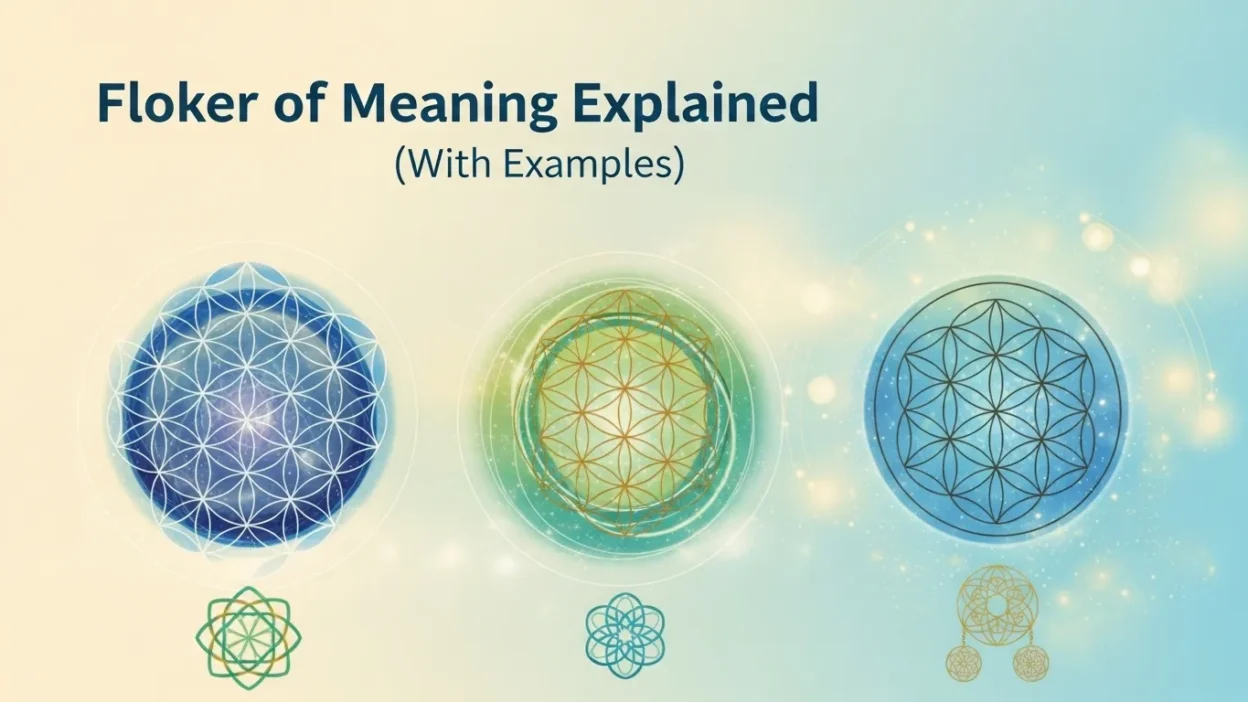
The Flower of Life is one of the most captivating and mysterious symbols in the world of sacred geometry. Composed of evenly spaced, overlapping circles forming a symmetrical flower-like pattern, it has fascinated artists, spiritual seekers, and scholars for thousands of years.
Its intricate design is more than just beautiful it is believed to hold profound spiritual significance, representing the creation of life, unity, and the interconnectedness of all things.
Found in ancient temples, manuscripts, and artifacts across cultures like Egypt, India, and China, the Flower of Life has stood the test of time as a symbol of harmony, balance, and cosmic order.
In this article, we will explore the meaning and symbolism of the Flower of Life, its historical origins, spiritual significance, hidden geometric patterns, and how it is used today in meditation, jewelry, and personal growth. Whether you are a beginner or deeply spiritual, this guide uncovers everything you need to know.
What Is the Flower of Life?
The Flower of Life is a geometric symbol made up of multiple evenly spaced, overlapping circles arranged in a flower-like pattern with perfect symmetry. At first glance, it appears as a simple decorative design, but its structure holds deep mathematical, spiritual, and philosophical significance. Each circle is identical in size and overlaps with the others to create a hexagonal grid, forming the complete Flower of Life pattern. This precise arrangement has fascinated humans for centuries because it represents harmony, balance, and the natural order found in the universe.
The Flower of Life is considered a fundamental element of sacred geometry, a system of shapes and patterns believed to reflect the underlying structure of all life and the cosmos. Its geometry is thought to encode the blueprint of creation, connecting all living things through a shared pattern. The design is often seen as a visual metaphor for the interconnectedness of life, illustrating how everything in existence originates from a single source and unfolds in perfect harmony.
This symbol has been discovered in ancient sites across the world, from the Temple of Osiris in Egypt to temples and manuscripts in India, China, and the Middle East. Despite its ancient roots, the Flower of Life continues to inspire modern art, meditation practices, and spiritual exploration. Its timeless design bridges the gap between science, art, and spirituality, making it one of the most enduring and meaningful symbols in human history.
Flower of Life Meaning Explained
The Flower of Life is not just a decorative symbol it carries profound meaning that spans spirituality, philosophy, and science. At its core, it represents creation, unity, and the interconnectedness of all living things. Each circle in the pattern is linked to the others, symbolizing how every part of life is connected and how all existence originates from a single source. This concept of unity is one of the reasons the Flower of Life has been revered across cultures for centuries.
Another central meaning of the Flower of Life is harmony and balance. Its perfect symmetry reflects the natural order of the universe, from the spirals of galaxies to the structure of DNA. By contemplating this symbol, many believe it encourages a sense of inner peace and alignment with the flow of life.
The Flower of Life also symbolizes infinite cycles and the continuity of life. Its repeating pattern is often associated with birth, growth, death, and rebirth the eternal rhythm of existence. Some spiritual practitioners see it as a reminder that life is interconnected, and every action has a ripple effect throughout the universe.
Beyond its spiritual significance, the Flower of Life is considered a universal blueprint in sacred geometry. It forms the foundation for other important geometric shapes like the Seed of Life, Fruit of Life, and Metatron’s Cube, which themselves carry deeper layers of meaning. Together, these patterns illustrate the complex, harmonious, and beautiful structure of life itself.
Spiritual Meaning of the Flower of Life
The Flower of Life holds a deeply spiritual significance, often regarded as a symbol of personal growth, enlightenment, and higher consciousness. Its intricate pattern is believed to represent the interconnectedness of the physical, mental, and spiritual aspects of life. Many spiritual practitioners view it as a tool to connect with the universal energy and awaken a deeper understanding of one’s place in the cosmos.
One of the primary spiritual interpretations of the Flower of Life is its association with spiritual awakening. Meditating on this symbol is said to enhance self-awareness, inner clarity, and mindfulness, allowing individuals to perceive the unity and harmony that exists within themselves and the world. The repeating geometric pattern encourages the recognition that all life is connected, fostering compassion and empathy.
The Flower of Life is also linked to energy balance and inner harmony. Its symmetry and perfect proportions are thought to promote a flow of positive energy, helping to align the mind, body, and spirit. Some believe that placing the symbol in meditation spaces or personal environments can enhance concentration, calmness, and spiritual clarity.
Additionally, the Flower of Life is often used as a symbol of protection. Its design is believed to create a shield of energy that preserves spiritual well-being while inviting growth and enlightenment. Across cultures, it has been seen as a representation of the divine order, the blueprint of creation, and a pathway to understanding higher truths.
Flower of Life in Sacred Geometry
The Flower of Life is a cornerstone of sacred geometry, a field that studies the geometric patterns and shapes believed to underpin the universe. Sacred geometry explores how these patterns reflect the fundamental structure of life, nature, and the cosmos, and the Flower of Life is one of its most iconic symbols. Its precise arrangement of overlapping circles creates a harmonious pattern that embodies balance, symmetry, and proportion, which are central principles of sacred geometry.
In sacred geometry, the Flower of Life is considered a universal blueprint, containing within it the foundation of all creation. Many geometric shapes, such as the Seed of Life, the Fruit of Life, and Metatron’s Cube, are derived from this pattern. Each of these shapes holds its own spiritual and symbolic significance, forming a complex network of geometric truths that represent the interconnectedness of life.
The pattern of the Flower of Life also reflects mathematical perfection, demonstrating ratios and symmetries that are found throughout nature. From the spirals of seashells and sunflower heads to the formation of snowflakes and honeycombs, this geometry is echoed in countless natural structures. Because of this, many believe the Flower of Life bridges the gap between the physical and spiritual worlds, illustrating that the universe operates according to universal laws of harmony and order.
By studying and meditating on the Flower of Life, spiritual practitioners and mathematicians alike see a symbol that represents both cosmic order and personal alignment, reinforcing its role as a timeless emblem of sacred geometry.
Hidden Shapes Inside the Flower of Life
One of the most fascinating aspects of the Flower of Life is that it contains several hidden geometric shapes, each carrying its own spiritual and symbolic meaning. These shapes are not only visually striking but also serve as deeper layers of the Flower of Life’s universal blueprint. Among the most important are the Seed of Life, the Egg of Life, the Fruit of Life, and Metatron’s Cube.
The Seed of Life is formed by seven overlapping circles at the center of the Flower of Life. It is considered the foundation of creation, representing the stages of formation, growth, and the beginnings of life itself. This simple yet profound pattern symbolizes the interconnectedness of all things from a single source.
The Egg of Life, created by eight interconnected spheres, is thought to represent the cellular structure of life, connecting sacred geometry with biology. Many spiritual teachers see it as a representation of potential and growth, highlighting how life unfolds in harmonious stages.
The Fruit of Life consists of 13 circles derived from the Flower of Life pattern and is believed to hold the key to Metatron’s Cube, a complex geometric figure that contains all five Platonic solids. These shapes are said to represent the building blocks of the universe, underlying all matter and energy.
Finally, Metatron’s Cube is a powerful geometric symbol used in spiritual practices for meditation, protection, and energy alignment. It illustrates how the Flower of Life is not just a pattern but a gateway to understanding the structure and harmony of the universe.
Origin of the Flower of Life
The Flower of Life is an ancient symbol whose origins are both widespread and mysterious. Its intricate pattern has been discovered in various cultures around the world, suggesting that its significance transcends geography and time. One of the most famous examples is found in the Temple of Osiris at Abydos, Egypt, where the Flower of Life is engraved in stone, dating back thousands of years. These carvings indicate that ancient civilizations recognized its spiritual and cosmic significance.
In India, the Flower of Life appears in traditional sacred art and architecture, often associated with spiritual practices and meditation. Similarly, in China and other parts of Asia, geometric patterns resembling the Flower of Life have been found in temples and decorative motifs, symbolizing harmony, balance, and the connection between heaven and earth.
The Middle East also contains examples of the Flower of Life in ancient mosaics and architectural designs, demonstrating that the symbol was valued not only for its beauty but also for its deep philosophical and spiritual meaning. Across these regions, the Flower of Life was considered more than decoration it represented the fundamental patterns of creation and the interconnectedness of all life.
Despite its widespread appearance, the precise origin of the Flower of Life remains uncertain. Some scholars suggest it emerged independently in different cultures due to its universal geometry, while others propose it was transmitted through early trade and cultural exchanges. Regardless of its origin, the Flower of Life continues to inspire awe, bridging the worlds of art, science, and spirituality across millennia.
Symbolism of the Flower of Life Pattern
The Flower of Life is more than a geometric design; every part of its pattern carries symbolic meaning that reflects life, creation, and the universe. Understanding the symbolism of its circles, intersections, and symmetry provides deeper insight into why this symbol has been revered for thousands of years.
The circles themselves represent unity, wholeness, and infinity. Each circle is identical and overlaps with others, illustrating that all life is interconnected and originates from a single source. This interconnectedness is a central theme of the Flower of Life, emphasizing that every living being and every event in the universe is part of a larger, harmonious system.
The intersections between circles carry the meaning of connection and relationships. These points of overlap show how life is a network of interactions, where every connection contributes to the greater pattern of existence. In spiritual terms, this symbolizes the interplay of energies and the links between the physical, emotional, and spiritual dimensions of life.
The overall symmetry and repetition of the Flower of Life symbolize balance, harmony, and the cyclical nature of life. Its repeating pattern reflects the cycles of birth, growth, death, and rebirth, demonstrating the eternal rhythm of the universe. This symmetry also aligns with the natural patterns found in flowers, snowflakes, and galaxies, reinforcing the idea that life follows universal laws of proportion and order.
By contemplating the Flower of Life, many people find inspiration, spiritual clarity, and a sense of connection to the universe and all living beings, making it a powerful symbol of life itself.
Flower of Life and the Universe
The Flower of Life is often seen as a cosmic symbol, representing the underlying patterns of the universe. Its perfectly symmetrical design mirrors the order and harmony found in nature, from the spiral of galaxies to the structure of atoms, highlighting the idea that all life is connected through a universal blueprint. This makes the Flower of Life more than a decorative pattern it becomes a map of creation, reflecting the intricate balance of energy and matter that governs existence.
In many spiritual traditions, the Flower of Life is considered a representation of creation myths. Its pattern is thought to symbolize the emergence of life from a single point of origin, illustrating how the universe unfolds in an organized and harmonious way. This concept aligns with modern physics and cosmology, which observe repeating patterns and structures throughout the cosmos, from microscopic cells to massive celestial formations.
The Flower of Life also embodies universal pattern theory, the idea that geometric forms underpin all natural processes. Practitioners of sacred geometry see this symbol as a bridge between science, spirituality, and philosophy, showing that the same fundamental structures govern both physical reality and spiritual consciousness.
Because of this cosmic significance, many people use the Flower of Life as a meditative and contemplative tool, focusing on its pattern to understand their place in the universe and to feel a sense of connection with all living beings. In this way, the Flower of Life acts as both a spiritual guide and a reminder of the inherent harmony in all of creation.
Uses of the Flower of Life
The Flower of Life is not only a symbol of spiritual and cosmic significance it is also widely used in daily life, meditation, and personal development. Its harmonious design makes it a versatile tool for those seeking balance, clarity, and connection.
One of the most common uses of the Flower of Life is in meditation and mindfulness practices. By focusing on the intricate pattern, practitioners can enhance concentration, calm the mind, and deepen their spiritual awareness. Some believe that meditating on the symbol helps align energy centers, or chakras, promoting a sense of harmony between mind, body, and spirit.
The Flower of Life is also popular in jewelry and personal accessories. Necklaces, bracelets, and pendants featuring the symbol are worn not only for their aesthetic appeal but also for their perceived spiritual protection and energy-enhancing properties. Similarly, it is used in home décor, from wall art to tapestries, creating an environment that feels balanced, peaceful, and connected to universal energy.
Beyond its decorative and meditative uses, the Flower of Life is often embraced as a symbol of personal growth and inspiration. Many people keep the symbol in journals, vision boards, or sacred spaces to remind themselves of the interconnectedness of life, the cycles of growth, and the harmony of the universe.
Whether used for meditation, protection, inspiration, or simply as a beautiful geometric pattern, the Flower of Life continues to serve as a timeless emblem of unity, balance, and spiritual insight across cultures and generations.
Flower of Life Tattoo Meaning
The Flower of Life has become a popular choice for tattoos, and for good reason. Beyond its visually striking geometric pattern, it carries deep spiritual and personal significance, making it more than just body art. Many people choose this symbol to represent personal growth, life cycles, and spiritual awakening. The overlapping circles of the Flower of Life illustrate the interconnectedness of all life, reminding the wearer of their connection to the universe and the flow of energy around them.
For some, a Flower of Life tattoo is a symbol of protection. The intricate pattern is believed to create a shield of positive energy, offering balance and spiritual security. This protective symbolism often attracts individuals seeking harmony in their lives or a visual representation of their personal spiritual journey.
The tattoo can also represent transformation and self-development. As the Flower of Life embodies cycles of creation, growth, and rebirth, it serves as a powerful reminder of the wearer’s ability to evolve, overcome challenges, and embrace change.
Popular placements for Flower of Life tattoos include the forearm, back, chest, or behind the neck, allowing the wearer to showcase the design in a space that feels personally meaningful. Many choose to incorporate other sacred geometry shapes, such as the Seed of Life or Metatron’s Cube, to deepen the spiritual significance of their tattoo.
Overall, a Flower of Life tattoo is much more than decorative it is a personal emblem of unity, spiritual growth, and cosmic connection, reflecting the wearer’s inner journey and understanding of life’s infinite patterns.
Flower of Life and Healing Beliefs
The Flower of Life is often associated with healing and energy work in spiritual and holistic practices. Its geometric pattern is believed to emit a harmonious energy that promotes balance, clarity, and well-being. Practitioners of sacred geometry and energy healing often use the Flower of Life to align the mind, body, and spirit, helping to restore equilibrium and encourage positive energy flow.
In spiritual circles, the Flower of Life is linked to chakra balancing. Its symmetrical design is said to help harmonize the body’s energy centers, supporting emotional stability and physical health. By meditating on the pattern or placing it near the body, individuals believe they can enhance their overall vitality and strengthen their connection to universal energy.
Beyond physical and energetic healing, the Flower of Life is also thought to support emotional and spiritual healing. Its representation of life’s interconnectedness can encourage a sense of unity, compassion, and acceptance. Many people use it as a visual aid for releasing stress, clearing negative energy, and cultivating inner peace.
It is important to note, however, that the healing properties of the Flower of Life are spiritual and symbolic rather than scientifically proven. While it may not cure physical ailments, its presence can serve as a powerful reminder of balance, growth, and universal harmony, inspiring individuals to nurture themselves emotionally, spiritually, and mentally.
Through meditation, visualization, and personal reflection, the Flower of Life continues to be a timeless tool for spiritual and emotional well-being.
Flower of Life vs Other Sacred Geometry Symbols
The Flower of Life is one of the most recognized symbols in sacred geometry, but it is often compared to other geometric patterns such as the Seed of Life, Metatron’s Cube, and Sri Yantra. Understanding the differences can help deepen your appreciation for each symbol’s unique significance.
The Seed of Life is a simpler pattern derived from the Flower of Life. It consists of seven overlapping circles and represents the stages of creation and the foundation of life. While the Flower of Life shows the universe in a broader, interconnected context, the Seed of Life focuses on the beginning of creation and is often used in meditative practices for grounding and personal growth.
Metatron’s Cube is a more complex geometric figure hidden within the Flower of Life. It contains all five Platonic solids, which are considered the building blocks of the universe. Metatron’s Cube symbolizes balance, protection, and the underlying structure of reality, making it a powerful tool in energy work and spiritual practices.
The Sri Yantra, originating from Hindu tradition, is a triangular geometric pattern composed of interlocking triangles. Unlike the Flower of Life, which emphasizes interconnectedness, the Sri Yantra represents the union of the divine masculine and feminine energies and is primarily used for spiritual focus, meditation, and manifesting intentions.
While each symbol serves different purposes, they are interconnected through sacred geometry. The Flower of Life acts as a foundational blueprint, from which other symbols emerge. Studying these patterns together provides insight into life, creation, and universal harmony, allowing spiritual seekers to explore the deeper mysteries of existence.
Is the Flower of Life Religious?
The Flower of Life is often mistaken for a religious symbol, but it is fundamentally spiritual rather than tied to any single religion. While it appears in temples, manuscripts, and sacred art across cultures including Egypt, India, China, and the Middle East it is used primarily to convey universal principles of creation, harmony, and interconnectedness, rather than to promote a specific faith.
Unlike religious icons that represent a particular deity or doctrine, the Flower of Life is considered a symbol of life itself. Its geometric pattern reflects the order and balance of the universe, offering insight into how all living things are connected. This makes it appealing to people from diverse spiritual backgrounds, including meditation practitioners, yoga enthusiasts, and followers of holistic and New Age traditions.
In modern spiritual movements, the Flower of Life is often used as a tool for personal growth, energy alignment, and meditation. Many practitioners place it in sacred spaces, jewelry, or artwork to encourage mindfulness and connect with the universal energy it represents.
Although it has spiritual significance, the Flower of Life is not part of any official religious doctrine. Its widespread presence in historical and cultural artifacts reflects humanity’s fascination with the patterns and principles underlying creation, rather than religious worship.
Ultimately, the Flower of Life serves as a universal symbol that transcends culture, faith, and time, offering a visual representation of the unity, harmony, and beauty inherent in all life. Its appeal lies in its ability to connect people spiritually, without prescribing religious beliefs.
Modern Popularity of the Flower of Life
The Flower of Life has experienced a resurgence in modern culture, becoming a widely recognized symbol in art, fashion, and spiritual communities. While its roots are ancient, the pattern continues to inspire people today due to its timeless beauty, spiritual significance, and universal appeal.
In contemporary spiritual communities, the Flower of Life is often used as a meditative and mindfulness tool. Practitioners incorporate it into yoga studios, meditation spaces, and personal altars to enhance focus, promote energy alignment, and encourage spiritual growth. Its presence is believed to bring a sense of peace, balance, and harmony to those who engage with it regularly.
Social media has also played a key role in popularizing the Flower of Life. Platforms like Instagram, Pinterest, and TikTok feature the symbol in posts about sacred geometry, meditation, and holistic living, making it accessible to a global audience. Many artists and creators share designs, tutorials, and interpretations, further spreading awareness of its spiritual and aesthetic value.
The Flower of Life has also influenced fashion and jewelry trends. Necklaces, bracelets, clothing patterns, and home décor featuring the symbol are popular for both their visual appeal and symbolic meaning. People choose these items to reflect personal growth, spiritual connection, and a desire for balance in daily life.
Overall, the Flower of Life remains a vibrant and meaningful symbol in modern culture. Its combination of artistic elegance, spiritual depth, and universal relevance ensures that it continues to inspire and resonate across generations.
Common Misconceptions About the Flower of Life
Despite its widespread popularity, the Flower of Life is often misunderstood. Many myths and misconceptions surround this ancient symbol, so it’s important to separate fact from interpretation.
One common misconception is that the Flower of Life is magical or possesses supernatural powers. While many people believe it can influence energy, provide protection, or grant spiritual abilities, these effects are symbolic and spiritual rather than literal. The Flower of Life serves as a visual and meditative tool, helping people focus, reflect, and feel connected, but it is not a source of magic.
Another misunderstanding is that the Flower of Life is a religious symbol tied to a specific faith. While it appears in temples and ancient manuscripts from multiple cultures, it is universal and spiritual rather than religious. Its meaning transcends doctrine, making it relevant to anyone interested in sacred geometry, meditation, or personal growth, regardless of religious background.
Some skeptics argue that the Flower of Life has scientific or factual power, claiming it holds hidden knowledge of the universe or energy fields. While its geometric structure reflects patterns seen in nature, such as the arrangement of cells, snowflakes, and flowers, these connections are symbolic interpretations rather than proven scientific phenomena.
Understanding these misconceptions helps people appreciate the Flower of Life for what it truly is: a timeless symbol of harmony, balance, and interconnectedness. Its power lies not in magic or religion, but in the inspiration and insight it provides for spiritual growth, contemplation, and connection with the universe.
Why People Feel Connected to the Flower of Life
The Flower of Life resonates deeply with many people because it reflects patterns found both in nature and within the human mind. Its geometric symmetry, repetition, and harmonious proportions are naturally pleasing to the eye, which can create a sense of calm, balance, and connection. This aesthetic appeal is often the first reason people are drawn to the symbol.
Beyond its visual impact, the Flower of Life evokes a sense of spiritual and psychological connection. Humans are pattern-seeking beings, and the overlapping circles symbolize interconnectedness, unity, and the cycles of life, which aligns with our innate desire to find meaning in the world. Seeing this symbol can trigger feelings of oneness, reminding us that everything in the universe is linked, from the smallest cell to the largest galaxy.
For many, the Flower of Life also holds personal significance. Its representation of creation, growth, and balance encourages reflection on one’s own life journey, inspiring self-awareness, mindfulness, and personal transformation. It serves as a visual cue for meditation and contemplation, helping individuals center themselves and connect to their inner energy.
Additionally, the Flower of Life’s historical and cultural presence enhances its sense of importance. Knowing that it has been revered by civilizations across the globe gives the symbol a timeless and universal resonance, allowing people to feel connected not only to the universe but also to the wisdom of past generations.
In essence, the Flower of Life appeals both visually and spiritually, fostering a profound sense of connection to life, nature, and the cosmos.
How to Use the Flower of Life in Daily Life
The Flower of Life is a versatile symbol that can be integrated into everyday life to promote balance, mindfulness, and spiritual awareness. Its harmonious design makes it a powerful tool for meditation, personal growth, and creating a peaceful environment.
One of the most popular ways to use the Flower of Life is in meditation and mindfulness practices. Focusing on the pattern while meditating can help calm the mind, enhance concentration, and align personal energy. Some practitioners place a Flower of Life symbol on their meditation mats or walls, allowing the geometric pattern to act as a visual anchor for inner reflection.
The Flower of Life can also be used in visualization exercises. By imagining the pattern enveloping the body, people often report feeling a sense of protection, balance, and connection to universal energy. It serves as a reminder of the interconnectedness of life and can encourage a deeper understanding of personal and spiritual growth.
In addition, the Flower of Life is commonly incorporated into home décor and personal spaces. Wall art, tapestries, or even coasters featuring the symbol can create a visually harmonious environment, promoting peace and positive energy. Jewelry featuring the Flower of Life is another way to carry its symbolic meaning throughout the day, serving as a reminder of unity, balance, and spiritual insight.
Ultimately, the Flower of Life is more than a decorative symbol. Whether through meditation, visualization, or everyday objects, it can help foster mindfulness, inspire personal growth, and create a tangible connection to the energy and harmony of the universe.
Frequently Asked Questions About the Flower of Life
The Flower of Life often raises curiosity, and many people have questions about its symbolism, history, and uses. Here are some of the most commonly asked questions:
1. What does the Flower of Life symbolize?
The Flower of Life symbolizes creation, unity, balance, and the interconnectedness of all life. Its overlapping circles represent the cycles of life and the harmonious patterns of the universe.
2. Is the Flower of Life powerful?
Its “power” is symbolic and spiritual. Many use it in meditation or visualization to enhance focus, energy alignment, and spiritual awareness, but it does not possess magical or supernatural abilities.
3. What religion uses the Flower of Life?
The Flower of Life is not tied to any one religion. It appears in ancient Egyptian, Indian, Chinese, and Middle Eastern cultures, but it is a universal spiritual symbol rather than a religious icon.
4. What does the Flower of Life represent spiritually?
Spiritually, it represents life’s interconnectedness, personal growth, energy balance, and higher consciousness. Meditating on it can encourage clarity, mindfulness, and a sense of connection to the universe.
5. Is the Flower of Life lucky?
Some believe it brings positive energy, harmony, and inspiration, but “luck” is subjective. Its main significance is spiritual and symbolic rather than superstitious.
6. What is the secret of the Flower of Life?
The “secret” lies in its geometry: it contains hidden patterns like the Seed of Life, Fruit of Life, and Metatron’s Cube, representing creation, universal structure, and the interconnectedness of all living things.
Understanding these FAQs helps people appreciate the Flower of Life’s timeless symbolism and integrate it meaningfully into spiritual and daily practices.
Conclusion:
The Flower of Life is a timeless symbol that transcends cultures, centuries, and spiritual traditions. Its intricate geometric pattern is more than visually captivating it represents unity, harmony, creation, and the interconnectedness of all life.
From the overlapping circles to the hidden shapes like the Seed of Life and Metatron’s Cube, every aspect of this pattern carries deep spiritual, symbolic, and philosophical significance.
Throughout history, the Flower of Life has appeared in temples, manuscripts, and sacred art across civilizations, demonstrating humanity’s long-standing fascination with the patterns that govern life and the universe.
Today, it continues to inspire people through meditation, spiritual practices, home décor, jewelry, and even tattoos, serving as a visual reminder of the balance and beauty inherent in life.
Whether used for personal growth, mindfulness, or spiritual reflection, the Flower of Life encourages contemplation of life’s cycles, energy, and universal connections. It is a symbol that bridges science, art, and spirituality, reminding us that harmony and order exist both within ourselves and in the world around us.
Ultimately, the Flower of Life is not just a symbol of the past it is a guide for the present and a source of inspiration for the future. By understanding its meaning and integrating it into daily life, we can cultivate a deeper sense of awareness, connectedness, and inner peace, embracing the infinite wisdom and beauty that this ancient symbol continues to offer.