
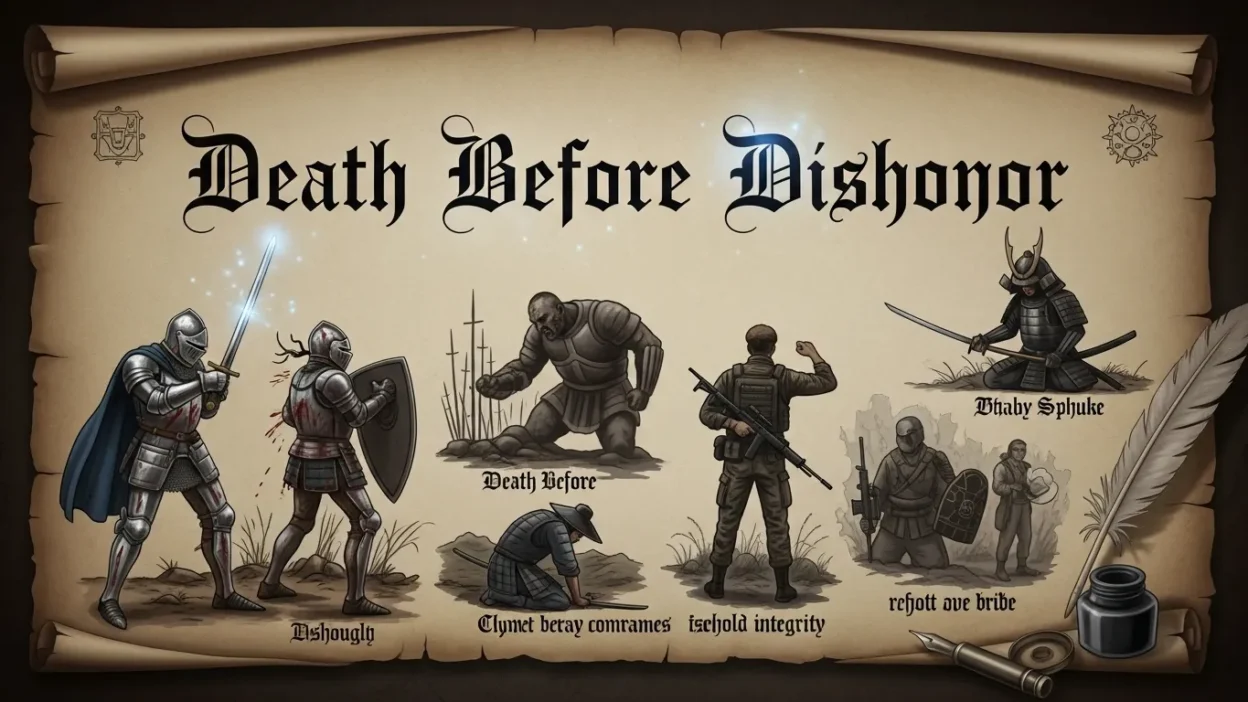
The phrase “Death Before Dishonor” carries a weight of profound meaning, symbolizing the choice to uphold one’s honor and integrity even at the cost of life itself.
Rooted in the codes of warriors, soldiers, and historical leaders, this expression reflects a deep commitment to values such as loyalty, courage, and personal integrity.
Across cultures and centuries, it has been more than just a saying it has been a guiding principle, shaping decisions in battle, leadership, and personal conduct.
Today, the phrase continues to resonate, appearing in military mottos, literature, tattoos, and motivational quotes, reminding people of the importance of standing by their principles.
Understanding the meaning of death before dishonor requires exploring its historical origins, cultural significance, and symbolic power. In this article, we will uncover where the phrase came from, how it has been interpreted over time, and why it remains a timeless expression of human courage and honor.
What Does “Death Before Dishonor” Mean?
The phrase “Death Before Dishonor” is a powerful declaration that emphasizes choosing personal integrity and honor over life itself. At its core, it reflects the idea that living a life tainted by betrayal, shame, or moral compromise is worse than death. This concept has been embraced by warriors, soldiers, and leaders throughout history who valued loyalty, courage, and ethical principles above survival.
Literal Meaning: Literally, the phrase conveys that one would rather face death than live with dishonor. It represents the ultimate commitment to one’s values, pledging that no compromise on honor is acceptable, even under the most extreme circumstances.
Figurative Meaning: Figuratively, it symbolizes unwavering moral strength, resilience, and the refusal to compromise principles for personal gain. In modern life, it can be applied beyond the battlefield—such as maintaining integrity in business, personal relationships, or social situations.
Key Values Behind the Phrase:
- Integrity – Standing firm on moral and ethical principles.
- Loyalty – Remaining faithful to one’s commitments and comrades.
- Courage – Facing challenges without yielding to fear or pressure.
- Pride – Upholding personal and cultural honor at all costs.
Understanding the meaning of death before dishonor helps us appreciate why this phrase has endured for centuries. It is not just a slogan for warriors; it is a philosophy that inspires people to live with dignity, face adversity bravely, and never compromise on what they believe is right.
The Origin of “Death Before Dishonor”
The phrase “Death Before Dishonor” has a long and storied history, rooted in the codes of warriors and soldiers who valued honor above life itself. Its origins can be traced back to ancient cultures where loyalty, courage, and personal integrity were considered the highest virtues. In these societies, dishonor was often seen as a fate worse than death, leading individuals to risk everything to uphold their reputation and moral standing.
In ancient Japan, the concept was central to the Bushido code, the ethical framework followed by samurai warriors. Bushido emphasized loyalty, honor, and self-discipline, and samurai were expected to maintain their honor even in the face of death. Rituals such as seppuku (ritual suicide) were sometimes performed to preserve personal and family honor, illustrating the extreme lengths to which individuals would go to avoid dishonor.
Similarly, in ancient Rome and Greece, soldiers and leaders adhered to strict codes of honor in battle. A cowardly act or betrayal could lead to public shame or exile, making personal reputation a matter of life and death. In medieval Europe, knights followed the chivalric code, which placed loyalty to one’s lord and honor above personal safety, reinforcing the idea that dying with honor was preferable to living in disgrace.
Over time, the phrase “Death Before Dishonor” evolved into a widely recognized motto, adopted by military organizations and even civilians as a symbol of courage and moral integrity. Its enduring presence reflects humanity’s timeless respect for honor, integrity, and the ethical principles that define a dignified life.
Death Before Dishonor in Ancient Cultures
The philosophy of “Death Before Dishonor” has deep roots in ancient cultures, where personal honor was often considered more valuable than life itself. Across civilizations, warriors were expected to uphold their reputation, demonstrate loyalty, and act with unwavering courage.
In Japan, the samurai lived by the Bushido code, which placed honor, loyalty, and self-discipline above all else. Samurai would rather die than face the shame of betrayal or failure, and acts like seppuku, a ritual suicide, were performed to maintain personal and family honor. The code shaped the samurai’s daily life, guiding decisions in both battle and society.
In ancient Sparta, soldiers were trained from childhood to value courage and loyalty. A Spartan warrior who fled battle or acted dishonorably faced severe social consequences, often being shamed or expelled. The culture taught that dying bravely on the battlefield was far preferable to living in disgrace.
Roman soldiers also embraced a strict code of honor. Loyalty to the empire and commanders was paramount, and dishonorable actions could result in public humiliation or legal punishment. Roman military culture emphasized courage, discipline, and the willingness to sacrifice oneself for the greater good.
During medieval Europe, knights followed the chivalric code, which demanded loyalty to their lord, courage in battle, and moral integrity. A knight who acted dishonorably risked losing both reputation and social standing.
Across these cultures, the common thread was clear: honor was worth more than life. The phrase “Death Before Dishonor” perfectly embodies this universal value, demonstrating humanity’s enduring respect for courage, integrity, and loyalty throughout history.
Death Before Dishonor in Military Traditions
The phrase “Death Before Dishonor” has long held a prominent place in military culture, reflecting the ideals of courage, loyalty, and unwavering commitment to duty. Across history, soldiers have embraced this philosophy as a guiding principle, understanding that honor and integrity are fundamental to the cohesion and effectiveness of military units.
Many military organizations have adopted the phrase or variations of it as official mottoes. These mottos serve as reminders that a soldier’s actions reflect not only personal character but also the reputation of their unit and nation. Upholding honor, even in the most dangerous circumstances, is considered a core responsibility of every soldier.
For soldiers, the concept goes beyond words—it shapes behavior on the battlefield. Choosing to act with integrity, maintain discipline, and protect comrades often requires great courage, sometimes even risking life itself. The willingness to sacrifice personal safety to preserve honor and fulfill duty exemplifies the essence of the phrase.
Historical examples highlight this dedication. Soldiers in numerous wars have refused surrender when capture meant shame or betrayal, choosing to fight to the end. Acts of bravery and loyalty, such as defending a position against overwhelming odds or protecting fellow soldiers, demonstrate the living meaning of “Death Before Dishonor.”
Even in modern times, the phrase continues to inspire military personnel worldwide. It symbolizes more than just battlefield valor—it represents the moral backbone of the armed forces, teaching that honor, integrity, and loyalty are values worth defending at any cost.
Symbolism Behind the Phrase
The phrase “Death Before Dishonor” carries profound symbolic meaning, representing values that go far beyond the battlefield. At its core, it embodies the idea that honor and integrity are more valuable than life itself, emphasizing the importance of ethical and moral principles in guiding human behavior.
One of the most prominent symbols within the phrase is the concept of honor versus dishonor. Honor represents personal integrity, loyalty, and courage, while dishonor reflects betrayal, cowardice, or moral compromise. By choosing “death” over dishonor, the phrase highlights the human desire to maintain dignity and self-respect, even in extreme circumstances.
The moral and ethical significance of the phrase is equally compelling. It encourages individuals to uphold their principles and make choices that align with their values, no matter the cost. This idea transcends military culture, influencing leaders, philosophers, and ordinary people seeking to live meaningful lives.
Psychologically, the phrase symbolizes resilience and courage. It reflects the strength required to face challenges, adversity, and fear while remaining true to one’s convictions. Those who embrace the concept are often admired for their unwavering commitment and inner strength.
Culturally, “Death Before Dishonor” has been adopted in literature, films, and modern motivational sayings as a symbol of loyalty, bravery, and pride. It continues to inspire people to act with integrity, defend their values, and live a life guided by principles rather than convenience or fear.
Ultimately, the phrase is more than a slogan—it is a timeless symbol of human dignity and ethical courage.
Death Before Dishonor in Modern Culture
Today, the phrase “Death Before Dishonor” continues to resonate far beyond historical battlefields, finding a place in modern culture as a symbol of courage, integrity, and loyalty. Its timeless appeal lies in its ability to inspire individuals to uphold their principles, even in everyday life.
One of the most visible expressions of the phrase today is in tattoos. Many people choose to ink “Death Before Dishonor” as a personal reminder to live with integrity and maintain honor in all aspects of life. These tattoos often incorporate symbols like swords, shields, or skulls, emphasizing courage and resilience.
In movies and television, the phrase is frequently used to highlight characters who face extreme challenges but remain true to their values. From war films to action dramas, protagonists who embody this philosophy are portrayed as brave, principled, and self-sacrificing, reinforcing the phrase’s association with honor and moral courage.
Literature also draws on this concept, with novels and historical accounts showcasing heroes who prioritize loyalty and integrity over personal gain or safety. These stories reinforce the universal admiration for individuals who act honorably, even in the face of danger.
On social media and motivational platforms, “Death Before Dishonor” is used in quotes, memes, and posts to inspire followers to stay committed to their values. It has become a metaphor for standing firm, being accountable, and resisting compromise in personal, professional, or social contexts.
Overall, the modern use of “Death Before Dishonor” demonstrates that the phrase has transcended its historical origins, continuing to symbolize unwavering integrity, courage, and the timeless human pursuit of honor.
Examples of “Death Before Dishonor” in Sentences
The phrase “Death Before Dishonor” is often used to illustrate situations where integrity and honor are valued above personal safety or comfort. Seeing how it appears in real-life examples helps readers grasp its true meaning and application.
In a military context, one might say: “The soldiers held their ground, embodying death before dishonor, refusing to surrender even when surrounded by the enemy.” This demonstrates courage, loyalty, and the willingness to sacrifice life rather than compromise principles.
In literature, the phrase often describes a character’s moral resolve: “The knight faced his enemies with death before dishonor, knowing that fleeing would bring shame to his name and kingdom.” Here, it emphasizes personal and societal honor, showing the value of integrity in decision-making.
In modern motivational speech, it might be applied figuratively: “In business and life, we should act with death before dishonor—never cutting corners or betraying trust, even when it’s difficult.” This usage highlights that the concept extends beyond the battlefield, influencing everyday ethics and behavior.
Even in popular culture, the phrase is used in films and social media posts: “He lived by the creed of death before dishonor, always defending his friends and standing by his values.” This reflects the enduring appeal of the phrase as a symbol of courage, loyalty, and moral strength.
By examining these examples, it becomes clear that “Death Before Dishonor” is more than just words—it is a philosophy that inspires people to maintain honor, act ethically, and confront challenges with unwavering courage.
Similar Quotes and Sayings About Honor
The philosophy behind “Death Before Dishonor” has inspired numerous quotes and sayings across cultures, emphasizing honor, integrity, and courage. These expressions reinforce the universal human value of choosing principle over personal gain or comfort.
One similar saying is “Honor above life”, which conveys the same message: personal integrity is more important than survival. This idea has appeared in ancient warrior codes, military mottos, and literature, reminding people that true courage involves moral strength, not just physical bravery.
Loyalty and integrity quotes also reflect the essence of the phrase. For example, “Loyalty to one’s comrades is the foundation of honor” illustrates how ethical behavior and commitment to others define true respect and dignity. Such sayings emphasize that honor is both personal and communal, connecting individual choices to societal values.
Famous historical figures have also echoed similar sentiments. The Roman philosopher Seneca wrote about virtue and courage, asserting that living without moral integrity is a life of shame, while dying for principles is honorable. Likewise, medieval knights and samurai often expressed that preserving reputation and ethical standards was worth more than life itself.
In modern times, motivational speakers and writers often reference these ideas to encourage resilience, accountability, and steadfastness. Phrases like “Stand by your values, even when it costs you everything” or “Integrity is the ultimate victory” continue to resonate with people seeking guidance in ethical decision-making.
By exploring similar quotes and sayings, we see that the concept of choosing honor over life is timeless, spanning cultures, centuries, and contexts, inspiring individuals to act with courage and moral clarity.
Misinterpretations of “Death Before Dishonor”
While the phrase “Death Before Dishonor” is widely admired, it is often misunderstood or taken too literally. Many people associate it solely with warriors and battlefield heroics, overlooking its broader philosophical and moral implications.
A common misinterpretation is the belief that the phrase promotes reckless behavior or glorifies death. In reality, it is not about seeking death but about choosing integrity and honor over compromising one’s principles. It emphasizes moral courage, accountability, and loyalty rather than a literal desire to die.
Another misunderstanding arises when the phrase is applied without context. For example, in modern life, some may interpret it as a call to refuse compromise in every situation, which can lead to rigid thinking or unnecessary conflict. The true meaning encourages ethical decision-making and standing by one’s values while still exercising wisdom and discretion.
From an ethical perspective, the phrase sparks debate. Critics argue that extreme adherence to honor could justify dangerous or harmful behavior. Supporters maintain that it is about prioritizing moral integrity and personal dignity, not creating unnecessary risks. The phrase becomes meaningful when balanced with judgment, responsibility, and respect for others.
Ultimately, understanding “Death Before Dishonor” requires distinguishing literal death from symbolic death. The essence of the phrase lies in moral strength, personal accountability, and the courage to face adversity without compromising core values. Misinterpretations often obscure this deeper ethical and cultural significance.
Why the Phrase Still Matters Today
The phrase “Death Before Dishonor” continues to hold relevance in modern society because it embodies timeless values that extend far beyond the battlefield. In an age where personal integrity and ethical behavior are often tested, the idea of upholding honor, even at great cost, resonates with people across cultures and professions.
In personal life, the phrase serves as a reminder to act with integrity in relationships, work, and decision-making. Choosing honesty over convenience, loyalty over betrayal, and principle over short-term gain reflects the enduring message of “Death Before Dishonor.” It encourages individuals to maintain self-respect and dignity in all circumstances.
In professional settings, the philosophy translates into ethical conduct, accountability, and leadership. Leaders who prioritize integrity inspire trust and respect, fostering environments where ethical behavior is valued over personal advantage. The concept reinforces the importance of doing what is right, even when facing pressure or adversity.
Moreover, in popular culture, the phrase remains a symbol of courage, resilience, and moral strength. It appears in literature, films, motivational quotes, and social media, reminding people that values such as honor, loyalty, and bravery are not outdated ideals but guiding principles for modern life.
Ultimately, “Death Before Dishonor” matters today because it teaches a universal lesson: life is meaningful when lived with integrity. It encourages individuals to face challenges bravely, make ethical choices, and prioritize honor over fleeting comfort, ensuring that moral courage remains a vital part of human character.
Death Before Dishonor in Personal Philosophy
The philosophy of “Death Before Dishonor” extends beyond military contexts and historical warrior codes; it can also guide personal behavior and ethical decision-making in everyday life. At its core, the concept encourages individuals to live with integrity, stand by their principles, and act with courage, even when doing so is difficult or unpopular.
Applying this philosophy begins with living with integrity. This means being honest, consistent, and morally upright in all areas of life—whether in relationships, work, or personal goals. Just as a soldier values honor above survival, an individual guided by this principle prioritizes ethical behavior over convenience or self-interest.
Standing up for your principles is another key aspect. Challenges, pressures, or temptations often test one’s values. Embracing the “Death Before Dishonor” mindset means refusing to compromise on what is right, even if it involves risk, criticism, or loss. This strengthens character and builds long-term respect from others.
Respect and reputation are also central to this philosophy. Maintaining honor in actions and words cultivates trust, admiration, and a sense of personal pride. People who consistently act with courage and integrity often inspire others, creating a positive influence that extends beyond themselves.
Ultimately, adopting the principle of “Death Before Dishonor” in personal philosophy is about living intentionally. It is a reminder that a meaningful life is not measured by comfort or avoidance of risk, but by the courage to uphold values, protect dignity, and act honorably in all circumstances.
(FAQs)
1. What does “Death Before Dishonor” mean?
“Death Before Dishonor” is a phrase that emphasizes choosing honor, integrity, and moral principles over life itself. It signifies a commitment to uphold values and personal dignity, even at great risk.
2. Where did the phrase “Death Before Dishonor” originate?
The phrase has roots in ancient warrior cultures, including the samurai of Japan, Roman soldiers, Spartans, and medieval knights. It evolved as a guiding principle emphasizing courage, loyalty, and ethical conduct.
3. How is “Death Before Dishonor” used in military culture?
Military organizations adopt the phrase or similar mottos to inspire soldiers to act with loyalty, bravery, and integrity. It symbolizes the commitment to honor and duty, even in life-threatening situations.
4. What is the symbolism behind “Death Before Dishonor”?
The phrase symbolizes moral courage, resilience, loyalty, and ethical integrity. It represents the choice to uphold one’s values rather than compromise principles for safety or convenience.
5. Can “Death Before Dishonor” be applied in modern life?
Yes. Beyond the battlefield, it applies to personal, professional, and social situations. It encourages ethical behavior, accountability, and standing firm in one’s principles.
6. Are there similar sayings to “Death Before Dishonor”?
Yes. Similar expressions include “Honor Above Life”, “Loyalty and Integrity”, and other quotes emphasizing courage, principle, and moral strength.
7. Is “Death Before Dishonor” meant to be taken literally?
Not necessarily. While historically associated with literal sacrifice, it is often symbolic today, representing moral strength and the courage to act with honor.
Conclusion:
The phrase “Death Before Dishonor” is more than a historical motto or military slogan it is a timeless expression of courage, integrity, and unwavering moral strength.
From the samurai of Japan to Roman soldiers, Spartans, and medieval knights, the principle has guided warriors to choose honor over life itself, shaping decisions and defining reputations.
Beyond its historical roots, the philosophy remains relevant today. It inspires individuals to live with integrity, stand by their principles, and act ethically in personal, professional, and social contexts.
Whether seen in literature, movies, tattoos, or motivational quotes, the phrase continues to symbolize loyalty, courage, and resilience.
At its core, “Death Before Dishonor” teaches a universal lesson: life is meaningful when lived with honor.
It reminds us that true bravery is not only about facing physical danger but also about making difficult moral choices, protecting one’s dignity, and refusing to compromise on what is right.
By embracing this principle, people can cultivate self-respect, inspire others, and live a life guided by courage, ethical conviction, and enduring values.

Welcome to TextFlirtz.com, your ultimate destination for flirty, fun, and clever text messages! Whether you’re looking to break the ice, charm your crush, or keep the sparks alive in your relationship, we’ve got a treasure trove of pick-up lines, flirty texts, and witty messages that make flirting effortless and exciting. Dive in, explore, and let your words do the magic—because at TextFlirtz.com, every message is a chance to flirt smarter, not harder.