

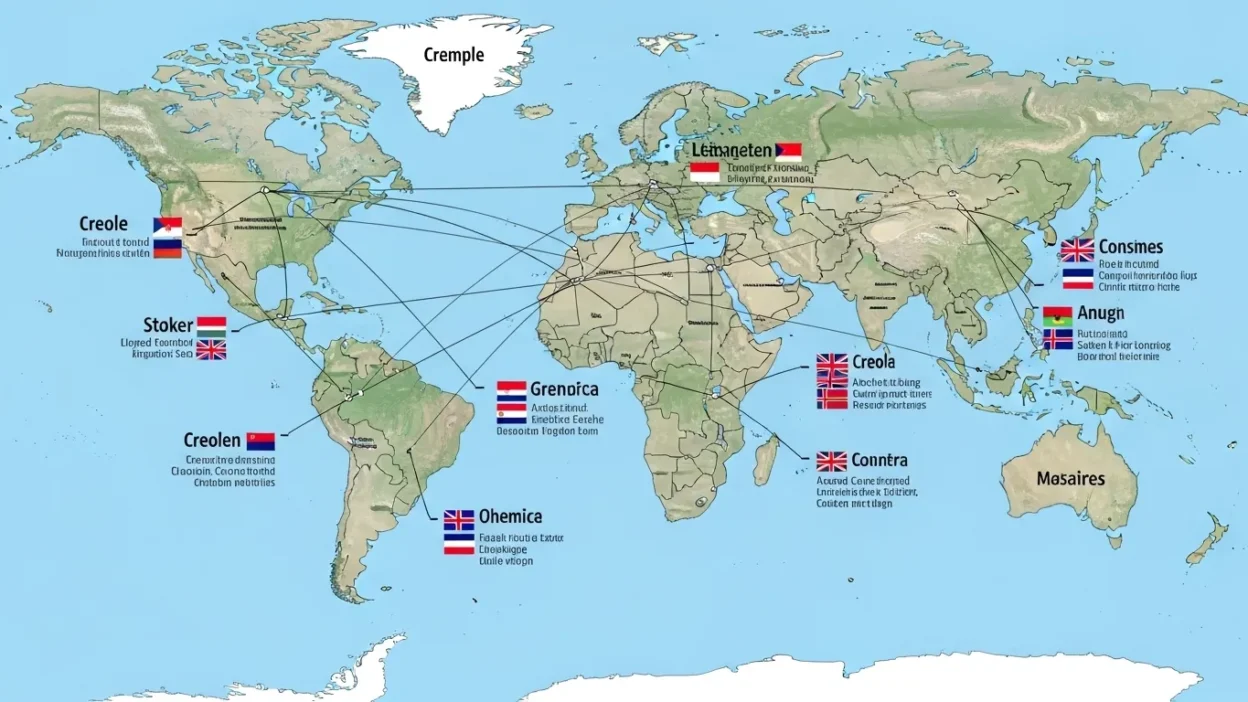
The word “Creole” carries a rich and multifaceted meaning, spanning language, culture, and identity. While many people associate it simply with a language or a group of people, its true significance goes much deeper.
Historically, the term emerged during the colonial era to describe people born locally in the colonies, often of mixed European, African, or Indigenous ancestry. Over time, “Creole” also came to describe languages that evolved from a mix of different tongues, known today as Creole languages.
Beyond language and ancestry, Creole reflects a vibrant cultural identity, expressed through food, music, traditions, and everyday life. Understanding Creole requires looking at its linguistic roots, historical context, and cultural significance.
In this article, we’ll explore the full meaning of Creole, including its origins, how Creole languages develop, who Creole people are, and the unique culture that carries this name.
What Does Creole Mean?
The word “Creole” has several interconnected meanings, depending on context. At its core, it refers to people, language, and culture, each carrying its own unique significance.
Creole as a Language
In linguistics, a Creole language is a fully developed, stable language that emerges from the mixing of two or more languages. Often, Creoles develop from a pidgin, which is a simplified language used for communication between groups that do not share a common tongue. Unlike pidgins, which have no native speakers, Creoles are spoken natively by entire communities. Examples include Haitian Creole, Jamaican Creole, and Louisiana Creole, each with distinct grammar, vocabulary, and pronunciation influenced by European, African, and Indigenous languages.
Creole as People
Historically, the term described people born locally in colonies, especially those of mixed European and African ancestry. In regions like the Caribbean, Louisiana, and parts of Africa, “Creole” identifies communities with unique histories, blending local and colonial heritage.
Creole as Culture
Beyond language and ancestry, Creole represents a distinct cultural identity. It encompasses cuisine, music, festivals, and traditions that reflect a fusion of diverse influences. From spicy Creole dishes to rhythmic music, the culture embodies resilience, creativity, and community.
Understanding the meaning of Creole requires considering all these layers. It is not just a word but a window into history, identity, and linguistic evolution, showing how people and language adapt, survive, and thrive in complex cultural landscapes.
Origin and Etymology of the Word Creole
The word “Creole” has a fascinating history that reveals much about colonial societies and cultural exchange. Its origin can be traced to the Portuguese word “crioulo” and the Spanish word “criollo”, both meaning “locally born”. Initially, the term referred to people of European descent who were born in the colonies rather than in Europe, distinguishing them from immigrants. Over time, its use expanded to include individuals of mixed ancestry and eventually entire communities shaped by colonial life.
Historical Context
During the 16th and 17th centuries, European powers colonized the Caribbean, Latin America, and parts of Africa. In these regions, Creole populations emerged as a result of interactions between European settlers, enslaved Africans, and Indigenous peoples. These communities developed their own languages, customs, and social identities.
Linguistic Evolution
As Creole communities formed, so did Creole languages. These languages developed from the contact between European colonial languages (like French, Spanish, Portuguese, and English) and African or Indigenous languages. Over generations, what began as a simplified pidgin evolved into a fully functional Creole language, capable of expressing complex ideas and used as a native tongue.
Modern Usage
Today, “Creole” carries broader meanings. It can describe people, language, culture, and identity, reflecting centuries of history, migration, and cultural blending. Understanding its etymology not only clarifies the term itself but also sheds light on the historical and social dynamics that shaped the communities and languages that bear the Creole name.
Creole Language Meaning – What Is a Creole Language?
A Creole language is a fully developed, natural language that emerges from the mixing of two or more languages, usually in situations of colonial contact, trade, or migration. Unlike a pidgin, which is a simplified form of communication with no native speakers, a Creole language is spoken natively by entire communities. Creoles have their own grammar, vocabulary, and pronunciation, making them distinct and complete languages in their own right.
How Creoles Develop
Creole languages often begin as pidgins—simplified languages created to enable communication between groups who do not share a common language. When children grow up learning a pidgin as their first language, it evolves into a Creole, gaining consistent grammar and expanded vocabulary. This process, known as nativization, transforms a limited pidgin into a fully expressive language.
Features of Creole Languages
Creole languages typically draw vocabulary from a colonial European language (like French, English, Spanish, or Portuguese) while incorporating grammatical structures and influences from African, Indigenous, or other local languages. For example, Haitian Creole uses mostly French-derived words but has unique grammar influenced by West African languages. Similarly, Jamaican Creole blends English vocabulary with African syntax and expressions.
Significance of Creole Languages
Creoles are more than linguistic curiosities—they are symbols of cultural identity and resilience, representing communities that adapted to challenging historical circumstances. Recognizing Creole languages as real, fully developed languages challenges outdated misconceptions that they are “broken” or “simplified” versions of European languages.
Examples of Creole Languages Around the World
Creole languages exist in many regions, each reflecting the unique history, culture, and linguistic influences of its community. These languages often blend European vocabulary with African, Indigenous, or Asian grammatical structures, creating distinct and fully functional languages.
Caribbean Creoles
The Caribbean is home to several well-known Creoles. Haitian Creole is derived primarily from French, with influences from African languages and some Indigenous terms. It is spoken by nearly all Haitians and is an official language of Haiti. Jamaican Creole, also called Patois, blends English vocabulary with African syntax and pronunciation. Other Caribbean examples include Trinidadian Creole and Bahamian Creole, each shaped by local history and community needs.
American Creoles
In the United States, Louisiana Creole developed from French, African, and Native American influences. Similarly, the Gullah language spoken along the southeastern coast combines English vocabulary with African grammar. These languages emerged from communities formed during slavery and colonization.
African Creoles
Africa has several Creole languages, such as Sierra Leone Krio, which mixes English with African languages and serves as a lingua franca. Cape Verdean Creole evolved from Portuguese and West African languages, reflecting the island nation’s colonial history.
Indian Ocean and Asian Creoles
The Indian Ocean islands feature Mauritian Creole and Seychellois Creole, both rooted in French but influenced by African and Asian languages. In Asia, the Chavacano language of the Philippines developed from Spanish mixed with local Philippine languages.
These examples highlight that Creole languages are not isolated; they are living, evolving systems of communication that reflect centuries of cultural interaction, adaptation, and resilience.
Creole People Meaning Who Are the Creole People?
The term “Creole people” has a historical and regional significance, referring to communities shaped by centuries of cultural and racial blending. Originally, during the colonial era, “Creole” described people of European descent born in the colonies, distinguishing them from immigrants who arrived from Europe. Over time, the meaning expanded to include individuals of mixed African, European, and sometimes Indigenous ancestry, particularly in the Caribbean, Latin America, and parts of Africa.
Regional Variations
In the Caribbean, Creole people often have mixed African and European heritage, with distinct cultural identities in countries like Haiti, Trinidad, and Jamaica. In Louisiana, United States, the term “Creole” refers to descendants of French and Spanish settlers, as well as African and Native American ancestry, forming a unique cultural group with its own traditions, cuisine, and dialect. In parts of Africa, such as Sierra Leone or Cape Verde, Creole communities emerged from historical trade, colonization, and migration, creating languages like Krio and Cape Verdean Creole.
Cultural Identity
Being Creole is not solely about ancestry it also reflects shared language, culture, and heritage. Creole people often maintain unique traditions, including music, food, and festivals, that preserve their community identity.
Modern Perspective
Today, “Creole” represents a rich, multi-layered identity, encompassing ancestry, language, and culture. It emphasizes the resilience and adaptability of communities that thrived despite colonial histories and social upheavals. Understanding Creole people provides insight into the complex interplay of history, migration, and cultural fusion that defines this diverse group.
Creole Culture Meaning – Language, Food, Music, and Traditions
The term “Creole culture” encompasses the rich traditions, practices, and expressions of communities identified as Creole. It reflects centuries of cultural blending, combining European, African, Indigenous, and sometimes Asian influences into a unique and vibrant identity.
Language as Cultural Foundation
Language is central to Creole culture. Creole languages serve not only as communication tools but also as symbols of identity and heritage. They preserve oral histories, folklore, and traditional expressions, connecting communities to their past while shaping modern social life.
Creole Cuisine
Creole food is another hallmark of the culture. It is characterized by fusion cooking, blending ingredients and techniques from different regions. For example, Louisiana Creole cuisine mixes French, African, Spanish, and Caribbean flavors, featuring dishes like gumbo, jambalaya, and étouffée. Caribbean Creole food also highlights spices, tropical fruits, and seafood, creating a flavorful reflection of local history and available ingredients.
Music and Arts
Music is a vital part of Creole cultural expression. Genres such as Zouk, Calypso, Jazz, and Zydeco incorporate rhythms and instruments from African, European, and Indigenous traditions. Art and dance often accompany music, reinforcing communal identity and celebration.
Traditions and Festivals
Creole culture celebrates life through festivals, rituals, and family-centered traditions. Events like Mardi Gras in Louisiana or Carnival in the Caribbean showcase music, costumes, and dance, reflecting the blended heritage and resilience of Creole communities.
In essence, Creole culture is dynamic and adaptive, offering a living example of how diverse influences can combine to create distinctive, enduring traditions that continue to thrive across the globe.
Difference Between Pidgin and Creole
Understanding the distinction between pidgin and Creole is crucial when discussing Creole languages, as the two terms are often confused. While both arise from language contact between different linguistic groups, they serve different purposes and evolve differently.
What Is a Pidgin?
A pidgin is a simplified language created to facilitate communication between people who do not share a common tongue. It usually has limited vocabulary and simplified grammar, borrowing words from dominant languages while adapting them for practical use. Pidgins are never spoken as a first language; they exist mainly for trade, work, or basic social interaction. Examples include early trade pidgins in West Africa or the Caribbean.
What Is a Creole?
A Creole language develops when a pidgin becomes nativized, meaning it is learned as a first language by children. Through this process, the language becomes fully structured, with consistent grammar, expanded vocabulary, and expressive capacity. Creoles can be used in all aspects of daily life, from home and school to government and literature. Haitian Creole and Jamaican Creole are prime examples.
Key Differences at a Glance
| Feature | Pidgin | Creole |
|---|---|---|
| Speakers | Non-native | Native speakers |
| Grammar | Simplified | Fully developed |
| Vocabulary | Limited | Extensive, mixed origins |
| Usage | Trade or limited context | Daily life and communication |
| Status | Often temporary | Stable and evolving |
Summary
While a pidgin is a bridge between languages, a Creole is a living, thriving language that embodies the history, identity, and culture of its speakers. Recognizing this distinction helps clarify misconceptions about Creole languages as “broken” or “simplified.”
Where Creole Languages Are Spoken
Creole languages are spoken across the Caribbean, the Americas, Africa, the Indian Ocean, and parts of Asia, reflecting the historical movements of people, trade, and colonization. Each region’s Creole languages carry unique linguistic and cultural influences.
Caribbean Region
The Caribbean has some of the most widely spoken Creole languages. Haitian Creole is spoken by nearly all Haitians and is an official language alongside French. Jamaican Creole, also called Patois, is used informally alongside English and is central to Jamaican identity. Other Caribbean Creoles include Trinidadian Creole, Bahamian Creole, and Barbadian Creole, each blending European languages with African and Indigenous influences.
North and South America
In the United States, Louisiana Creole developed from French, African, and Native American roots. Similarly, the Gullah language of South Carolina and Georgia combines English and African elements. In South America, Creole languages appear in countries such as Suriname and Guyana, reflecting the colonial Dutch and British presence and African heritage.
Africa
Africa is home to Creole languages like Sierra Leone Krio, a lingua franca derived from English and West African languages. Cape Verdean Creole, spoken in Cape Verde, evolved from Portuguese and African linguistic influences. These languages often serve as bridges between diverse ethnic groups.
Indian Ocean and Asia
The Indian Ocean islands feature Mauritian Creole and Seychellois Creole, both rooted in French and African languages. In Asia, Chavacano, spoken in the Philippines, developed from Spanish mixed with local Philippine languages.
Creole languages, therefore, are global phenomena, reflecting centuries of migration, colonization, and cultural blending. They are not limited to one country or continent but are living legacies of history and human adaptation.
Common Characteristics of Creole Languages
Creole languages, despite developing in different regions of the world, share several distinctive characteristics that reflect their origins from language contact and blending. These features make Creoles fully functional languages, capable of expressing complex ideas.
1. Simplified Grammar Origins
Creoles often begin with simplified grammar derived from pidgins, but as they become nativized, their grammar stabilizes and becomes systematic. They usually have consistent word order, tense markers, and pronoun usage, making communication precise and efficient.
2. Vocabulary Sources
Most Creole languages borrow the majority of their vocabulary from a colonial European language, such as French, English, Portuguese, or Spanish. However, the grammar, pronunciation, and expressions often incorporate African, Indigenous, or other local linguistic influences. For example, Haitian Creole uses French-derived words but applies African-influenced syntax.
3. Pronunciation Patterns
Creoles tend to have simplified and regularized pronunciation compared to the source language. This makes the language easier for children to learn as a first language and contributes to the unique sound of each Creole.
4. Functional Flexibility
Creole languages are used in all areas of daily life—home, school, business, and literature. Unlike pidgins, which are limited to basic communication, Creoles are capable of expressing complex thoughts, emotions, and abstract concepts.
5. Cultural Identity
Creoles are markers of identity for their communities. They preserve history, oral traditions, and social practices, linking language directly to culture and heritage.
These characteristics demonstrate that Creoles are not “broken” languages but dynamic, evolving systems that reflect the creativity and resilience of their speakers.
Common Misunderstandings About Creole
Despite their rich history and linguistic significance, Creole languages and cultures are often misunderstood. Many misconceptions arise from outdated views and limited exposure, leading to stereotypes that do not reflect reality.
1. Creole Is Not a Broken Language
One of the most common misconceptions is that Creoles are “broken” or “simplified” versions of European languages. In reality, Creoles are fully developed languages with their own grammar, vocabulary, and syntax. They are capable of expressing complex ideas, emotions, and abstract concepts, just like any other language.
2. Creole Is More Than One Language
Another misunderstanding is treating “Creole” as a single language. In truth, there are hundreds of Creole languages worldwide, each unique to its region and influenced by different European and local languages. Haitian Creole, Jamaican Creole, Louisiana Creole, and Mauritian Creole are just a few examples.
3. Creole Does Not Only Refer to Mixed-Race People
While historically “Creole” referred to people of mixed ancestry born in colonies, today it also describes language, culture, and heritage. Being Creole may involve ancestry, but it is equally about shared cultural practices, community identity, and linguistic heritage.
4. Creole Is Not Inferior to Other Languages
Creole languages have sometimes been stigmatized as inferior or informal. In fact, they are legitimate, living languages used in daily life, education, literature, music, and government.
By dispelling these misunderstandings, we can appreciate that Creole languages and cultures are vibrant, resilient, and deeply meaningful, representing centuries of history, adaptation, and creativity.
Creole in Everyday English – Examples and Usage
The word “Creole” appears in everyday English in a variety of contexts, often referring to language, people, or culture. Understanding its usage helps convey respect for its history and meaning.
1. Creole as a Language
In linguistic contexts, “Creole” is used to describe a fully developed language that originated from the blending of multiple languages. For example:
- “Haitian Creole is spoken by nearly all residents of Haiti.”
- “Jamaican Creole has unique grammar that differs from standard English.”
2. Creole as People
When referring to people, “Creole” often indicates a community with shared ancestry and culture, especially in the Caribbean or Louisiana. Examples include:
- “The Louisiana Creoles have a rich culinary and musical heritage.”
- “Creole communities in the Caribbean preserve unique traditions and languages.”
3. Creole as Culture
The word is also used to describe cultural elements, including cuisine, music, and festivals:
- “Creole cuisine blends African, European, and Indigenous influences.”
- “Zydeco is a popular Creole music genre in Louisiana.”
4. Using Creole Correctly
It is important to use “Creole” in context. Using it solely to describe race or ethnicity can be misleading. Correct usage acknowledges the intersection of language, culture, and identity. For example, instead of saying “he speaks broken Creole,” it is more accurate to say, “he speaks Haitian Creole fluently.”
In everyday English, Creole is more than a label; it represents a living, evolving heritage, reflecting the resilience and creativity of its speakers and communities across the world.
Why the Word Creole Has Multiple Meanings
The word “Creole” has multiple meanings because it developed over centuries in diverse historical, linguistic, and cultural contexts. Its evolution reflects the complexity of human migration, colonialism, and cultural blending.
1. Historical Roots
Originally, “Creole” referred to people of European descent born in the colonies, distinguishing them from immigrants. As colonial societies became more diverse, the term expanded to include people of mixed African, European, and Indigenous ancestry. This historical shift created a dual meaning: referring both to ancestry and local identity.
2. Linguistic Evolution
The expansion of “Creole” into a linguistic term further broadened its meaning. Languages that developed from pidgins—simplified contact languages—were eventually called Creoles once they became fully nativized. As a result, “Creole” now describes both people and the languages they speak, linking identity and communication.
3. Cultural Significance
Over time, Creole also came to represent a rich cultural identity, including music, food, traditions, and social practices. The term now signifies not just ancestry or language, but a living cultural heritage that is constantly evolving.
4. Regional Variation
The meaning of Creole can differ depending on the region. In the Caribbean, it may emphasize language and culture, while in Louisiana, it may stress ancestry and heritage. In Africa, it can denote a community formed through historical trade and migration.
Because of this layered history, “Creole” is a multi-dimensional term. Understanding its multiple meanings requires considering language, people, culture, and history together, rather than in isolation.
Related Terms to Creole – Pidgin, Dialect, Vernacular
Understanding Creole also involves distinguishing it from related linguistic terms such as pidgin, dialect, and vernacular, which are sometimes confused with Creole.
1. Pidgin
A pidgin is a simplified language developed to enable communication between people who do not share a common tongue. Pidgins usually have limited vocabulary and simplified grammar and are used primarily in trade or work contexts. Unlike Creoles, pidgins are not spoken as a first language. When a pidgin becomes nativized and develops a full grammar, it can evolve into a Creole language.
2. Dialect
A dialect is a regional or social variation of a language. It may differ in pronunciation, vocabulary, or grammar from the standard language but is still mutually intelligible with it. For example, Jamaican English and American Southern English are dialects, whereas Jamaican Creole is a separate Creole language.
3. Vernacular
The vernacular refers to the everyday spoken language of a community, often used in informal contexts. It can include dialects or Creoles but does not necessarily constitute a distinct language. Vernacular emphasizes usage and context, rather than origin or linguistic development.
Summary of Differences
While pidgins, dialects, and vernaculars are related to communication, Creoles are fully developed, native languages with their own grammar, vocabulary, and cultural significance. Recognizing these distinctions helps avoid common misunderstandings, such as labeling a Creole as a “broken language” or confusing it with informal speech.
By understanding related terms, we can appreciate Creole as a unique linguistic and cultural phenomenon, rather than merely a variation of a European language.
Importance of Creole Languages Today
Creole languages are not just relics of history—they remain vital to the identity, culture, and daily life of millions of people worldwide. Understanding their importance highlights both their linguistic value and their role in preserving cultural heritage.
1. Cultural Identity
Creole languages are a core part of community identity. They carry the history, traditions, and collective memory of the people who speak them. For example, Haitian Creole reflects centuries of resilience and adaptation under colonial rule and slavery, while Louisiana Creole preserves the heritage of French, African, and Native American ancestors. Speaking a Creole language strengthens cultural pride and belonging.
2. Education and Communication
In many regions, Creoles serve as the primary language of communication at home and in communities. Recognizing and teaching Creole in schools helps children learn effectively in their mother tongue, improving literacy and education outcomes. In addition, Creoles are increasingly used in media, literature, and local governance, expanding their practical and social relevance.
3. Preservation of Heritage
Creole languages are living records of history, capturing the fusion of languages, cultures, and experiences across generations. Preserving these languages helps maintain unique cultural expressions, such as storytelling, proverbs, songs, and oral traditions.
4. Global Significance
Creoles demonstrate the creative adaptability of human language. Linguists study Creoles to understand language development, social adaptation, and cultural exchange. They also offer insight into how languages evolve naturally under contact and pressure.
In short, Creole languages are essential to cultural continuity, education, and global linguistic diversity, proving that they are far more than “simplified” languages—they are vibrant, thriving, and indispensable.
Frequently Asked Questions About Creole Meaning
To better understand Creole, it helps to address some of the most common questions about the term, its languages, and its cultural significance.
1. What does Creole literally mean?
Originally, “Creole” meant “locally born”, referring to people born in the colonies rather than in Europe. Over time, it also came to describe people of mixed ancestry, languages, and cultural identities.
2. Is Creole a language or ethnicity?
Creole can refer to both. As a language, it is a fully developed, nativized language derived from European and local languages. As an ethnic or cultural term, it refers to communities with shared ancestry, heritage, and traditions.
3. What is an example of Creole?
Examples include Haitian Creole (French-based), Jamaican Creole (English-based), Louisiana Creole (French and African influences), and Mauritian Creole (French and African influences).
4. Is Creole the same as pidgin?
No. A pidgin is a simplified language used for basic communication and has no native speakers. A Creole develops from a pidgin when it becomes a first language of a community, with fully structured grammar and vocabulary.
5. Who speaks Creole?
Creoles are spoken by millions worldwide, particularly in the Caribbean, parts of Africa, the Indian Ocean islands, and areas of the Americas where colonial interactions occurred.
6. Does Creole refer only to mixed-race people?
No. While Creole historically referred to people of mixed ancestry, today it also refers to language, culture, and community identity, beyond racial or ethnic labels.
Answering these questions clarifies that Creole is a multifaceted term, encompassing language, people, and culture, and should always be understood in its proper historical and social context.
Conclusion:
The word “Creole” is much more than a simple label. It represents a complex and layered identity that spans language, people, culture, and history.
From its origins as a term meaning “locally born” during the colonial era, Creole has evolved to describe people of diverse ancestry, fully developed languages, and vibrant cultural practices.
Creole languages, such as Haitian Creole, Jamaican Creole, and Louisiana Creole, are not broken or simplified forms of European languages. They are complete, expressive, and dynamic, capable of conveying everything from daily conversation to poetry, music, and literature.
Similarly, Creole people embody a blend of historical influences, with distinct customs, traditions, and cultural contributions that enrich the regions where they live.
Creole culture encompassing music, cuisine, festivals, and social practices is a testament to the creativity and resilience of communities that have adapted across centuries of migration, colonization, and cultural exchange. Understanding Creole requires seeing the term as a multidimensional concept that connects language, identity, and heritage.
Today, Creole continues to thrive, offering insight into how languages evolve, communities endure, and cultures blend. Recognizing and respecting its many layers allows us to appreciate Creole as a living legacy, not only a historical or linguistic curiosity.
By exploring its meaning, origins, and significance, we gain a deeper understanding of human adaptability, cultural fusion, and linguistic richness all embodied in the word Creole.

Welcome to TextFlirtz.com, your ultimate destination for flirty, fun, and clever text messages! Whether you’re looking to break the ice, charm your crush, or keep the sparks alive in your relationship, we’ve got a treasure trove of pick-up lines, flirty texts, and witty messages that make flirting effortless and exciting. Dive in, explore, and let your words do the magic—because at TextFlirtz.com, every message is a chance to flirt smarter, not harder.