

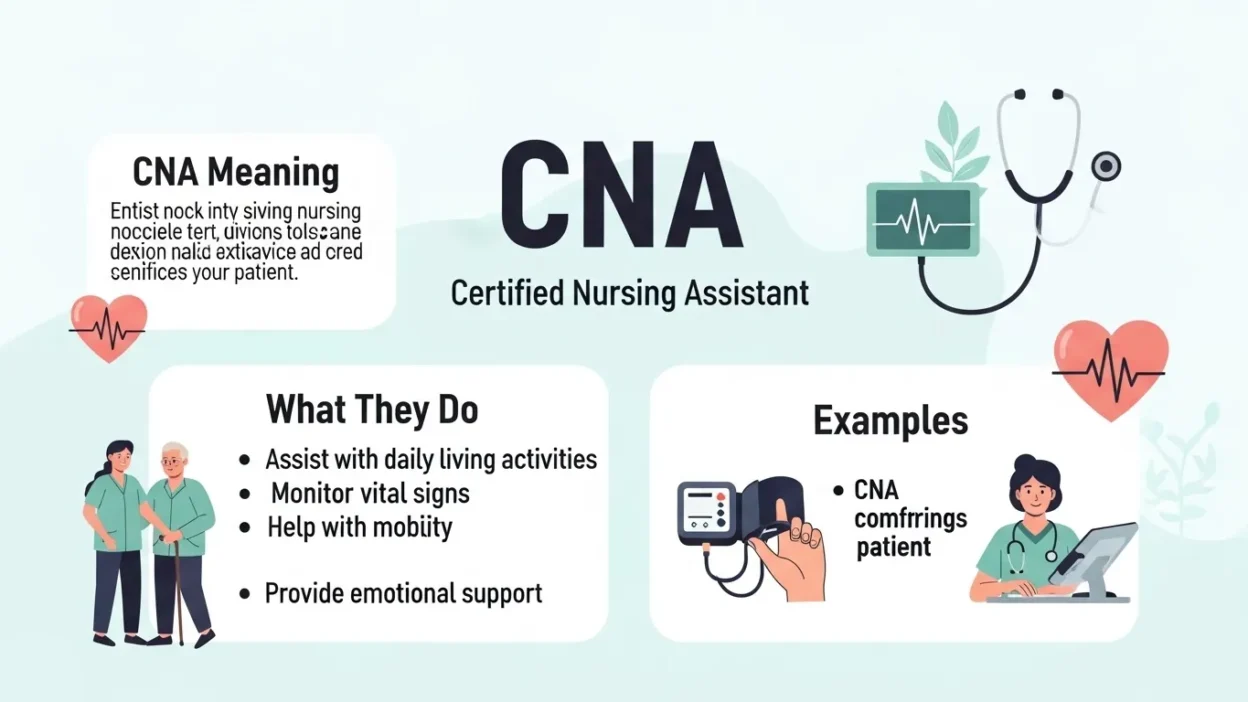
In the healthcare world, you might often come across the term CNA, especially in hospitals, nursing homes, and clinics. But what exactly does CNA mean in medical terms?
CNA stands for Certified Nursing Assistant, a vital healthcare professional who provides direct patient care under the supervision of registered nurses and licensed practical nurses.
CNAs play a crucial role in ensuring patients’ comfort, safety, and overall well-being, performing tasks like monitoring vital signs, assisting with daily activities, and supporting both patients and medical staff.
If you are a student exploring a career in healthcare, a family member trying to understand patient care roles, or someone considering becoming a CNA, understanding this role is essential.
This article will break down everything you need to know about CNAs their responsibilities, required skills, training, certification, salary, career growth, and how they differ from nurses giving you a complete picture of this essential medical profession.
What Does CNA Mean in Medical Terms?
In the medical field, CNA stands for Certified Nursing Assistant. It is one of the most common abbreviations in healthcare settings, especially hospitals, nursing homes, and clinics. The term is used to identify healthcare professionals who provide essential patient care under the supervision of nurses. CNAs are considered the frontline caregivers because they interact with patients directly, often spending the most time with them compared to other medical staff.
CNA Full Form in Healthcare
- C – Certified: Indicates that the individual has completed a state-approved training program and passed a certification exam.
- N – Nursing: Shows the role is focused on patient care within the nursing framework.
- A – Assistant: Highlights that CNAs assist registered nurses (RNs) or licensed practical nurses (LPNs) rather than making independent medical decisions.
Simple Definition
A Certified Nursing Assistant is a healthcare worker responsible for providing basic patient care, supporting daily activities such as bathing, feeding, moving patients, and monitoring vital signs. They act as a bridge between patients and nurses, reporting any changes in a patient’s condition.
CNA in Medical Abbreviations
Medical charts, hospital reports, and scheduling systems often use CNA as a shorthand. For example, a patient’s care log might read, “CNA assisted with mobility and feeding,” indicating the tasks completed by the nursing assistant. Understanding this abbreviation is essential for patients, family members, and healthcare students to know the role CNAs play in patient care and hospital operations.
What Is a Certified Nursing Assistant (CNA)?
A Certified Nursing Assistant (CNA) is an entry-level healthcare professional who provides direct patient care under the supervision of registered nurses (RNs) or licensed practical nurses (LPNs). CNAs are essential members of the healthcare team because they handle many of the daily tasks that ensure patients remain comfortable, safe, and healthy. Their work is especially critical in hospitals, nursing homes, assisted living facilities, and home healthcare environments.
Role in the Healthcare Team
CNAs act as the eyes and ears of nurses, observing patients closely and reporting any changes in their condition. They provide hands-on support with routine tasks such as helping patients bathe, dress, eat, and move around. This allows nurses and other medical professionals to focus on more complex medical procedures and patient care plans. CNAs also offer emotional support, often forming strong bonds with patients, especially in long-term care settings.
Importance of CNAs in Healthcare
Without CNAs, hospitals and care facilities would struggle to maintain high-quality patient care. They play a vital role in maintaining hygiene, preventing bedsores, assisting with mobility, and monitoring patients’ vital signs. CNAs also ensure that patients’ daily needs are met promptly, which contributes to faster recovery, better comfort, and overall patient satisfaction. Their work forms the foundation of patient-centered care, making them indispensable in any healthcare setting.
In short, a CNA is more than just an assistant they are frontline caregivers whose efforts directly impact patient well-being and the efficiency of healthcare facilities.
What Does a CNA Do?
A Certified Nursing Assistant (CNA) plays a crucial role in healthcare by providing direct, hands-on patient care. Their responsibilities focus on supporting patients with daily activities, ensuring comfort, and assisting medical staff in delivering high-quality care. CNAs often spend the most time with patients, making them essential for monitoring both physical and emotional well-being.
Daily CNA Responsibilities
Personal Care Tasks
CNAs help patients with bathing, dressing, grooming, and toileting. These tasks are fundamental to maintaining hygiene and dignity, especially for patients who are bedridden or have limited mobility.
Monitoring Vital Signs
Taking and recording vital signs such as blood pressure, temperature, pulse, and respiration is a key CNA duty. Accurate measurements help nurses and doctors track patient health and detect potential complications early.
Mobility and Assistance
CNAs assist patients in moving safely, whether it’s helping them walk, use a wheelchair, or turn in bed. Proper support prevents falls, bedsores, and injuries, ensuring patient safety.
Feeding and Nutrition Support
For patients who need help eating, CNAs assist with meals, monitor food intake, and provide hydration. This ensures that patients maintain proper nutrition, which is essential for recovery and overall health.
Patient Comfort and Support
Beyond physical care, CNAs provide emotional support and companionship. Making beds, tidying rooms, and simply spending time with patients help improve morale and foster a caring environment.
In essence, CNAs combine medical support, personal care, and emotional attention to ensure patients receive comprehensive daily care. Their role is vital for both patient recovery and smooth hospital or facility operations.
CNA Duties in Different Healthcare Settings
Certified Nursing Assistants (CNAs) work in various healthcare environments, and their responsibilities can slightly differ depending on the setting. Understanding these differences helps clarify the versatility and importance of the CNA role.
CNA Duties in Hospitals
In hospitals, CNAs assist nurses in monitoring patients, preparing them for procedures, and providing bedside care. They may help with moving patients between rooms, collecting specimens, or assisting in post-operative recovery. Hospitals often have a fast-paced environment, requiring CNAs to respond quickly to patient needs while maintaining accuracy and care quality.
CNA Duties in Nursing Homes
Nursing homes focus on long-term patient care, primarily for the harmful. CNAs here provide daily living assistance, including bathing, dressing, feeding, and mobility support. They also engage residents in recreational activities, monitor chronic conditions, and ensure comfort, making their role crucial in maintaining quality of life for long-term residents.
CNA Duties in Assisted Living Facilities
In assisted living facilities, CNAs help residents who need partial support with daily activities. Responsibilities often include medication reminders, light housekeeping, meal assistance, and encouraging independence while ensuring safety.
CNA Duties in Home Healthcare
CNAs in home healthcare provide one-on-one care in a patient’s home. They assist with daily activities, medication reminders, mobility support, and basic health monitoring. This role requires strong communication skills and adaptability, as CNAs often work independently while coordinating with family members and medical professionals.
CNA Duties in Rehabilitation Centers
Rehab centers focus on recovery and therapy, so CNAs assist patients with exercises, mobility, and daily routines while monitoring progress and reporting to nurses or therapists.
Across all settings, CNAs are the backbone of patient care, ensuring safety, comfort, and consistent support every day.
Skills Required to Become a CNA
Becoming a Certified Nursing Assistant (CNA) requires a combination of technical knowledge, personal qualities, and physical abilities. These skills ensure CNAs can provide safe, compassionate, and effective care in healthcare settings.
Essential Personal Skills
Compassion and empathy are crucial because CNAs work closely with patients, many of whom may be harmful, ill, or disabled. Patience is also key, as daily routines can be repetitive, and patients may require extra attention or emotional support. Reliability and responsibility are vital since patients depend on CNAs for basic care, safety, and comfort.
Technical Skills
CNAs must have a basic understanding of medical procedures and patient care. This includes taking vital signs like blood pressure, pulse, and temperature, assisting with feeding and mobility, and practicing proper hygiene and infection control. Accurate documentation and reporting are also critical, as nurses rely on CNAs to communicate any changes in a patient’s condition.
Physical Requirements
CNAs often spend long hours standing, walking, and lifting patients, so physical stamina and strength are important. Proper body mechanics are necessary to prevent injury to both the patient and the caregiver.
Communication Skills
Effective communication is essential for interacting with patients, families, and medical staff. CNAs must clearly explain care procedures, listen to patient concerns, and report information accurately to nurses and doctors.
In summary, CNAs combine compassion, technical ability, physical endurance, and communication skills to deliver high-quality patient care. Mastery of these skills ensures they can handle the diverse challenges of the healthcare environment successfully.
CNA Education and Training Requirements
Becoming a Certified Nursing Assistant (CNA) requires completing a state-approved education and training program. These programs are designed to equip aspiring CNAs with the skills and knowledge needed for patient care in hospitals, nursing homes, and other healthcare settings.
Minimum Education Requirements
To enroll in a CNA training program, candidates typically need a high school diploma or GED. Some states may allow enrollment without a diploma if the applicant meets other criteria, such as passing a basic skills assessment.
CNA Training Programs
CNA training programs combine classroom instruction and hands-on clinical experience. Students learn about:
- Basic patient care: Bathing, grooming, feeding, and mobility assistance
- Medical terminology: Understanding hospital and clinical language
- Vital signs monitoring: Measuring blood pressure, temperature, pulse, and respiration
- Safety and infection control: Preventing accidents and the spread of disease
- Communication skills: Interacting effectively with patients, families, and medical staff
- Ethics and patient rights: Respecting confidentiality and patient dignity
Training Duration
Most CNA programs are 4 to 12 weeks long, depending on whether the course is part-time or full-time. Programs include clinical rotations, allowing students to practice skills under supervision in real healthcare settings.
Completing an approved CNA training program is the first step toward certification. Proper training ensures CNAs are competent, confident, and ready to provide high-quality care from day one, making it a critical foundation for anyone entering the healthcare field.
CNA Certification Process
After completing a state-approved training program, the next step to becoming a Certified Nursing Assistant (CNA) is obtaining official certification. Certification ensures that CNAs meet the standards required to provide safe and effective patient care.
CNA Certification Exam
The CNA certification exam typically consists of two parts:
- Written or oral test – This evaluates your knowledge of patient care, medical terminology, safety procedures, and infection control.
- Skills test – Candidates must demonstrate practical abilities, such as taking vital signs, assisting patients with mobility, performing hygiene tasks, and other essential caregiving skills.
Passing both sections is required to receive CNA certification. The exam ensures that candidates are prepared to handle real-world healthcare situations confidently.
State Licensing Requirements
Certification and licensing requirements vary by state. Most states require CNAs to:
- Complete a background check
- Submit proof of training completion
- Pass the certification exam
- Register with the state’s nursing assistant registry
Some states also require periodic recertification, usually every two years, which may include continuing education or a refresher course.
Health and Background Checks
Healthcare facilities require CNAs to have up-to-date vaccinations, a physical exam, and criminal background checks. These steps ensure patient safety and compliance with healthcare regulations.
By completing the certification process, CNAs gain the legal authorization to work in healthcare settings, demonstrating their competency and professionalism. Certification not only validates skills but also increases employability, credibility, and career opportunities in the medical field.
Where Do Certified Nursing Assistants Work?
Certified Nursing Assistants (CNAs) are highly versatile healthcare professionals, working in a wide range of settings where patient care is essential. Their responsibilities and daily routines can vary depending on the workplace, but their core mission supporting patients and assisting medical staff remains consistent.
Hospitals
In hospitals, CNAs assist nurses and doctors with preparing patients for procedures, monitoring vital signs, and providing bedside care. They may help with patient transfers, collect specimens, or support post-operative recovery. The fast-paced hospital environment requires CNAs to be adaptable, efficient, and attentive to patient needs.
Nursing Homes
Nursing homes focus on long-term care, often for har Vmfulpatients. CNAs help residents with daily living activities such as bathing, dressing, eating, and mobility. They also provide companionship, engage residents in recreational activities, and monitor chronic health conditions. CNAs are crucial for maintaining residents’ comfort and quality of life.
Assisted Living Facilities
In assisted living facilities, CNAs assist residents who require partial support. Duties often include medication reminders, light housekeeping, meal assistance, and promoting independence while ensuring safety.
Home Healthcare
CNAs in home healthcare provide one-on-one care in a patient’s home. They help with daily activities, monitor health conditions, and coordinate with family members and medical professionals. This setting requires strong communication skills and the ability to work independently.
Rehabilitation Centers
In rehabilitation centers, CNAs assist patients with mobility exercises, daily routines, and recovery monitoring, supporting therapists and nurses to help patients regain independence.
Across all settings, CNAs are the backbone of patient care, ensuring comfort, safety, and consistent support, making them indispensable in healthcare.
CNA vs Other Healthcare Jobs
Understanding how a Certified Nursing Assistant (CNA) compares to other healthcare roles helps clarify the responsibilities, training, and career path for aspiring healthcare professionals.
CNA vs Registered Nurse (RN)
The main difference between a CNA and an RN lies in education, responsibilities, and scope of practice. CNAs complete a short training program and certification, while RNs complete a two- or four-year degree in nursing. RNs can perform medical procedures, administer medications, and develop patient care plans, whereas CNAs provide basic daily care and assist nurses with routine tasks. While CNAs spend more time with patients physically, RNs take on advanced medical responsibilities.
CNA vs Licensed Practical Nurse (LPN)
Licensed Practical Nurses (LPNs) have more medical training than CNAs, usually completing a one-year program and passing a licensing exam. LPNs can administer medications, change dressings, and monitor more complex patient conditions, while CNAs focus on personal care, mobility, and basic monitoring. CNAs often support LPNs in long-term and hospital care settings.
CNA vs Medical Assistant
Medical Assistants (MAs) primarily work in clinics and outpatient settings, performing administrative tasks such as scheduling, patient records management, and basic clinical procedures like drawing blood. CNAs, in contrast, are more focused on hands-on patient care and assisting with daily living activities.
In short, CNAs are entry-level healthcare workers who provide direct care, whereas RNs, LPNs, and MAs have broader medical responsibilities or administrative duties. Understanding these differences is essential for those choosing a healthcare career path or planning to advance from CNA to higher roles.
CNA Salary and Job Outlook
Becoming a Certified Nursing Assistant (CNA) offers a stable entry into the healthcare field, with opportunities for growth and steady demand. Understanding salary ranges, factors affecting pay, and job outlook helps prospective CNAs plan their careers effectively.
Average CNA Salary
The average CNA salary varies depending on location, experience, and workplace type. In the United States, CNAs typically earn between $28,000 and $38,000 per year, or approximately $14 to $18 per hour. Hospitals and specialized facilities often pay higher wages than nursing homes or home healthcare settings.
Factors Affecting CNA Salary
Several factors influence CNA earnings:
- Experience: Experienced CNAs tend to earn higher wages.
- Location: Urban areas or regions with higher healthcare demand often offer better pay.
- Workplace Type: Hospitals, rehabilitation centers, and private care facilities typically pay more than nursing homes or assisted living facilities.
- Certifications and Skills: Additional certifications, such as specialized care for ICU or pediatrics, can increase earning potential.
Job Demand and Outlook
The demand for CNAs is strong and growing, primarily due to an aging population and the increasing need for long-term and home healthcare services. The Bureau of Labor Statistics (BLS) projects steady job growth in the coming years, making CNA a reliable career choice.
Career Advancement Opportunities
Many CNAs use their experience as a stepping stone to pursue roles like Licensed Practical Nurse (LPN), Registered Nurse (RN), or specialized patient care positions, which offer higher salaries and expanded responsibilities.
Overall, a CNA career provides a stable income, high demand, and opportunities for growth, making it an attractive option for those entering healthcare.
Benefits of Becoming a CNA
Becoming a Certified Nursing Assistant (CNA) offers numerous advantages for those looking to start a career in healthcare. CNAs gain hands-on experience, job stability, and opportunities for career growth, making this role an attractive choice for many.
Fast Entry into Healthcare
One of the biggest benefits of becoming a CNA is the quick pathway into the healthcare field. Unlike registered nurses, who require years of education, CNAs can complete training programs in just 4 to 12 weeks and start working almost immediately. This allows individuals to begin earning while gaining practical experience.
Affordable Training
CNA programs are generally low-cost compared to nursing degrees, making them accessible to a wide range of people. Many community colleges, vocational schools, and healthcare facilities offer programs that balance classroom learning with clinical practice.
Job Stability
The demand for CNAs remains high across hospitals, nursing homes, and home healthcare agencies, especially as the population ages. This ensures consistent employment opportunities and job security for certified CNAs.
Career Advancement Opportunities
Working as a CNA provides a foundation for further healthcare careers. Many CNAs use their experience to pursue roles like Licensed Practical Nurse (LPN), Registered Nurse (RN), or specialized patient care positions. This on-the-job experience is invaluable for advancing in the healthcare industry.
Making a Difference
Beyond financial benefits, CNAs experience the personal satisfaction of helping others. They play a key role in improving patient comfort, health, and quality of life, making the job both meaningful and rewarding.
In short, becoming a CNA combines quick entry, affordability, stability, career growth, and personal fulfillment, making it an ideal choice for aspiring healthcare professionals.
Challenges of Working as a CNA
While being a Certified Nursing Assistant (CNA) is rewarding, the job also comes with its share of challenges. Understanding these difficulties helps aspiring CNAs prepare for the physical, emotional, and professional demands of the role.
Physical Demands
CNAs spend long hours standing, walking, and lifting patients, which can be physically exhausting. Moving bedridden patients, assisting with mobility, and performing repetitive tasks like bathing and feeding require strength, stamina, and proper body mechanics to prevent injury.
Emotional Stress
CNAs often work with patients who are sick, harmful, or terminally ill, which can be emotionally taxing. They witness suffering, family distress, and sometimes patient death. Managing these emotional challenges requires resilience, empathy, and strong coping skills.
Long Shifts and Irregular Hours
Healthcare facilities operate 24/7, and CNAs often work nights, weekends, and holidays. Long or irregular shifts can lead to fatigue and work-life balance challenges, especially in fast-paced environments like hospitals.
Workplace Challenges
CNAs must also navigate high-pressure situations, demanding patients, and coordination with nurses and other staff. Miscommunication or errors can impact patient safety, adding stress to the role.
Limited Career Scope Without Advancement
While CNAs are essential for patient care, the role is entry-level, with limited medical responsibilities. Career growth typically requires additional education and certifications, which can be a barrier for some.
Despite these challenges, many CNAs find the job fulfilling due to the opportunity to provide care, support patients, and build a meaningful healthcare career. Awareness of these challenges helps prepare new CNAs for success.
Career Advancement Opportunities for CNAs
Starting as a Certified Nursing Assistant (CNA) is often the first step in a rewarding healthcare career. While CNAs begin with basic patient care responsibilities, many use the position as a springboard for higher-level nursing and specialized healthcare roles.
CNA to Licensed Practical Nurse (LPN)
Many CNAs choose to pursue Licensed Practical Nurse (LPN) programs after gaining hands-on experience. LPN programs typically take one year and allow individuals to perform more advanced medical procedures, administer medications, and manage patient care plans. Experience as a CNA gives practical insight into patient needs, making the transition smoother.
CNA to Registered Nurse (RN)
Another popular pathway is advancing to Registered Nurse (RN). Becoming an RN requires completing an Associate’s or Bachelor’s degree in Nursing and passing the NCLEX-RN exam. CNAs already have clinical experience, patient care skills, and familiarity with medical environments, giving them a competitive advantage in nursing programs.
Specialized CNA Roles
Some CNAs pursue specialized certifications to work in areas such as:
- Pediatric care – assisting children in hospitals or clinics
- Geriatric care – providing specialized support for harmful patients
- ICU or critical care assistance – supporting nurses in intensive care units
Leadership and Management Opportunities
Experienced CNAs can also move into leadership roles, such as CNA supervisor or training instructor, helping mentor new CNAs and coordinate patient care in facilities.
In essence, a CNA role provides practical experience, career flexibility, and multiple advancement pathways, making it an excellent entry point for anyone committed to a long-term healthcare career.
How Long Does It Take to Become a CNA?
Becoming a Certified Nursing Assistant (CNA) is a relatively quick pathway into the healthcare field, making it ideal for individuals seeking to start a medical career without committing to years of education.
CNA Training Duration
Most CNA training programs take 4 to 12 weeks to complete, depending on whether the course is full-time or part-time. Training combines classroom instruction with hands-on clinical experience, allowing students to learn medical terminology, patient care techniques, infection control, and basic healthcare procedures. Some programs may offer accelerated schedules for students who want to complete training more quickly.
Clinical Experience
During the training, students participate in clinical rotations in hospitals, nursing homes, or assisted living facilities. This practical experience is essential, as it teaches students how to apply skills in real-life patient care scenarios, from taking vital signs to assisting with mobility and personal hygiene.
Certification Process
After completing the training, candidates must pass the CNA certification exam, which usually includes a written or oral test and a skills demonstration. The exam ensures that CNAs are competent and prepared for professional responsibilities.
Overall Timeline
From enrollment to certification, the process typically takes 1 to 3 months, depending on program length, scheduling, and exam availability. Once certified, CNAs can begin working immediately, gaining valuable experience while deciding whether to pursue further education or specialization in nursing or healthcare.
In summary, becoming a CNA is fast, efficient, and practical, providing an excellent opportunity to enter the healthcare field quickly while gaining foundational skills for future advancement.
Who Should Become a CNA?
A career as a Certified Nursing Assistant (CNA) is ideal for individuals who enjoy helping others, working in healthcare, and building hands-on experience. While anyone with the right motivation can become a CNA, certain qualities and career goals make this role especially suitable.
Ideal Candidates
CNAs should be compassionate, patient, and reliable. The job involves assisting patients with personal care, mobility, and daily activities, so a genuine interest in caring for people is essential. Strong communication skills are also important, as CNAs regularly interact with patients, families, and healthcare teams.
Students and Aspiring Nurses
For those interested in pursuing a nursing or healthcare career, becoming a CNA is an excellent first step. It provides practical experience, familiarity with medical environments, and hands-on patient care skills that are invaluable for nursing school or other advanced healthcare programs.
Career Changers
Individuals looking to switch careers into healthcare can benefit from CNA training because it is short, affordable, and provides immediate job opportunities. CNAs gain firsthand experience in patient care, which can help decide if a long-term healthcare career is the right fit.
Those Seeking Job Stability
CNAs are in high demand across hospitals, nursing homes, and home care agencies, making the profession suitable for people seeking stable employment and career growth.
In essence, anyone with compassion, dedication, and a desire to work in healthcare can thrive as a CNA. The role suits both beginners exploring medical careers and experienced individuals seeking a meaningful, hands-on healthcare position.
Is CNA a Nurse?
A common question among patients, students, and career seekers is whether a Certified Nursing Assistant (CNA) is a nurse. The answer is no, but CNAs are an essential part of the nursing team. Understanding the differences between CNAs and nurses helps clarify their role in healthcare.
Education Differences
CNAs complete a short training program, usually lasting 4 to 12 weeks, followed by a certification exam. In contrast, nurses, such as Registered Nurses (RNs) or Licensed Practical Nurses (LPNs), complete formal degree programs and additional licensing exams. Nurses receive more extensive education in medical procedures, anatomy, pharmacology, and patient care planning.
Responsibilities Differences
CNAs focus on direct patient care, including bathing, feeding, mobility assistance, taking vital signs, and reporting changes in patient condition. Nurses have broader responsibilities, including administering medications, creating care plans, performing medical procedures, and supervising CNAs and other support staff.
Scope of Practice
CNAs work under the supervision of nurses or physicians, meaning they cannot make independent medical decisions. Nurses, on the other hand, have the authority to assess, plan, and implement patient care.
Importance of CNAs
While CNAs are not nurses, they are critical to healthcare operations. They provide frontline care, spend the most time with patients, and ensure that nurses and doctors can focus on complex medical tasks. Without CNAs, patient care and daily routines in hospitals, nursing homes, and clinics would be significantly impacted.
In summary, CNAs are not nurses, but their role complements and supports nursing professionals, making them indispensable in any healthcare team.
Is Becoming a CNA Worth It?
Deciding to become a Certified Nursing Assistant (CNA) is a significant career choice. While the role comes with challenges, it also offers many benefits, opportunities, and long-term value, making it worthwhile for the right individuals.
Pros of Becoming a CNA
- Quick Entry into Healthcare: CNA training programs are short, often completed within 4 to 12 weeks, allowing you to start working quickly.
- Hands-On Experience: CNAs gain practical, patient-facing experience that is valuable for future healthcare roles.
- Job Stability: CNAs are in high demand across hospitals, nursing homes, and home care agencies, providing consistent employment.
- Career Growth: Experience as a CNA can be a stepping stone to LPN, RN, or specialized nursing roles.
- Personal Fulfillment: Helping patients with daily care, offering comfort, and improving quality of life can be highly rewarding.
Cons of Becoming a CNA
- Physically Demanding: Long hours of standing, walking, and lifting patients can be exhausting.
- Emotional Stress: Working with sick, harmful, or terminal patients can be emotionally challenging.
- Limited Scope: CNAs cannot administer medications or perform advanced medical procedures, which may limit career growth without further education.
Long-Term Career Value
Despite the challenges, many CNAs find the job rewarding due to the opportunity to make a difference while gaining foundational experience in healthcare. For those willing to advance their skills and education, the CNA role serves as an excellent entry point to a fulfilling and stable medical career.
In conclusion, becoming a CNA is worth it for individuals who value patient care, practical experience, and career opportunities in healthcare.
Frequently Asked Questions (FAQ)
Here are some of the most commonly asked questions about Certified Nursing Assistants (CNAs) and their role in healthcare.
What Does CNA Stand for in Medical Terms?
CNA stands for Certified Nursing Assistant, a healthcare professional who provides direct patient care under the supervision of nurses. CNAs assist with daily living activities, monitor vital signs, and ensure patient comfort.
What Does a CNA Do in a Hospital?
In hospitals, CNAs help patients with bathing, feeding, mobility, and personal care. They also monitor vital signs, assist with procedures, and report changes in patient conditions to nurses, ensuring smooth and effective patient care.
Can a CNA Give Medication?
No. CNAs cannot administer medications. Only nurses or licensed medical professionals can give medications. CNAs focus on basic patient care and assist nurses in other supportive tasks.
How Long Does CNA Training Take?
CNA training programs typically last 4 to 12 weeks, including classroom instruction and hands-on clinical experience. After training, candidates must pass the CNA certification exam to begin working.
How Much Does a CNA Earn?
The average CNA salary ranges from $28,000 to $38,000 per year, depending on location, experience, and workplace type. Hospitals and specialized facilities often pay higher wages than nursing homes or home healthcare.
Can a CNA Become a Nurse?
Yes. Many CNAs use their experience as a stepping stone to become Licensed Practical Nurses (LPNs) or Registered Nurses (RNs) by completing additional education and licensing requirements.
Is CNA a Good Career?
Yes. The CNA role offers quick entry into healthcare, hands-on experience, job stability, and career advancement opportunities, making it an excellent choice for aspiring healthcare professionals.
Conclusion:
A Certified Nursing Assistant (CNA) plays a vital role in healthcare, providing hands-on care and support to patients across hospitals, nursing homes, assisted living facilities, and home healthcare settings.
CNAs are not nurses, but they are essential members of the healthcare team, ensuring patient comfort, safety, and well-being.
Becoming a CNA offers a quick and affordable pathway into the medical field, with opportunities for career growth, skill development, and meaningful patient interactions.
While the job can be physically demanding and emotionally challenging, the benefits including job stability, experience, and the ability to make a difference often outweigh the difficulties.
For anyone considering a healthcare career, a CNA position provides a strong foundation, practical experience, and numerous advancement opportunities. Whether as a stepping stone to becoming a nurse or a fulfilling career in itself, the CNA role remains a rewarding and indispensable part of the medical profession.

Welcome to TextFlirtz.com, your ultimate destination for fun, flirty, and clever pick-up lines that spark conversations and make hearts skip a beat! Whether you’re looking to impress your crush, add some humor to your chats, or just have a playful time texting, we’ve got you covered with lines that are witty, spicy, and unforgettable. Dive in, explore our collections, and start flirting the smart way—because at TextFlirtz.com, words are your best wingman!