
Carnations are one of the most beloved and versatile flowers, admired for their delicate ruffled petals, vibrant colors, and long-lasting beauty. Beyond their aesthetic appeal, carnations carry rich symbolism and meaningful messages that have been recognized across cultures for centuries.
Each color of the carnation conveys a unique emotion or sentiment from love and admiration to remembrance and good luck making them ideal for every occasion, whether it’s a wedding, birthday, or a heartfelt gesture of sympathy.
Understanding the meaning of carnations can help you communicate your feelings more thoughtfully and select the perfect flower for any moment. In this comprehensive guide, we will explore the general symbolism of carnations, meanings by color, cultural and spiritual significance, and their role in relationships and special occasions.
Whether you’re a flower enthusiast, a gift-giver, or simply curious about floral symbolism, this article will reveal everything you need to know about carnations and their timeless charm.
What Are Carnations?
Carnations, scientifically known as Dianthus caryophyllus, are perennial flowers belonging to the Caryophyllaceae family. They are renowned for their frilled petals, delicate fragrance, and long-lasting blooms, which make them a favorite choice for bouquets, floral arrangements, and decorative gardens. Native to the Mediterranean region, carnations have been cultivated for thousands of years and were highly valued by ancient civilizations for both their beauty and symbolic meanings.
There are several types of carnations, each with its own characteristics. Standard carnations are the most common, featuring a single large bloom per stem. Spray carnations produce multiple smaller blooms on one stem, making them ideal for compact arrangements and corsages. Miniature or dwarf carnations are perfect for garden borders and small pots, while wild carnations grow naturally in rocky or mountainous areas.
Carnations thrive in well-drained soil with plenty of sunlight, and their diverse range of colors from red and pink to white, yellow, and even green adds to their versatility. Over time, carnations have become culturally significant and are often used to convey emotions and messages without words. Their enduring beauty and symbolic power make them not only a visually appealing flower but also a meaningful one, suitable for expressing love, admiration, remembrance, and celebration.
Understanding the origin, types, and characteristics of carnations provides a foundation for appreciating their deeper meanings, which we will explore in the next sections.
General Meaning of Carnations
Carnations are more than just beautiful flowers they carry a rich tapestry of meanings that have evolved over centuries. At their core, carnations symbolize love, fascination, and admiration, making them a popular choice for expressing heartfelt emotions. Their layered petals are often seen as a reflection of complexity in human feelings, while their long-lasting blooms signify enduring affection and loyalty.
The emotional meanings of carnations vary depending on the context. They can express deep romantic love, gratitude toward someone special, or admiration for achievements and qualities. Beyond personal relationships, carnations are also associated with positive traits such as joy, celebration, and good fortune, which is why they are frequently included in festive arrangements.
Interestingly, carnations can also carry negative connotations in certain situations. For example, yellow carnations have historically been linked to rejection or disappointment, reminding us that flowers, like emotions, can convey complex messages.
The symbolic versatility of carnations makes them suitable for a wide range of occasions. They are commonly given as gifts on birthdays, anniversaries, and Mother’s Day, while also serving as thoughtful tokens for sympathy or remembrance. This adaptability has helped carnations maintain their popularity across cultures, eras, and personal occasions.
Understanding these general meanings lays the groundwork for exploring how specific colors of carnations convey distinct emotions, which we will cover in the next section. By decoding their symbolism, you can choose the right carnation to perfectly express your feelings.
Carnation Flower Color Meanings
One of the most fascinating aspects of carnations is how different colors convey unique emotions and messages. Understanding the meaning behind each color can help you select the perfect flower for any occasion, whether it’s a romantic gesture, a celebration, or a thoughtful gift.
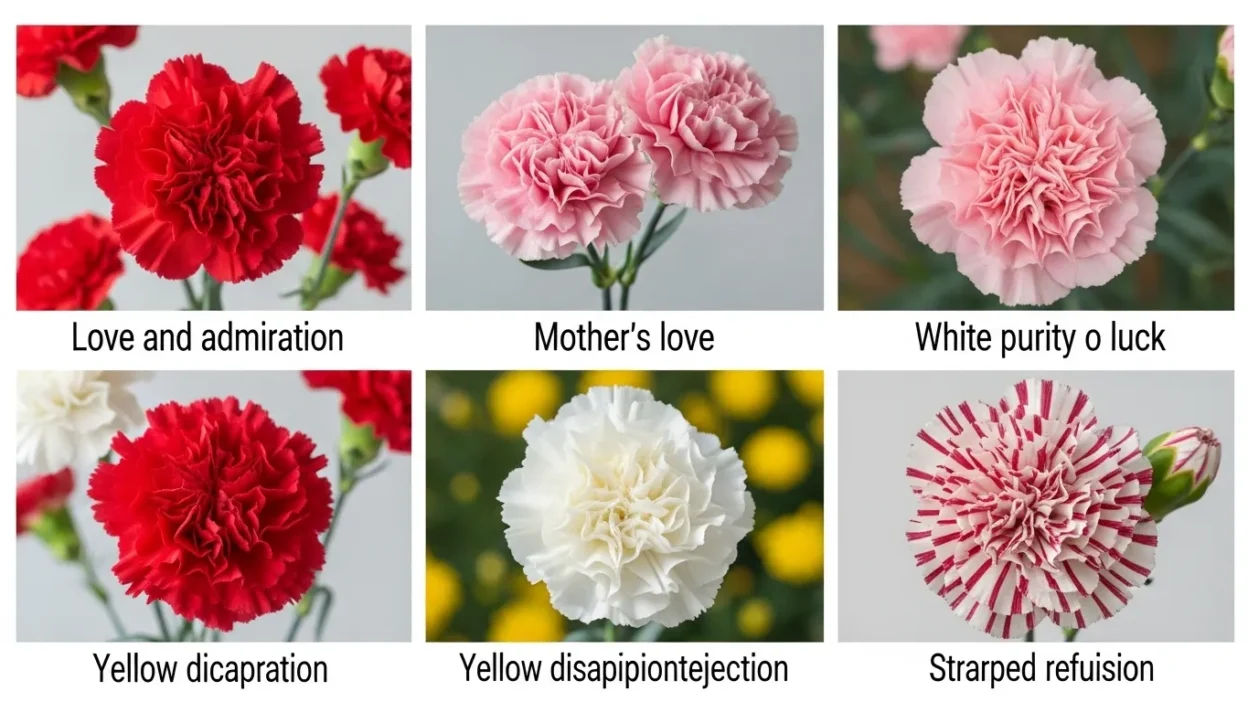
Red carnations are perhaps the most universally recognized, symbolizing deep love, passion, and admiration. They are often given to express romantic feelings or to honor someone you deeply respect. Light red carnations, on the other hand, carry a gentler meaning of affection and care, making them ideal for friends and family.
Pink carnations are strongly associated with motherly love and gratitude. They are traditionally given on Mother’s Day and represent appreciation, tenderness, and the nurturing spirit of maternal figures. White carnations symbolize purity, innocence, and good luck, often used in weddings, religious ceremonies, or to convey remembrance in funerals.
Yellow carnations have a more complex meaning they are traditionally linked to disappointment or rejection, though in modern interpretations they can also symbolize friendship and cheerfulness. Purple carnations stand for creativity, uniqueness, and admiration, making them a bold choice for someone exceptional in your life. Meanwhile, green carnations symbolize renewal, good fortune, and growth, often used to convey hope and prosperity.
Finally, blue carnations, though rare and often artificially colored, represent imagination, fantasy, and the pursuit of the impossible, making them a whimsical and thoughtful gift. By understanding the meaning of each color, you can communicate specific emotions without saying a word, allowing carnations to become a powerful tool for expression.
Historical Meaning of Carnations
Carnations have a long and fascinating history that spans thousands of years, making them not only beautiful flowers but also symbols rich in cultural significance. Their origins trace back to the Mediterranean region, where they were cultivated by the Greeks and Romans. In ancient Greece, carnations were associated with love and fascination, often used in ceremonial crowns and garlands during celebrations. The Romans valued them for their fragrance and decorative appeal, using them in festivals, religious rituals, and even as adornments for clothing.
During the medieval period in Europe, carnations continued to carry symbolic weight. They were often used in religious artwork, representing devotion, purity, and divine love. The flower’s intricate petals were thought to resemble the Virgin Mary’s tears, which further enhanced its spiritual significance.
The Victorian era introduced the “language of flowers,” a system in which different flowers and colors conveyed secret messages. In this period, carnations became a popular choice for expressing emotions that were difficult to speak aloud. Red carnations symbolized deep love, while white ones conveyed innocence and pure affection. Pink carnations were especially linked to maternal love and gratitude, a tradition that continues today on Mother’s Day.
In modern times, carnations remain a symbol of love, admiration, and remembrance across cultures. Their enduring popularity is a testament to their versatility, beauty, and the emotional depth they convey. From ancient ceremonies to contemporary bouquets, carnations have always held a special place in human culture, bridging the gap between beauty and meaning.
Carnations Meaning in Different Cultures
Carnations have held cultural and symbolic significance across the world for centuries, with each region attributing its own meanings and traditions to this versatile flower. In Western culture, carnations are most commonly associated with love, admiration, and celebration. They are frequently used in bouquets for weddings, anniversaries, and romantic gestures, as well as in ceremonies honoring mothers and loved ones. In particular, pink carnations have become a symbol of maternal love, especially on Mother’s Day, reflecting gratitude and appreciation for mothers’ nurturing roles.
In Eastern cultures, carnations carry a slightly different emphasis. In countries like Japan and Korea, they are often used to express respect and honor, particularly for elders or teachers. They are common in formal ceremonies and gifts, symbolizing good luck, longevity, and reverence. The flower’s delicate appearance and variety of colors make it suitable for expressing both admiration and polite affection.
European traditions have also woven carnations into national and ceremonial symbolism. For instance, in some countries, carnations are used in festivals and national celebrations, representing unity, pride, and cultural heritage.
Religiously, carnations have been associated with spiritual stories as well. In Christianity, the flower is sometimes linked to the Virgin Mary, symbolizing her love and purity. Across cultures, carnations maintain a balance between beauty and meaning, making them one of the few flowers that can convey love, respect, admiration, and remembrance simultaneously.
Understanding these cultural variations helps in choosing the right carnation for a particular occasion or audience, ensuring the flower’s message is both meaningful and appropriate.
Spiritual Meaning of Carnations
Beyond their visual appeal, carnations carry deep spiritual significance in many traditions. They are often regarded as symbols of love, devotion, and spiritual connection, representing emotions that go beyond the physical and touch the heart and soul. Many people view carnations as messengers of positive energy, capable of uplifting spirits and providing comfort during challenging times.
In spiritual contexts, carnations are associated with emotional healing and protection. Their presence in a home, garden, or bouquet is believed to bring peace, harmony, and balance, helping to calm the mind and soothe emotional stress. The layered petals of the carnation are sometimes interpreted as symbolizing layers of human emotion, reminding us to embrace all aspects of our feelings with acceptance and love.
Different colors of carnations also carry spiritual meanings. White carnations are linked to purity and divine love, often used in religious ceremonies or as offerings. Red carnations symbolize passion and deep devotion, while pink carnations are considered a symbol of gratitude and maternal love, often evoking nurturing energy.
Carnations are also believed to enhance inner strength and courage. Their symbolism encourages individuals to face life’s challenges with grace, express love openly, and maintain hope during difficult moments. In some traditions, placing carnations on altars or in sacred spaces is thought to invite blessings and protective energies, reinforcing their role as flowers of spiritual significance.
Through these spiritual associations, carnations are more than decorative blooms they serve as symbols of emotional depth, inner strength, and positive energy.
Carnations Meaning in Love and Relationships
Carnations are widely recognized as flowers that convey emotions in romantic and personal relationships. Their symbolism makes them an ideal choice for expressing feelings that are sometimes difficult to put into words. Depending on the color, carnations can communicate love, admiration, friendship, or familial affection, allowing them to serve as a versatile floral message.
In romantic relationships, red carnations are the most popular choice. They symbolize deep love, passion, and admiration, making them perfect for anniversaries, Valentine’s Day, or simply expressing heartfelt feelings. Light red carnations convey a gentler form of affection, representing care, tenderness, and lasting attachment without the intensity of deep red blooms.
For friendship, yellow carnations can be a meaningful, though sometimes misunderstood, choice. While traditionally linked to disappointment, they are also seen as symbols of joyful companionship and cheerfulness in modern interpretations. Pink carnations, on the other hand, are ideal for showing gratitude and admiration, making them a thoughtful gift for friends or mentors.
Carnations also hold significance in family relationships. Pink carnations are strongly associated with maternal love, often given on Mother’s Day to express appreciation and affection. White carnations symbolize innocence and pure love, making them suitable for children or other family members as a token of enduring care and respect.
By understanding the meanings behind the colors and types of carnations, you can choose flowers that perfectly match the emotions you want to convey, ensuring that your floral gestures are both beautiful and meaningful.
Carnations Meaning for Special Occasions
Carnations are one of the most versatile flowers, making them perfect for special occasions where emotions need to be expressed with thoughtfulness and care. Their symbolism changes slightly depending on the event, allowing them to convey precise messages of love, gratitude, or remembrance.
On Mother’s Day, pink carnations are the traditional choice. They symbolize maternal love, appreciation, and gratitude, honoring the nurturing role of mothers and the care they provide. Many people choose carnations for this day because they communicate heartfelt emotion in a simple yet meaningful way.
For weddings, white carnations are often incorporated into bouquets and decorations. Their symbolism of purity, innocence, and enduring love makes them ideal for celebrating a couple’s commitment. Red carnations may also be included to represent passion and romantic devotion, balancing the purity of white with emotional depth.
In funerals or memorials, carnations are widely used to express remembrance, respect, and sympathy. White carnations, in particular, convey a sense of peace and purity, offering comfort to grieving families.
Carnations also work well for birthdays, anniversaries, and graduations, with color choices tailored to the sentiment: red for love, pink for admiration, and yellow for friendship and joy. Their long-lasting blooms make them a practical choice, as they can remain vibrant for days, extending the positive message beyond the initial presentation.
By understanding the symbolism of carnations for different occasions, you can ensure that your floral gift is not only beautiful but also deeply meaningful, leaving a lasting impression on the recipient.
Carnation Tattoo Meaning
Carnations are not only popular as gifts and decorative flowers they also carry significant symbolism when used in tattoos. People often choose carnation tattoos to represent love, admiration, or personal milestones, allowing the flower to convey emotions that are deeply meaningful to them.
One of the most common themes in carnation tattoos is love and romance. Red carnations, symbolizing passion and deep affection, are often inked to celebrate a relationship, commemorate a loved one, or express unspoken romantic feelings. Light red carnations can symbolize gentle affection and care, making them suitable for tattoos honoring family or close friends.
Pink carnations are frequently chosen to represent maternal love and gratitude, reflecting the nurturing and supportive qualities of a mother or caregiver. These tattoos can serve as a permanent tribute to a parent or a symbol of appreciation for someone who has provided guidance and care.
White carnations in tattoos symbolize purity, innocence, and remembrance, making them a thoughtful choice for memorial tattoos or spiritual expression. Green and purple carnations can convey renewal, creativity, and uniqueness, reflecting the wearer’s personal growth, individuality, or artistic nature.
The versatility of carnations allows them to be incorporated into larger floral designs, paired with names, dates, or other symbols to create a personal narrative. Whether chosen for romantic, familial, or personal significance, carnation tattoos offer a way to carry the flower’s emotional and symbolic meaning permanently, combining beauty with deep personal expression.
Carnations Meaning in Dreams
Carnations often appear in dreams, carrying symbolic messages related to emotions, relationships, and personal growth. The flower’s presence in a dream can reflect the dreamer’s feelings, aspirations, or subconscious thoughts, making it a meaningful symbol to interpret.
Seeing vibrant red carnations in a dream usually represents passion, love, and admiration. It may indicate that the dreamer is experiencing deep romantic feelings or longing for emotional connection. Light red carnations, in contrast, suggest gentle affection and care, highlighting tenderness in relationships or personal interactions.
Pink carnations in dreams symbolize gratitude, maternal love, and nurturing energy. Dreaming of pink carnations may indicate appreciation for someone who has provided support or a reminder to express love and gratitude in waking life. White carnations are often associated with purity, innocence, and spiritual reflection, suggesting that the dreamer is seeking peace or clarity in their personal or spiritual journey.
Yellow carnations, while traditionally linked to disappointment, may in dreams represent caution, unfulfilled expectations, or unresolved emotions. Meanwhile, purple or green carnations can signify creativity, uniqueness, and personal growth, encouraging the dreamer to embrace their individuality and potential.
Wilted or dying carnations in dreams often reflect loss, regret, or emotional challenges, serving as a warning or a prompt for introspection. By understanding the symbolism of carnations in dreams, one can gain insight into hidden emotions, personal desires, and spiritual guidance, making the flower a powerful tool for self-reflection and emotional awareness.
When to Give Carnations
Carnations are versatile flowers that can be given for a variety of occasions, making them a thoughtful choice for expressing emotions without words. Their meanings ranging from love and admiration to remembrance and friendship allow them to convey specific sentiments depending on the event and color.
For romantic occasions, red carnations are ideal. They symbolize deep love, passion, and admiration, making them perfect for anniversaries, Valentine’s Day, or intimate gestures that celebrate a partner. Light red carnations express a gentler form of affection, suitable for long-term relationships or gestures of care.
On Mother’s Day, pink carnations are traditionally given to honor maternal love, gratitude, and nurturing qualities. They are a simple yet powerful way to show appreciation and recognition for the important women in your life.
White carnations are appropriate for weddings and spiritual ceremonies. Their symbolism of purity, innocence, and good luck makes them ideal for bridal bouquets, baptism gifts, or other sacred events. Yellow carnations, while historically linked to disappointment, are now often used in friendship arrangements to convey joy, optimism, and cheerful companionship.
Carnations are also suitable for funerals and memorials, where white or pink carnations can express remembrance, respect, and sympathy. Their long-lasting blooms make them especially meaningful, symbolizing enduring love and memory.
By understanding the meaning behind each color and occasion, you can ensure that the carnations you give communicate the intended message, creating a thoughtful and memorable gesture that resonates emotionally with the recipient.
Interesting Facts About Carnations
Carnations are not only beautiful and meaningful but also fascinating in their history, cultivation, and characteristics. One interesting fact is that they are one of the oldest cultivated flowers in the world. Historical evidence shows that carnations were grown in the Mediterranean region over 2,000 years ago, and they have been admired by Greeks, Romans, and later Europeans for their beauty and symbolism.
Another remarkable aspect of carnations is their long vase life. Unlike many other flowers, carnations can remain fresh for up to two weeks when properly cared for, making them a popular choice for bouquets, floral arrangements, and gifts. Their durability also adds to their symbolism of enduring love and lasting affection.
Carnations are highly versatile in terms of color variety. While naturally occurring in shades of pink, red, and white, modern cultivation techniques have allowed florists to produce carnations in yellow, purple, green, and even blue, each color carrying its own unique meaning. This makes carnations suitable for a wide range of occasions, from weddings and anniversaries to birthdays and memorials.
Additionally, carnations have played a significant role in cultural and ceremonial traditions. They have been used in religious events, royal celebrations, and festivals across different countries. Their association with love, admiration, and remembrance has made them a timeless choice for expressing emotions.
These facts highlight why carnations are much more than ordinary flowers. They are a symbol of beauty, history, and emotional depth, capable of conveying a wide array of messages in both personal and cultural contexts.
Carnations vs Other Flowers Meaning
While many flowers carry symbolic meanings, carnations stand out for their versatility, long-lasting blooms, and rich historical significance. Comparing carnations to other popular flowers can help you understand why they are often chosen to convey specific emotions.
Carnations vs Roses: Roses are widely associated with romantic love, particularly red roses, which symbolize passion. While carnations also represent love, they have a broader emotional range. Red carnations convey deep affection, but pink, white, yellow, and even green carnations can symbolize gratitude, purity, friendship, and renewal, making them more versatile for different occasions.
Carnations vs Lilies: Lilies are often linked to purity, rebirth, and spirituality, commonly used in religious ceremonies and funerals. Carnations share some of these spiritual meanings especially white carnations but they are more widely associated with personal relationships, admiration, and emotional expression, offering a balance of beauty and message that lilies may not always convey.
Carnations vs Tulips: Tulips are typically connected with perfect love, elegance, and springtime renewal. They are seasonal and carry a lighter, simpler symbolism. Carnations, however, are available year-round and offer a richer palette of meanings based on color, context, and cultural significance.
Overall, carnations are unique in that they combine aesthetic beauty with symbolic versatility. Their ability to convey a range of emotions love, admiration, remembrance, gratitude, and hope makes them ideal for occasions that require thoughtful expression. Whether compared to roses, lilies, or tulips, carnations remain a timeless flower with a deep and multifaceted meaning.
Common Myths About Carnations
Despite their widespread popularity, carnations are often surrounded by misconceptions and myths that can obscure their true symbolism. Understanding these myths helps in appreciating the flower’s full meaning and choosing them appropriately.
One common myth is that carnations are only suitable for funerals. While white carnations are often used in memorial arrangements to symbolize remembrance and purity, carnations are incredibly versatile. Red, pink, and even green carnations are widely used in celebrations, romantic gestures, and festive occasions, demonstrating that their meaning extends far beyond mourning.
Another misconception is that carnations have only romantic symbolism. While red carnations represent deep love and passion, other colors convey a variety of emotions. Pink carnations symbolize gratitude and maternal love, yellow carnations represent friendship and cheerfulness, and purple or green carnations can symbolize creativity, uniqueness, and growth. This range shows that carnations are suitable for expressing friendship, family bonds, spiritual feelings, and personal admiration not just romantic love.
Some people also believe that carnations are cheap or ordinary flowers, which undermines their historical and cultural significance. In reality, carnations are one of the oldest cultivated flowers, with a history spanning thousands of years. Their long vase life, wide color range, and symbolic depth make them a meaningful and thoughtful choice for many occasions.
By dispelling these myths, it becomes clear that carnations are much more than decorative blooms. They are expressive, versatile, and deeply symbolic flowers capable of conveying a wide spectrum of emotions and sentiments.
How to Care for Carnations
Carnations are not only beautiful and meaningful flowers but also relatively easy to care for, which adds to their popularity in bouquets, gardens, and floral arrangements. Proper care ensures that their blooms remain vibrant and long-lasting, allowing you to enjoy their beauty and symbolism for days or even weeks.
For cut carnations, start by trimming the stems at a 45-degree angle before placing them in a clean vase. This allows the flowers to absorb water more efficiently. Use fresh, room-temperature water and change it every two to three days to prevent bacterial growth, which can shorten the flowers’ lifespan. Adding a floral preservative can also help maintain freshness by providing essential nutrients and reducing bacteria.
Carnations thrive with indirect sunlight. Avoid placing them in direct sunlight or near heat sources, as excessive heat can cause petals to wilt. Ensure the vase is positioned in a cool, draft-free area to extend the blooms’ longevity.
For potted carnations or garden plants, plant them in well-drained soil with adequate sunlight ideally six hours a day. Water regularly but avoid waterlogging, as too much moisture can lead to root rot. Fertilizing every four to six weeks with a balanced fertilizer encourages strong growth and more blooms.
By following these simple steps, you can enjoy carnations at their best, whether as part of a bouquet, centerpiece, or garden display. Proper care not only preserves their aesthetic appeal but also maintains the symbolic messages of love, admiration, and remembrance that carnations represent.
Frequently Asked Questions About Carnations Meaning
Carnations are rich in symbolism, and many people have questions about their meanings, uses, and significance. Here are some of the most frequently asked questions:
1. What do carnations symbolize?
Carnations symbolize love, admiration, fascination, and devotion. Depending on their color, they can convey specific emotions such as gratitude, friendship, or remembrance.
2. What is the spiritual meaning of carnations?
Spiritually, carnations are associated with emotional healing, protection, and positive energy. They are thought to bring peace, balance, and comfort, making them a flower of both emotional and spiritual significance.
3. What do pink carnations mean?
Pink carnations are a symbol of maternal love, gratitude, and appreciation. They are often given on Mother’s Day or to someone who has nurtured and supported you.
4. Are carnations romantic flowers?
Yes, red carnations are traditionally romantic, representing deep love, passion, and admiration. Light red carnations can also express gentle affection, suitable for less intense romantic gestures.
5. When should you give carnations?
Carnations can be given for romantic occasions, Mother’s Day, weddings, anniversaries, birthdays, funerals, and graduations. The key is choosing the right color for the message you want to convey.
6. Can carnations express friendship or disappointment?
Yes, yellow carnations can symbolize friendship and cheerfulness in modern interpretations, though historically they were linked to disappointment. Pink, green, and purple carnations can also express admiration, creativity, and personal growth.
By understanding these answers, you can use carnations to communicate emotions thoughtfully, making them more than just decorative flowers they become powerful symbols of feeling and intention.
Conclusion:
Carnations are much more than simple decorative flowers they are symbols rich in meaning, history, and cultural significance. From their origins in the Mediterranean to their role in modern celebrations, carnations have remained a timeless choice for expressing a wide range of emotions.
Their versatility is one of their greatest strengths: each color conveys a unique message, whether it’s red for passionate love, pink for maternal affection, white for purity and remembrance, or yellow for friendship and cheerfulness.
Beyond color symbolism, carnations carry spiritual and emotional significance. They are associated with healing, protection, hope, and positive energy, making them suitable for both joyous occasions and moments of reflection.
Their long-lasting blooms and adaptability have allowed them to remain relevant across cultures, from Western celebrations to Eastern traditions, weddings, anniversaries, funerals, and even spiritual rituals.
Understanding carnations’ meanings allows you to communicate emotions thoughtfully, whether through a bouquet, a garden display, a tattoo, or even in dreams.
They serve as a bridge between beauty and expression, making each gift or arrangement more than just visually appealing it becomes a meaningful gesture that resonates deeply.
In summary, carnations are flowers of enduring beauty, emotional depth, and symbolic versatility.
By appreciating their history, colors, and cultural significance, you can select the perfect carnation for any occasion, ensuring that your gesture of love, admiration, or remembrance leaves a lasting impression. Whether for yourself or someone special, carnations are a timeless choice that speaks volumes without a single word.

Welcome to TextFlirtz.com, your ultimate destination for flirty, fun, and clever text messages! Whether you’re looking to break the ice, charm your crush, or keep the sparks alive in your relationship, we’ve got a treasure trove of pick-up lines, flirty texts, and witty messages that make flirting effortless and exciting. Dive in, explore, and let your words do the magic—because at TextFlirtz.com, every message is a chance to flirt smarter, not harder.