

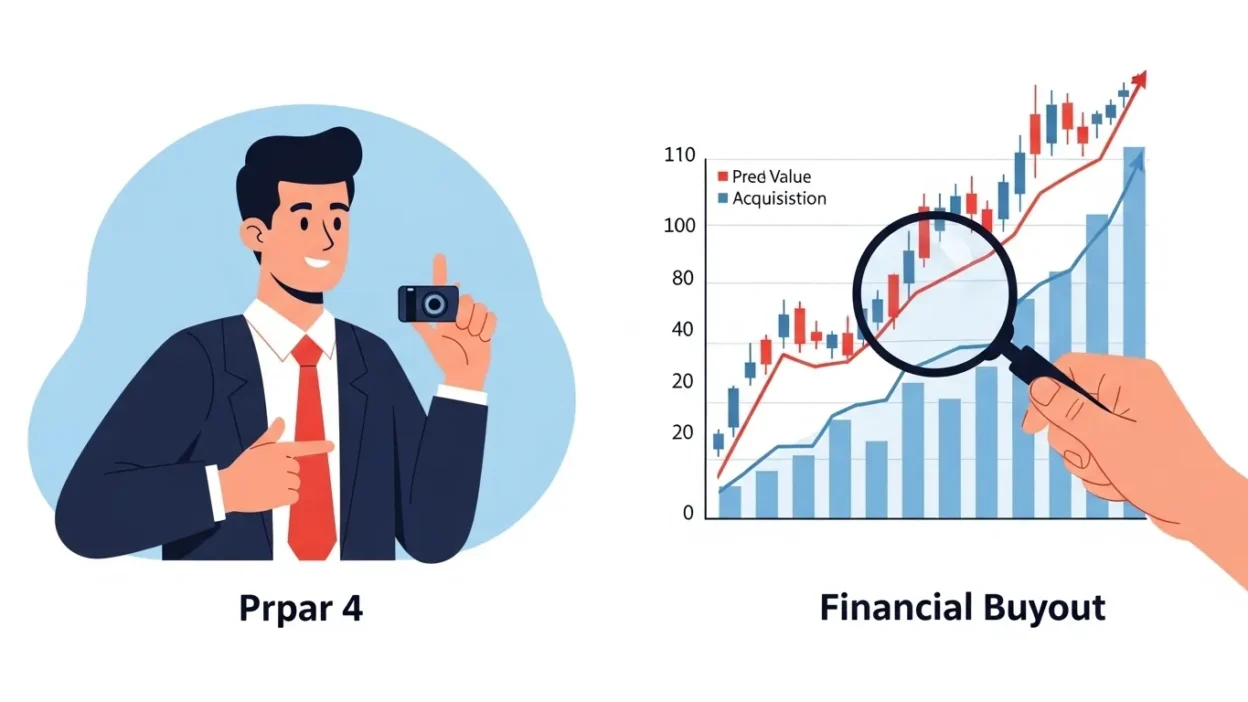
A buyout is a term commonly used in business, finance, and real estate, referring to the process where one party purchases the ownership stake, assets, or rights of another. In simple terms, it means taking control of a business, property, or contract by acquiring someone else’s share.
Buyouts can occur in various contexts from corporate acquisitions and management takeovers to real estate settlements and employment agreements.
Understanding the meaning of a buyout is essential for business owners, investors, and employees, as it can significantly impact ownership, control, and financial outcomes. Buyouts often involve careful planning, valuation, and legal agreements to ensure a smooth transfer of rights or assets.
They can be motivated by strategic growth, retirement, conflict resolution, or financial restructuring. In this article, we will explore the definition, types, processes, advantages, risks, and real-world examples of buyouts, providing a comprehensive guide for anyone looking to understand this important financial concept.
What Is a Buyout?
A buyout is a financial or business transaction in which one party purchases the ownership, stake, or rights of another party in a business, property, or contract. Essentially, it involves one person, group, or organization taking full or partial control by acquiring the existing shares, assets, or rights from the current owner. The concept of a buyout is most commonly used in the business world but also applies to real estate, partnerships, and employment agreements.
In business, a buyout often occurs when an investor, management team, or another company purchases a controlling interest in a firm. This can give the buyer full authority to make strategic decisions, restructure operations, or merge the acquired entity with other ventures. Buyouts can also take place when a business owner wants to retire or exit the company, allowing another party to take over ownership.
There are several key features that define a buyout: it typically involves a financial transaction, a transfer of ownership or control, and often a legal agreement outlining terms, obligations, and conditions. The transaction may be structured in various ways, including cash payments, debt financing, or a combination of both.
Understanding what a buyout is helps business owners, investors, and employees recognize the implications of ownership changes, financial responsibilities, and decision-making authority. Later sections of this guide will delve into the types of buyouts, how they work, and their advantages and risks, providing a complete picture of this important financial concept.
How a Buyout Works
A buyout is a structured process that involves several key steps, ensuring a smooth transfer of ownership and minimizing risks for both parties. While the specifics can vary depending on the type of buyout, most transactions follow a general framework.
The first step in a buyout is the decision to pursue the transaction. This could come from a business owner planning to retire, a management team seeking control, or an external investor looking to acquire a stake. Once the decision is made, the next step is a valuation of the business or asset. Accurate valuation is critical, as it determines the price the buyer will pay and ensures fairness for both sides. Valuation methods may include analyzing financial statements, assets, revenue, and market comparisons.
After valuation, the parties enter negotiations to agree on the terms of the buyout. This includes price, payment methods, timelines, and any contingencies. The financing of a buyout can involve cash payments, loans, or investor funding, depending on the buyer’s resources.
Once terms are finalized, legal documentation is prepared, including buy-sell agreements, contracts, and shareholder agreements. This step ensures the transaction is legally binding and protects both parties.
Finally, the transfer of ownership takes place, followed by integration or operational changes, if necessary. For example, a management buyout may lead to restructuring or strategic adjustments. Understanding this process helps participants plan effectively, manage risks, and make informed decisions during a buyout.
Types of Buyouts
Buyouts can take several forms, depending on the parties involved, the purpose of the transaction, and the structure of the deal. Understanding the different types helps business owners, investors, and employees navigate buyout situations effectively.
1. Management Buyout (MBO)
A management buyout occurs when a company’s existing management team purchases the business from its owners. This type of buyout allows managers to take full control, aligning the company’s strategic direction with their vision. MBOs are common when owners retire or want to exit the business.
2. Leveraged Buyout (LBO)
A leveraged buyout involves a buyer using borrowed funds, often secured against the company’s assets, to finance the purchase. LBOs are frequently employed by private equity firms to acquire companies with growth potential. While debt increases financial risk, it allows buyers to acquire businesses without committing large amounts of cash upfront.
3. Employee Buyout (EBO)
In an employee buyout, employees collectively purchase the business, typically when owners want to retire or sell. This type of buyout promotes employee ownership and engagement, as workers gain both control and financial interest in the company.
4. Corporate Buyout
A corporate buyout occurs when one company purchases another to expand market share, acquire assets, or achieve strategic growth. Unlike mergers, a buyout usually results in one company taking full control rather than forming a combined entity.
5. Real Estate and Partnership Buyouts
Buyouts are not limited to businesses. In real estate, co-owners may buy each other’s share to simplify ownership. In partnerships, one partner may buy out another to gain full control. These buyouts ensure clear ownership and prevent future disputes.
Each type of buyout serves different purposes, from strategic expansion to succession planning, and involves unique financial and legal considerations.
Buyout vs. Acquisition vs. Merger
While buyouts, acquisitions, and mergers are all forms of business transactions, they have distinct differences in purpose, structure, and outcome. Understanding these differences is crucial for business owners, investors, and employees.
A buyout is when one party purchases the ownership stake, shares, or assets of another, giving the buyer full or partial control. The key focus is on ownership transfer. Buyouts can be conducted by management teams, employees, private equity firms, or other companies. They often occur for strategic growth, retirement planning, or restructuring purposes.
An acquisition involves one company purchasing another company’s assets or shares to gain control, often for expansion, technology, or market share. Unlike buyouts, acquisitions may not always involve full control immediately, and sometimes the acquired company continues to operate under its existing management. Acquisitions can be friendly or hostile, depending on whether the target company agrees to the transaction.
A merger, on the other hand, occurs when two companies combine to form a single entity. Mergers are typically seen as a partnership of equals, with both companies contributing resources and management to the new organization. Unlike buyouts and acquisitions, the focus of a merger is collaboration and creating synergies rather than one party taking control of the other.
| Transaction Type | Control | Purpose | Example |
| Buyout | Full/Partial | Ownership transfer, succession | Management buying a company |
| Acquisition | Partial/Full | Strategic expansion | Tech company acquiring startup |
| Merger | Shared | Synergy, growth | Two companies combining operations |
Understanding these distinctions helps stakeholders evaluate risks, negotiate terms, and plan financial and operational strategies effectively.
Reasons for a Buyout
Buyouts occur for a variety of strategic, financial, and personal reasons. Understanding why a buyout takes place helps business owners, investors, and employees anticipate potential outcomes and plan accordingly.
1. Owner Retirement or Exit
One of the most common reasons for a buyout is the retirement or exit of a business owner. Owners who want to step away from daily operations may sell their stake to management, employees, or external investors, ensuring continuity and a smooth transition of ownership.
2. Strategic Expansion
Companies often pursue buyouts as a strategic growth strategy. By acquiring another business, a company can increase market share, access new products or services, and expand its geographical reach. Corporate buyouts are a common tool for achieving competitive advantage.
3. Financial Restructuring
Buyouts may also occur during financial restructuring. If a company faces financial challenges, new investors or management may buy out existing shareholders to reorganize debt, improve efficiency, and stabilize operations.
4. Conflict Resolution
In partnerships or small businesses, disagreements between owners may lead to a partner buyout. One party purchasing the other’s stake resolves conflicts while allowing the business to continue operations smoothly.
5. Investment Opportunities
Investors may pursue buyouts to capitalize on growth potential. A leveraged buyout (LBO) or management buyout can provide high returns if the acquired company is undervalued or has strong profit potential.
6. Succession Planning
Buyouts also play a role in succession planning, particularly in family businesses. Transferring ownership to the next generation or trusted managers ensures business continuity and preserves long-term value.
Overall, buyouts are driven by a combination of financial, strategic, and operational goals, each tailored to the specific needs of the buyer and seller.
Advantages of a Buyout
Buyouts offer several advantages for buyers, sellers, and even employees, depending on the type of transaction and the goals of the parties involved. Understanding these benefits helps stakeholders make informed decisions.
1. Full Control and Ownership
One of the main advantages of a buyout is that the buyer gains full or significant control over the business, asset, or property. This allows for strategic decision-making, operational changes, and alignment with long-term goals without interference from previous owners or partners.
2. Faster Decision-Making
With centralized ownership, companies can make decisions quickly, implement new strategies, and respond to market changes more efficiently. Management buyouts, in particular, empower internal leaders to act without seeking external approval.
3. Business Continuity
Buyouts often ensure smooth continuity of operations, especially when owners retire or leave the business. Selling to a management team or employees reduces disruption, preserves institutional knowledge, and maintains relationships with customers and suppliers.
4. Financial Growth Opportunities
Buyouts, particularly leveraged and corporate buyouts, can unlock new growth potential. Buyers may restructure operations, expand into new markets, or integrate additional resources to increase profitability and long-term value.
5. Employee Motivation and Ownership
In employee buyouts, workers gain a financial stake in the company, which can boost engagement, productivity, and loyalty. Ownership creates a sense of responsibility and alignment with the company’s success.
6. Strategic Restructuring
Buyouts also allow for strategic restructuring, such as consolidating operations, improving efficiency, or repositioning the business in the market. Buyers can implement changes that were not possible under previous ownership.
Overall, buyouts provide a combination of control, growth potential, continuity, and strategic flexibility, making them a valuable tool for investors, managers, and companies looking to evolve.
Disadvantages and Risks of a Buyout
While buyouts offer numerous advantages, they also come with significant risks and potential drawbacks. Understanding these disadvantages is essential for buyers, sellers, and stakeholders to make informed decisions.
1. High Debt Burden
Many buyouts, especially leveraged buyouts (LBOs), involve substantial borrowing to finance the purchase. High levels of debt can strain cash flow, increase financial risk, and make the business vulnerable to market fluctuations or economic downturns.
2. Cash Flow Pressure
Buyouts often require significant upfront capital or regular debt repayments. This can limit available funds for day-to-day operations, expansion, or investments, potentially slowing growth or impacting employee compensation and resources.
3. Integration Challenges
In corporate or management buyouts, merging existing operations, systems, and teams can be complex and time-consuming. Cultural clashes, incompatible workflows, and management disagreements may reduce efficiency and employee morale.
4. Overvaluation Risk
Buyers may overestimate the value of a business or asset during a buyout, paying more than it is worth. Overvaluation can lead to financial losses, reduced return on investment, and difficulty in achieving profitability.
5. Legal and Regulatory Complications
Buyouts require careful legal documentation and compliance with regulatory requirements. Failure to meet these obligations can result in legal disputes, fines, or delays, increasing costs and risks.
6. Employee Uncertainty
During a buyout, employees may face job insecurity, changes in management, or shifts in company culture. This uncertainty can impact productivity, retention, and overall business performance.
In summary, while buyouts can provide control and growth opportunities, they also involve financial, operational, and legal risks. Proper planning, due diligence, and strategic execution are essential to mitigate these challenges.
Real-World Examples of Buyouts
Understanding real-world examples of buyouts helps illustrate how they work in practice and the impact they can have on businesses, employees, and industries.
1. Management Buyout Example
One well-known example of a management buyout (MBO) is the purchase of Dell Technologies’ tracking of its private equity buyout led by Michael Dell in 2013. Michael Dell and Silver Lake Partners bought out public shareholders to take the company private. This buyout gave Dell full control over strategic decisions, allowing the company to restructure operations, invest in long-term growth, and focus on innovation without the pressure of quarterly public earnings reports.
2. Leveraged Buyout Example
A famous leveraged buyout (LBO) occurred in 1989 when RJR Nabisco was acquired by Kohlberg Kravis Roberts & Co. (KKR) for $25 billion. This deal was financed largely through debt and became one of the largest and most notable buyouts in history. Although the acquisition faced financial challenges due to the debt load, it highlighted how private equity firms use leverage to acquire large companies.
3. Employee Buyout Example
In some small businesses, employees have collectively purchased the company from retiring owners. For example, a local manufacturing firm may transition ownership to employees, creating employee-owned businesses. This increases worker engagement and ensures continuity of operations while maintaining local jobs.
4. Real Estate Buyout Example
Buyouts also occur in real estate. For instance, when co-owners of a property decide to sell their stake, one owner may buy out the other to gain full ownership. This often happens in divorce settlements or inheritance cases, simplifying ownership and avoiding future disputes.
These examples demonstrate that buyouts are versatile transactions, ranging from small-scale employee purchases to multi-billion-dollar corporate deals, each with unique financial, strategic, and operational implications.
Buyouts in Different Industries
Buyouts are not limited to one sector; they occur across various industries, each with unique motivations, structures, and implications. Understanding how buyouts operate in different fields provides insight into their flexibility and strategic importance.
1. Corporate Buyouts
In the corporate world, buyouts are often used for strategic growth, market expansion, or acquiring technology. Large companies may acquire smaller competitors or startups to enhance their product portfolio, increase market share, or gain a competitive advantage. Corporate buyouts often involve significant financing, complex legal agreements, and careful integration planning.
2. Startups and Technology
In the startup ecosystem, buyouts frequently occur when investors or larger firms acquire promising startups. This allows the acquiring company to access innovative products, talented teams, or intellectual property. Startups benefit by gaining financial support and scaling opportunities while founders or early investors can exit profitably.
3. Real Estate Buyouts
Buyouts are also common in real estate, particularly when co-owners of property decide to sell their share. This can occur due to disagreements, inheritance settlements, or divorce proceedings. A buyout allows one party to gain full ownership and simplifies property management.
4. Employment and Contract Buyouts
Certain employment contracts include buyout clauses, allowing either the employee or employer to terminate agreements in exchange for a financial settlement. This is common in industries like sports, entertainment, and executive-level positions, providing flexibility and exit options.
5. Small Businesses and Partnerships
In small businesses, buyouts often occur when partners wish to exit the business or when ownership needs to be consolidated. This ensures operational continuity and can prevent conflicts between remaining partners.
Overall, buyouts are a versatile tool across industries, enabling ownership transfer, strategic growth, and financial planning in a wide range of contexts.
Key Terms Related to Buyouts
Understanding key terms related to buyouts is essential for anyone involved in business, finance, or real estate. These terms clarify the process, rights, and responsibilities of all parties.
1. Equity
Equity refers to the ownership interest in a business or asset. In a buyout, the buyer often purchases equity from existing owners, gaining a stake that can range from partial to full control.
2. Stake
A stake is the percentage of ownership a person or entity holds in a company. Buyouts often involve acquiring a stake from one or more shareholders to consolidate ownership.
3. Valuation
Valuation is the process of determining the financial worth of a business, asset, or property. Accurate valuation is critical to ensure that the buyer pays a fair price and the seller receives appropriate compensation.
4. Debt Financing
Debt financing involves borrowing money to fund a buyout. Common in leveraged buyouts, it allows the buyer to acquire a business without using large amounts of personal or investor capital.
5. Exit Strategy
An exit strategy is a plan for selling ownership in a business or asset, often used by investors, founders, or employees. Buyouts are one form of exit strategy, providing liquidity and financial closure.
6. Buy-Sell Agreement
A buy-sell agreement is a legal contract that outlines how a buyout will occur, including terms, pricing, and conditions. It protects all parties and prevents disputes during ownership transfer.
7. Private Equity
Private equity refers to investment firms that often facilitate buyouts, particularly leveraged buyouts, by providing the necessary capital to acquire companies.
Familiarity with these terms helps buyers and sellers navigate buyouts efficiently, reduce risks, and make informed financial and operational decisions.
Buyout Financing and Valuation Methods
Financing and valuation are critical components of any buyout, determining how the transaction is structured, funded, and priced. Understanding these elements helps buyers and sellers make informed decisions and reduces financial risk.
Buyout Financing
Buyouts can be financed in several ways:
- Cash Payments – The buyer pays the full price upfront, often using personal funds or reserves. This is common in smaller buyouts where debt financing is unnecessary.
- Debt Financing – Borrowing money from banks or financial institutions is a common method, particularly in leveraged buyouts (LBOs). Debt is often secured against the company’s assets and repaid over time using future cash flow.
- Private Equity Funding – Private equity firms provide capital to facilitate buyouts, especially large corporate transactions. These firms may also help manage operations and strategy post-buyout.
- Seller Financing – In some cases, the seller agrees to finance a portion of the buyout, allowing the buyer to pay over time. This reduces the upfront burden and can help close deals faster.
Valuation Methods
Determining a fair price is essential. Common valuation methods include:
- Asset-Based Valuation – Calculating the value of tangible and intangible assets minus liabilities.
- Income-Based Valuation – Estimating the business’s value based on projected future income.
- Market Comparison – Comparing the business to similar companies recently sold in the market.
- Discounted Cash Flow (DCF) – Calculating the present value of future cash flows, often used in larger or more complex transactions.
By carefully selecting financing and applying accurate valuation methods, buyers and sellers can structure buyouts that balance risk, affordability, and potential returns.
Frequently Asked Questions (FAQs) About Buyouts
Buyouts can be complex, and many people have questions about how they work, their implications, and their outcomes. Here are some of the most frequently asked questions about buyouts.
1. What does a buyout mean in business?
In business, a buyout refers to one party purchasing the ownership stake, shares, or assets of another. It results in a transfer of control or ownership, which can be partial or complete, depending on the agreement.
2. Is a buyout the same as a takeover?
Not exactly. A takeover often implies that one company acquires another, sometimes without the target company’s consent, while a buyout can be agreed upon by all parties involved. Buyouts also often focus on full ownership or strategic exit.
3. What is a buyout in real estate?
In real estate, a buyout occurs when one co-owner of a property purchases the other owner’s share. This is common in cases of inheritance, divorce, or co-investments, allowing one party to gain full ownership.
4. How is a buyout financed?
Buyouts can be financed through cash payments, debt financing, private equity, or seller financing. The method depends on the size of the transaction, the buyer’s resources, and the financial structure of the deal.
5. Are buyouts good or bad?
Buyouts are neither inherently good nor bad. They can provide control, growth opportunities, and continuity, but also carry financial, legal, and operational risks. Proper planning and due diligence are essential to maximize benefits and minimize drawbacks.
By answering these common questions, stakeholders gain a clearer understanding of buyouts, their mechanisms, and their potential impact on businesses, employees, and investors.
Conclusion:
A buyout is a significant financial and business transaction that involves the purchase of ownership stakes, assets, or rights from one party to another.
It is a versatile tool used across industries from corporate acquisitions and management takeovers to real estate settlements and employment contract agreements. Understanding the meaning of a buyout is essential for business owners, investors, and employees, as it directly impacts control, decision-making authority, and financial outcomes.
Buyouts can occur for many reasons, including retirement or exit planning, strategic expansion, conflict resolution, financial restructuring, and succession planning.
They offer numerous advantages, such as full control, faster decision-making, business continuity, and potential financial growth. Employee buyouts, in particular, can increase engagement and create a sense of ownership among workers.
However, buyouts also carry risks and disadvantages. High debt levels, cash flow pressure, legal complications, and integration challenges are common concerns. Overvaluation or poor planning can reduce profitability and lead to financial losses.
Therefore, due diligence, accurate valuation, strategic planning, and careful execution are critical to the success of any buyout.
From management and leveraged buyouts to real estate and partnership buyouts, understanding the types, processes, financing methods, and legal considerations ensures stakeholders can navigate these transactions effectively.
Whether you are a buyer, seller, or employee, knowledge of buyouts empowers you to make informed decisions and achieve your business or personal goals.
In conclusion, buyouts are not just financial transactions they are strategic opportunities that, when executed properly, can foster growth, stability, and long-term value for all parties involved.