
Understanding gender-related terms is essential in today’s conversations about identity and inclusivity, and one acronym that often appears is AMAB. But what does AMAB actually mean?
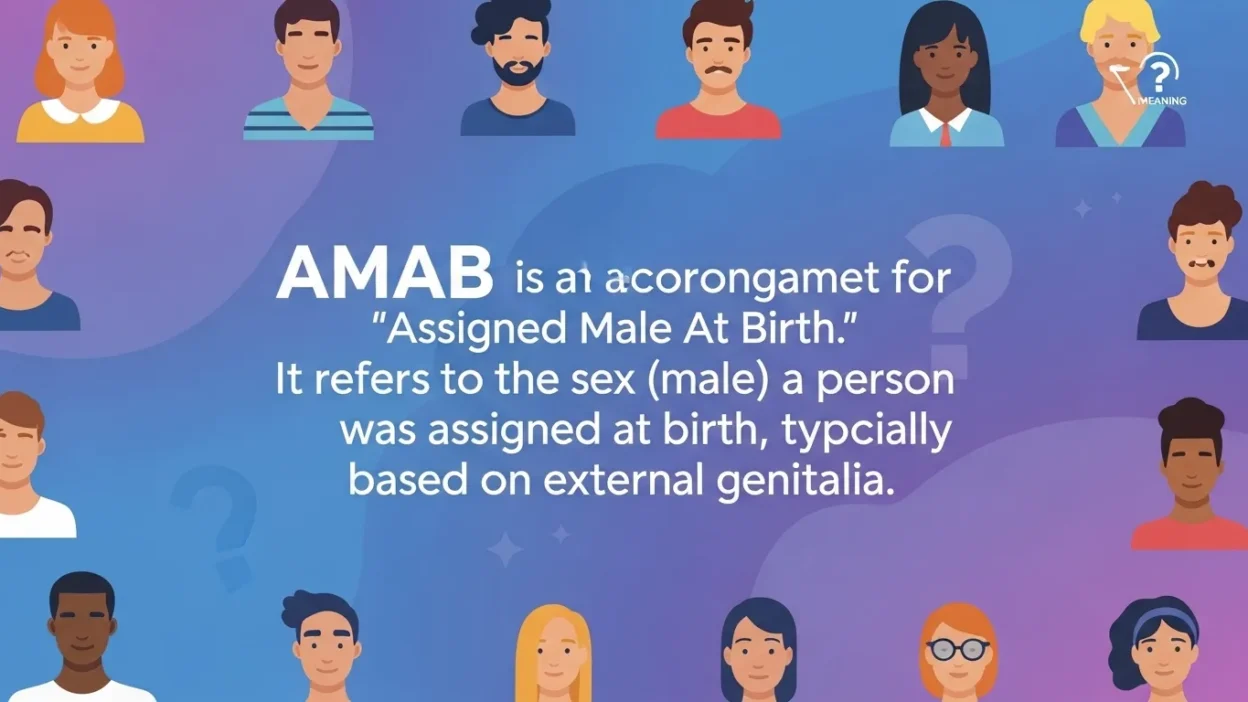
AMAB stands for “Assigned Male at Birth”, a term used to describe the sex a person was labeled at birth based on physical characteristics. Unlike simply calling someone “male,” AMAB emphasizes that this assignment is not necessarily tied to a person’s gender identity.
This distinction is important in discussions about transgender, nonbinary, and other gender-diverse individuals. Whether you’re reading about gender studies, participating in LGBTQ+ conversations, or just browsing social media, encountering terms like AMAB can be confusing.
This article will break down the meaning of AMAB, explain how it differs from other terms like AFAB, explore its significance in modern society, and provide examples of how it is used respectfully and accurately.
What Does AMAB Mean?
AMAB is an acronym for “Assigned Male at Birth”. It refers to the sex a person is labeled with when they are born, usually based on physical anatomy such as genitalia. While many people might assume this automatically defines someone as “male,” the term AMAB is more precise because it separates sex assignment at birth from a person’s actual gender identity.
The use of AMAB has become more common in academic, medical, and social discussions, especially within the LGBTQ+ community. It acknowledges that gender is not strictly determined by biology. For example, someone who is AMAB may grow up identifying as a man, a woman, nonbinary, or another gender entirely. Using the term helps avoid assumptions about how a person identifies based solely on their birth assignment.
It’s important to note the emphasis on the word “assigned.” This highlights that the label is given by medical professionals based on observable traits, not necessarily a reflection of who the individual is or will become. This distinction is critical in understanding and respecting transgender, nonbinary, and gender-diverse people.
In short, AMAB is a neutral, inclusive term that communicates biological assignment at birth without making assumptions about gender identity. In combination with terms like AFAB (Assigned Female at Birth), it helps create a more accurate and respectful conversation around sex and gender.
AMAB vs AFAB: Understanding the Difference
When exploring gender terminology, you may also encounter AFAB, which stands for “Assigned Female at Birth.” Together, AMAB and AFAB are used to describe the sex a person is labeled with at birth, helping to clarify discussions around gender identity without making assumptions.
The main difference is simple: AMAB refers to those assigned male at birth, while AFAB refers to those assigned female at birth. However, the significance goes beyond anatomy. These labels recognize that sex assigned at birth does not always match a person’s gender identity. For instance, an individual who is AMAB may later identify as a woman, nonbinary, or any other gender, just as someone who is AFAB may identify as a man, nonbinary, or another identity.
Using AMAB and AFAB allows people to talk about biological assignment in a way that is respectful and inclusive. This is especially important in medical, academic, and social discussions, where clarity about birth-assigned sex is necessary but assumptions about gender identity can be harmful.
Here’s a quick comparison:
| Term | Meaning | Example |
|---|---|---|
| AMAB | Assigned Male at Birth | A transgender woman who was labeled male at birth |
| AFAB | Assigned Female at Birth | A transgender man who was labeled female at birth |
By understanding AMAB and AFAB, we can discuss gender, identity, and biology separately, fostering more accurate and respectful communication.
Gender Identity vs Sex Assigned at Birth
Understanding AMAB and AFAB requires a clear distinction between sex assigned at birth and gender identity. While AMAB refers to the sex label given based on physical traits at birth, gender identity is a person’s internal sense of who they are. It may align with their assigned sex, or it may differ entirely.
For example, someone who is AMAB might grow up identifying as a cisgender man, meaning their gender identity matches their assigned sex. Others may identify as a transgender woman, meaning their gender identity differs from their birth assignment. Some may identify as nonbinary, genderfluid, or other identities outside the traditional male-female categories. Similarly, an AFAB individual could identify as a cisgender woman, transgender man, or nonbinary.
This distinction is crucial for fostering respectful communication. Using terms like AMAB or AFAB emphasizes the birth assignment without assuming the person’s gender. It allows discussions about health, statistics, and social experiences to be precise while respecting each person’s identity.
Recognizing the difference between sex assigned at birth and gender identity also helps challenge common misconceptions. Being AMAB does not automatically make someone a man, just as being AFAB does not automatically make someone a woman. By keeping these concepts separate, we can better understand the experiences of transgender, nonbinary, and gender-diverse individuals, and create an environment of inclusivity and awareness.
Why Do People Use the Term AMAB?
The term AMAB is widely used today because it provides clarity, inclusivity, and precision when discussing sex and gender. Unlike simply saying “male,” AMAB focuses on the sex assigned at birth rather than assuming a person’s gender identity. This distinction is important in conversations about transgender, nonbinary, and gender-diverse individuals, where assumptions based on appearance can be incorrect or even harmful.
One major reason people use AMAB is to promote inclusive language. By using AMAB and AFAB (Assigned Female at Birth), we acknowledge that not everyone’s gender aligns with the sex they were assigned at birth. This helps create respectful dialogue in social, educational, and healthcare settings.
Another reason is accuracy in research and healthcare. Studies on medical conditions, hormone treatments, or social experiences often distinguish between AMAB and AFAB populations to provide meaningful data. Using AMAB avoids conflating assigned sex with gender identity, which could skew results or lead to misinterpretation.
Finally, AMAB is important in social and online discussions. In communities focused on gender, sexuality, and inclusivity, using precise terms shows awareness and respect. For example, someone might say, “They are AMAB and identify as nonbinary,” which communicates both their birth assignment and gender identity clearly.
In short, AMAB is used to create clarity, respect, and inclusivity, separating biological assignment from identity while supporting informed conversations about gender.
How AMAB Is Used in Everyday Language
The term AMAB has become increasingly common in both online and offline conversations about gender. One of its main uses is in social media, where people discuss personal identities, experiences, and inclusivity. Platforms like Twitter, TikTok, Reddit, and Tumblr often include terms like AMAB and AFAB to describe oneself accurately without assuming gender. For example, someone might write, “I’m AMAB and identify as nonbinary,” which communicates both their assigned sex at birth and their current gender identity.
AMAB is also widely used in research and healthcare. Medical studies often require precise terminology to differentiate between populations assigned male or female at birth, particularly when studying health conditions, hormonal treatments, or social outcomes. Using AMAB instead of simply “male” ensures researchers acknowledge gender diversity and do not make assumptions about identity.
In everyday conversations, using AMAB helps people speak respectfully about others. It avoids assumptions that could be hurtful, such as assuming that someone assigned male at birth identifies as a man. It also allows educators, parents, and allies to have informed discussions about gender with accuracy and sensitivity.
Here are a few example sentences showing AMAB in use:
- “They are AMAB and use they/them pronouns.”
- “Healthcare guidelines sometimes differ for AMAB and AFAB patients.”
- “The study looked at AMAB youth to understand social experiences in school.”
Overall, AMAB is a neutral, inclusive term that helps people communicate clearly about sex assigned at birth without making assumptions about gender identity.
Common Misconceptions About AMAB
Despite its growing use, there are several misconceptions about AMAB that can cause confusion. One of the most common is the assumption that being AMAB automatically means someone is a man. In reality, AMAB only refers to the sex assigned at birth based on physical characteristics. A person who is AMAB may identify as a man, woman, nonbinary, or another gender entirely.
Another misunderstanding is that AMAB defines a person’s gender identity or sexual orientation. Being AMAB does not determine whether someone is heterosexual, homosexual, bisexual, or otherwise. It only indicates the assignment made at birth, not who the person is or whom they are attracted to.
Some people also confuse AMAB with being cisgender. While a cisgender man may indeed be AMAB, many AMAB individuals are transgender or nonbinary. Using the term AMAB helps avoid assuming someone’s identity based on appearance or societal expectations.
Additionally, some think the term AMAB is offensive or unnecessary. On the contrary, it is considered a neutral, respectful, and inclusive term, particularly in discussions about gender, healthcare, and education. It allows people to talk about birth-assigned sex without making assumptions or generalizations.
By understanding these misconceptions, we can communicate more accurately and respectfully. Recognizing that AMAB does not equal “male” and that gender identity is independent of birth assignment is essential for fostering inclusivity and understanding in modern discussions about gender.
Related Gender Terms You Should Know
Understanding AMAB is easier when you’re familiar with other gender-related terms that often appear alongside it. One of the most common is AFAB, which stands for Assigned Female at Birth. Like AMAB, AFAB describes the sex a person was labeled at birth based on physical characteristics, without assuming gender identity.
Another important term is cisgender, which refers to someone whose gender identity matches their sex assigned at birth. For example, a person who is AMAB and identifies as a man would be considered cisgender.
Transgender is a term for individuals whose gender identity differs from their assigned sex at birth. For instance, an AMAB person who identifies as a woman is transgender.
Nonbinary is another key term, describing people who do not identify exclusively as male or female. Nonbinary individuals may also be AMAB or AFAB, highlighting that assigned sex at birth does not determine identity.
Other related terms include:
- Intersex – individuals born with physical sex characteristics that do not fit typical definitions of male or female.
- Genderfluid – people whose gender identity changes over time.
- Gender identity – a person’s internal sense of their own gender, which may or may not align with their assigned sex.
Knowing these terms helps you discuss gender more accurately and inclusively. Using precise language like AMAB and AFAB allows for clear communication in social, academic, and healthcare contexts, while also respecting each person’s identity.
The Importance of Understanding AMAB in Modern Society
Understanding AMAB is not just about learning an acronym—it plays a significant role in fostering inclusivity, awareness, and respect in modern society. Using terms like AMAB and AFAB allows people to acknowledge biological assignment without making assumptions about gender identity, which is crucial in social, educational, and professional contexts.
In social settings, recognizing the distinction between sex assigned at birth and gender identity helps prevent misunderstandings and promotes respectful communication. For instance, referring to someone as AMAB instead of simply “male” ensures that transgender and nonbinary individuals are acknowledged and included. This small but meaningful change in language demonstrates empathy and awareness.
In healthcare and research, understanding AMAB is essential for accurate data collection and treatment planning. Medical studies often differentiate between AMAB and AFAB populations to better understand health trends, hormonal treatments, and gender-specific needs. Using precise terminology prevents assumptions that could negatively impact care.
Furthermore, understanding AMAB contributes to educational awareness. Schools, universities, and public institutions can create more inclusive environments when staff and students understand these concepts. This promotes equality and reduces discrimination or bias.
Ultimately, embracing terms like AMAB reflects a broader cultural shift toward recognizing diversity in gender identity. It empowers people to discuss gender respectfully, supports marginalized communities, and fosters a society where everyone’s identity is recognized and validated.
AMAB in Healthcare and Medical Contexts
In healthcare, the term AMAB is essential for providing accurate, respectful, and effective care. Medical professionals use AMAB to distinguish between sex assigned at birth and gender identity, which helps ensure that patients receive treatments that are appropriate for their specific biological and health needs.
For example, certain health screenings, such as prostate exams, are relevant for AMAB individuals, regardless of their gender identity. Similarly, hormone therapies for transgender or nonbinary patients require knowledge of their assigned sex at birth to determine safe dosages and medical considerations. Using the term AMAB instead of assuming “male” prevents miscommunication and ensures personalized care.
AMAB is also important in research and public health studies. When analyzing health trends, scientists often categorize participants by AMAB or AFAB to better understand how biological sex may impact outcomes. This distinction is particularly significant in studies on cardiovascular health, hormone-related conditions, or social experiences related to gender.
Moreover, using AMAB in healthcare respects patients’ identities by avoiding assumptions. A transgender woman, for example, may be AMAB but identifies as female. Healthcare providers who recognize this distinction can communicate more respectfully and create a safe, inclusive environment.
In summary, AMAB is not just terminology—it is a practical and respectful tool in medicine and research. It ensures accurate treatment, promotes inclusive healthcare, and recognizes the diversity of gender identities in clinical settings.
Historical Development of Terms Like AMAB and AFAB
The terms AMAB (Assigned Male at Birth) and AFAB (Assigned Female at Birth) have emerged relatively recently in both academic and social contexts. Historically, discussions about sex and gender primarily relied on the binary categories of “male” and “female,” often assuming that biological sex automatically determined a person’s gender identity. This approach left little room for understanding transgender, nonbinary, and intersex individuals.
With the rise of gender studies and LGBTQ+ advocacy in the late 20th century, scholars and activists began emphasizing the importance of distinguishing between sex assigned at birth and gender identity. The word “assigned” became key to highlighting that birth labels are not necessarily reflective of a person’s true identity. This terminology offered a neutral, inclusive way to discuss people without making assumptions.
In addition, the adoption of AMAB and AFAB in medical research and healthcare guidelines further cemented their relevance. Doctors and researchers needed terms that clearly identified birth-assigned sex for studies on health outcomes while respecting patients’ gender identities. This balance between precision and inclusivity helped popularize the terms.
Today, AMAB and AFAB are widely used in educational materials, social media, healthcare, and advocacy. Their development reflects a broader societal shift toward recognizing gender diversity and promoting respectful, accurate language. These terms have become vital tools for creating inclusive conversations and ensuring that everyone’s identity is acknowledged.
When Should You Use the Term AMAB?
The term AMAB is most useful in situations where clarity, inclusivity, and respect are needed. It is primarily applied when discussing sex assigned at birth without assuming someone’s gender identity. Using AMAB is appropriate in social, educational, healthcare, and research contexts.
In social settings, AMAB can be used when talking about someone’s experiences related to their birth-assigned sex. For example, in online communities, someone might say, “I am AMAB and identify as nonbinary,” which clearly communicates both their biological assignment and their current gender identity. This avoids assumptions that can be hurtful or exclusionary.
In healthcare, AMAB is important when medical professionals need accurate information about anatomical or physiological considerations. For example, an AMAB patient may require screenings or treatments specific to individuals assigned male at birth, regardless of their gender identity. Using AMAB ensures inclusive and precise care.
In academic and research contexts, AMAB helps differentiate populations for studies on health, social experiences, or demographics. It ensures that results are accurate and meaningful, without conflating sex assigned at birth with gender identity.
However, it’s important to use the term respectfully. Avoid labeling someone as AMAB unless it is relevant to the discussion or study. Asking individuals for their preferred terms or pronouns is always the best practice.
In summary, AMAB should be used when clarity about sex assigned at birth is necessary, while always respecting the person’s gender identity and personal preferences.
FAQs About AMAB Meaning
1. What does AMAB stand for?
AMAB stands for Assigned Male at Birth. It describes the sex a person was labeled with at birth based on physical characteristics.
2. Is AMAB the same as male?
Not exactly. AMAB refers to the birth assignment, while “male” is often assumed to indicate gender identity. An AMAB person may identify as a man, woman, nonbinary, or another gender.
3. Can someone be AMAB and nonbinary?
Yes. AMAB only refers to birth assignment and does not determine a person’s gender identity. Many AMAB individuals identify as nonbinary, genderfluid, or other identities outside the male/female binary.
4. Can a transgender woman be AMAB?
Yes. A transgender woman is someone who was AMAB at birth but identifies as female. Using AMAB helps clarify this distinction without making assumptions.
5. Why do people use AMAB instead of male?
AMAB emphasizes that sex was assigned at birth, separating biological characteristics from gender identity. It is a more inclusive and respectful term, especially in discussions about transgender and nonbinary individuals.
6. Is AMAB a gender identity?
No. AMAB is not a gender identity; it simply describes sex assigned at birth. Gender identity is a person’s internal sense of who they are.
7. What is the opposite of AMAB?
The opposite is AFAB (Assigned Female at Birth), used in similar contexts to clarify birth assignment without assuming identity.
These FAQs address the most common questions about AMAB, helping readers understand and use the term accurately and respectfully.
Conclusion:
Understanding AMAB, or Assigned Male at Birth, is essential for fostering clarity, inclusivity, and respect in conversations about gender. Unlike simply labeling someone “male,” AMAB highlights that the sex assigned at birth does not automatically determine a person’s gender identity.
This distinction is vital for acknowledging the experiences of transgender, nonbinary, and gender-diverse individuals.
Using terms like AMAB and AFAB allows for precise communication in social, educational, healthcare, and research contexts. It ensures that discussions about biological sex do not assume gender identity, while also promoting respectful and inclusive language. Recognizing the difference between assigned sex and personal identity helps prevent misunderstandings and supports a culture of empathy.
By learning the meaning of AMAB, understanding related terms, and addressing common misconceptions, readers can engage in conversations about gender with accuracy and sensitivity. Whether in healthcare, research, or everyday interactions, using the term appropriately demonstrates awareness and fosters a more inclusive society.
In short, AMAB is more than an acronym it is a tool for recognition, respect, and understanding in a world that values diversity and identity.